

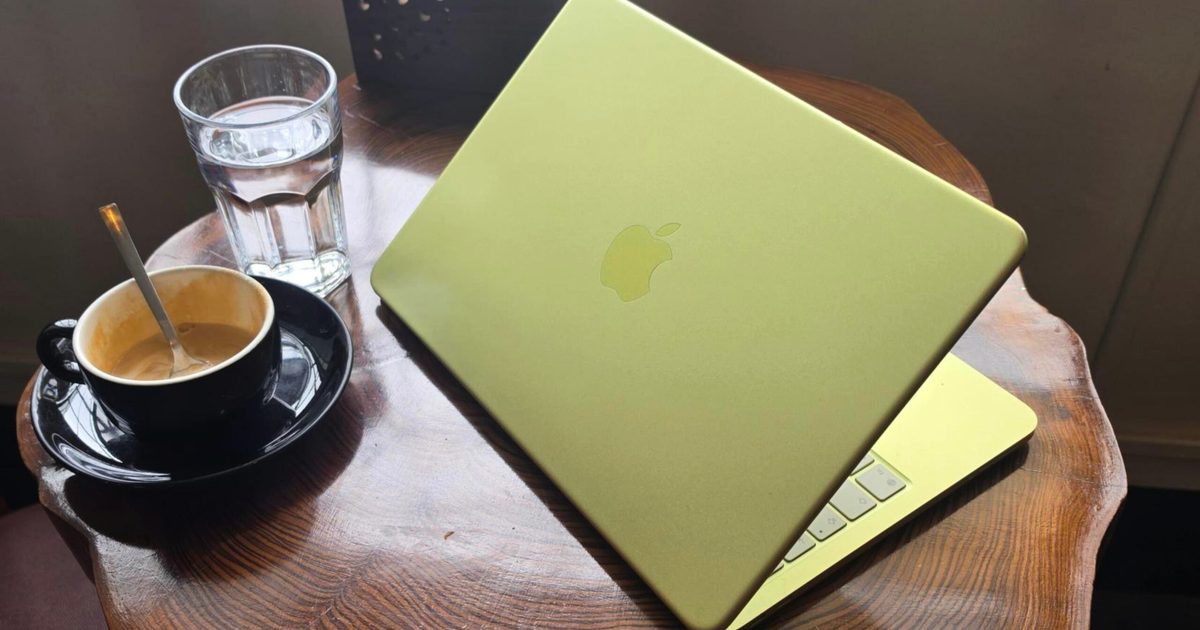
Over the past year, consumer tech economics have been heavily disrupted by soaring memory and chip costs, driven by the massive push to build AI infrastructure. Major manufacturers have shifted their focus to enterprise demand, leaving everyday consumers with more expensive and limited choices than just a year ago. Even Apple, the world's most valuable consumer tech company, has felt the pressure. While iPhones have so far escaped the brunt, tablets, mini PCs, and laptops have seen painful price hikes.
Apple has a reputation for arriving late to trends and then landing well, but the memory-driven price increase is arguably its steepest mid-cycle hike. The MacBook Neo, launched at $599 with 8GB of RAM and a repurposed A18 Pro chip, was a surprise hit that sold better than expected. Within three months of launch, Apple was forced to raise its price by $100, a double-digit jump attributed to the same RAM shortage. Even so, the Neo still offers unique value, sitting $400 to $500 below the entry-level M5 MacBook Air while outperforming most competitors in its price segment.
The Neo succeeded because it knew exactly what it wanted to be: a lightweight, affordable laptop for browsing the web, managing documents, attending video calls, editing photos, and streaming media. It was not designed for local AI workflows like running large language models, generating AI images, or video editing. Yet now, with the entire consumer tech industry obsessed with AI, there is growing pressure to transform the Neo into an AI-first device. That would be a grave mistake.
The AI Arms Race Misses the Point
Windows OEMs are racing to meet Microsoft's Copilot+ PC standard, which demands at least 45 TOPS of on-device AI compute. That requires more powerful CPUs, GPUs, and larger, faster memory pools, all of which drive up costs. Below the $1,000 mark, most customers care little about local LLMs or AI features, yet brands keep chasing the tag. The Neo escaped that trap by using a repurposed phone chip and just 8GB of RAM, delivering real-world performance for everyday tasks without the AI premium.
If Apple decides to equip the Neo's successor with a more powerful NPU, a larger GPU, or 16GB of mandatory baseline memory, it would directly increase the bill of materials by $100–$200. That would push the device closer to $900–$1,000, eroding its price advantage and potentially cannibalizing sales of the MacBook Air. The Air already offers a much more powerful chip; once the price gap narrows, the Neo loses its distinct identity.
Apple Already Segments AI Strategically
Apple's current AI strategy is already segmented. Older iPhones like the iPhone 15 do not support Apple Intelligence. While the MacBook Neo and iPhone 17 get the new Siri AI experience, advanced features such as on-device Siri voices and natural dictation are limited to the iPhone 17 Pro or iPhone Air. Apple is comfortable drawing these lines, so the Neo's successor does not need to chase parity. It simply needs to hold its lane.
If Apple wants to improve performance for the next Neo, it can reuse binned A19 Pro chips, similar to how it used the A18 Pro in the original model. It can also continue using older, cheaper memory like DDR4, which is perfectly adequate for the tasks the Neo is built for. These choices would keep costs in check while still offering a meaningful upgrade.
The Precedent of 'Good Enough' Hardware
Apple would not be the first to adopt a 'good enough' approach. Intel is bringing back older processors for budget machines, and Dell recently launched laptops with Nvidia's aging RTX 3050 GPU. These companies recognize that not every user needs the latest hardware. The Neo should follow the same logic: use proven, cost-effective components that deliver a smooth experience for the majority of users who do not demand local AI compute.
Moreover, the memory crisis is expected to worsen through late 2026 and 2027, making it even more critical to avoid unnecessary hardware upgrades that would inflate prices. The Neo's biggest strength is knowing how little AI it actually needs to succeed. The best cheap MacBook is worth far more than the cheapest AI MacBook that costs hundreds more.
As Apple works on the Neo's successor, it should remember why the original model became a phenomenon: it offered the right hardware at the right price for the right audience. It is built for everyday computing, not for running local AI workloads. If Apple stays true to that formula, the MacBook Neo can continue to thrive without losing its soul.
Source: Digital Trends News