

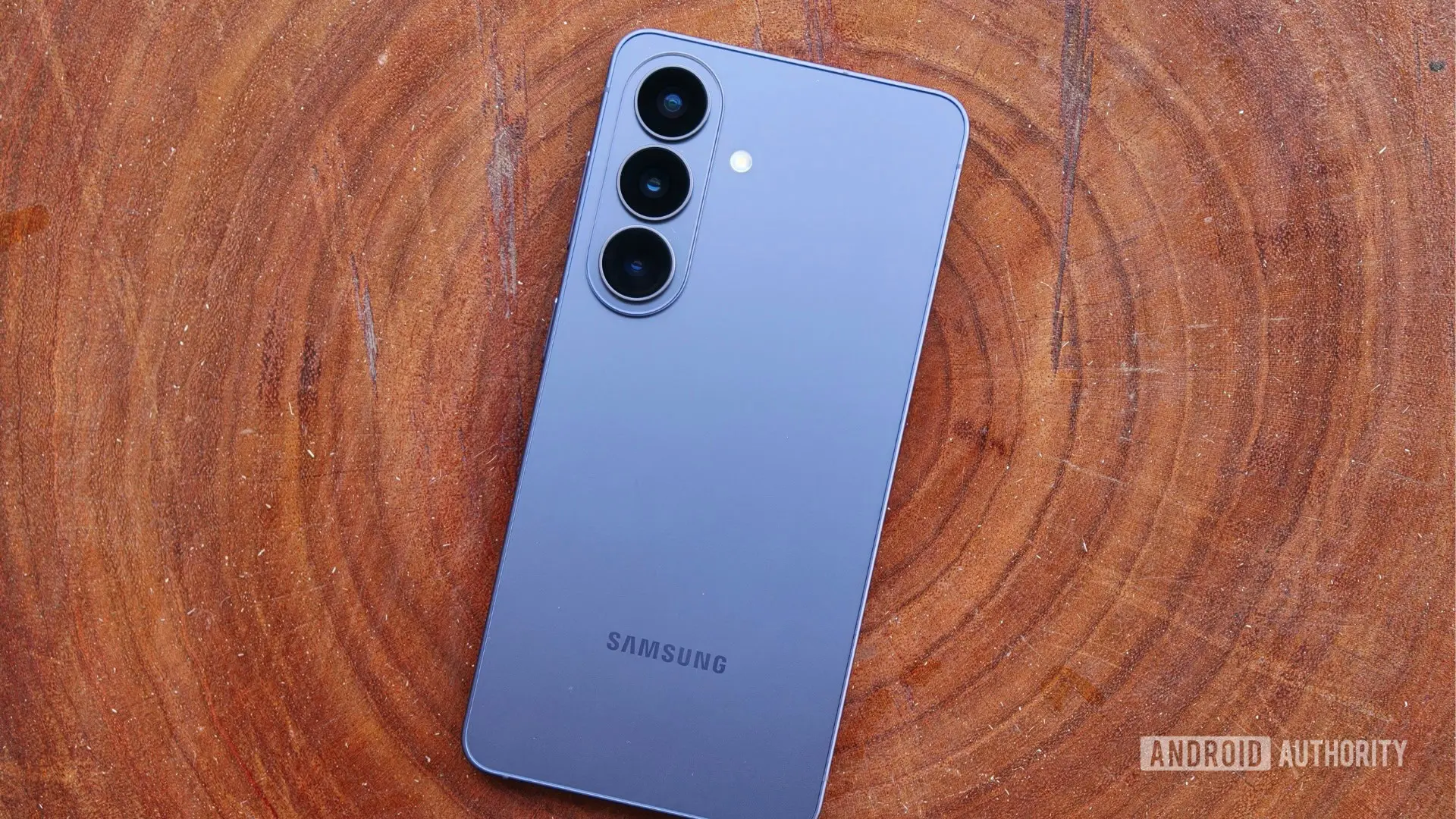
The upcoming Samsung Galaxy S27 series has been the subject of intense speculation for months, and the latest leak will be a bitter pill for fast-charging enthusiasts. China’s 3C certification registry has reportedly listed the wired charging specifications for both the Galaxy S27 and the Galaxy S27 Plus. According to the listing, the Galaxy S27 will stick to a modest 25W peak wired charging speed, while the Galaxy S27 Plus will remain at 45W.
For those who have followed Samsung’s flagship lineup over the years, this is a painfully familiar story. The base Galaxy S model has been stuck at 25W since the Galaxy S20 generation. The Plus model has not charged any faster than 45W since the Galaxy S22 Plus. If the new leak holds true, the Galaxy S27 family will extend that streak for yet another year.
What do the 3C listings actually mean?
3C certification is one of several regulatory approvals that phone manufacturers need to sell their devices in China. It is not an official product announcement, nor does it confirm every technical detail, but it frequently reveals power adapter and charging specifications before launch. Over the years, leaks from the same database have proved accurate, which is why industry watchers pay attention to it.
The tip in question comes from a post shared by tipster Abhishek Yadav on X, citing the Chinese certification registry. No other information about battery capacity, charging curves, or the type of adapter included in the box has been confirmed based on this particular filing. Still, the headline numbers themselves are enough to generate discussion.
It should be noted that peak wired charging speeds do not tell the whole story. A phone may reach 25W only for a limited window before tapering down, while another might hold high wattage for longer. Samsung’s implementation has generally been conservative, prioritizing thermal management and long-term battery health over maximum speed. But even when accounting for real-world charging curves, the lack of meaningful progress is hard to ignore.
A trend of stagnation
When the Galaxy S20 debuted, 25W fast charging was considered respectable, if not class-leading. By 2022, the Galaxy S22 Plus offered 45W wired charging, which was seen at the time as a step in the right direction. Yet the industry did not stand still. In the years since, rival Android phone makers have pushed charging speeds to 80W, 100W, and even 200W in some cases. Samsung has stayed entirely flat.
The base Galaxy S27, assuming the leak is accurate, would therefore represent the eighth consecutive flagship generation with identical 25W charging. The Galaxy S27 Plus would mark the sixth generation in a row at 45W. That level of consistency is unusual in the mobile industry, where every year typically brings some kind of incremental improvement, even if it is minor.
This is not to say that Samsung has neglected battery technology altogether. The company has introduced larger batteries, more efficient displays, and advanced power management features in its recent flagships. Battery life on a modern Galaxy S phone can be excellent, largely because of silicon-carbon battery chemistry and adaptive software that extends runtime. However, when it finally becomes necessary to recharge, the process is slower than the competition’s.
The FE problem
What makes the leak especially frustrating is the awkward positioning of the Galaxy S26 FE. Samsung’s Fan Edition phones are supposed to be the more affordable option, offering a near-flagship experience at a lower price. Earlier reports suggested that the Galaxy S26 FE supports 45W wired charging. If that is true, a cheaper phone in Samsung’s own lineup would charge dramatically faster than the more expensive Galaxy S27.
The base Galaxy S27 would thus look like a downgrade in at least one key aspect relative to its lower-priced sibling. Many users upgrade to a compact flagship because they want the best hardware in a smaller body. Learning that the phone lacks the charging speed of a budget flagship would likely push some buyers toward the FE model or toward one of the other Android flagships.
Competition has moved ahead
It is impossible to discuss this leak without mentioning the broader fast-charging landscape. Brands such as Xiaomi, Oppo, OnePlus, Vivo, and Honor have introduced extremely high wattage charging in their flagship phones. Some close to 100W or more are available in multiple markets, with charging times as low as 20 to 30 minutes for a full battery. Even mid-range phones from Chinese brands often offer 60W or 67W charging, which is faster than the Galaxy S27 Plus.
Apple’s iPhone lineup has also gradually improved its wired charging speeds, reaching around 30W for the latest Pro models. That is still slower than the Galaxy S27 Plus, but Apple has a different ecosystem and battery management philosophy. More importantly, the gap between the base iPhone and the base Galaxy S27 is growing narrower. Samsung’s ability to differentiate on charging is quickly fading.
In Europe and other regions, Samsung still participates in the shift to USB Power Delivery. Wired charging standards have become more interoperable, but Samsung has not taken advantage of newer PPS adapters that allow finer control over voltage and current. The 45W figure for the Plus model was impressive in 2020; in 2026, it is merely average for a high-end device, and 25W is below average.
What about the Ultra and Pro?
According to other rumors, the Galaxy S27 family might include a new Pro variant that sits between the Galaxy S27 Plus and the Galaxy S27 Ultra. Samsung may choose to concentrate its biggest improvements in that model, including perhaps a higher charging speed. Meanwhile, the Galaxy S27 Ultra could build upon the 60W charging introduced with the Galaxy S26 Ultra.
If those rumors are correct, the base and Plus models would be left in an unenviable position. Samsung has previously used the Galaxy S25 and S26 generations to refine the core experience of its phones rather than overhaul specifications. The S27 Ultra, and any new Pro model, might instead carry the innovation torch. But the ordinary S27 buyer would not benefit from those changes.
Magnetic wireless charging could soften the blow
Even if wired charging remains unchanged, the Galaxy S27 series may include a meaningful wireless charging improvement. Several reports have suggested that Samsung plans to integrate magnets into the back of the phone, enabling MagSafe-style accessory support. This would allow cases, wallets, and wireless chargers to snap into perfect alignment using a ring of magnets around the charging coil.
Samsung has offered wireless charging on its flagships for years, but without internal magnets, users have had to rely on external cases to get a magnetic alignment. The addition of an embedded magnet array would bring the Galaxy S27 line more in line with Apple’s MagSafe ecosystem and the Qi2 wireless charging standard. However, the magnetic feature is about alignment and accessory attachment, not necessarily about faster charging speed.
There is no word yet on whether Samsung will increase wireless charging watts. The current Galaxy S series tops out at around 15W, which is slow compared with some Chinese rivals that offer 50W or 60W wireless charging. A magnetic array would make charging more convenient, but
Source: Android Authority News