

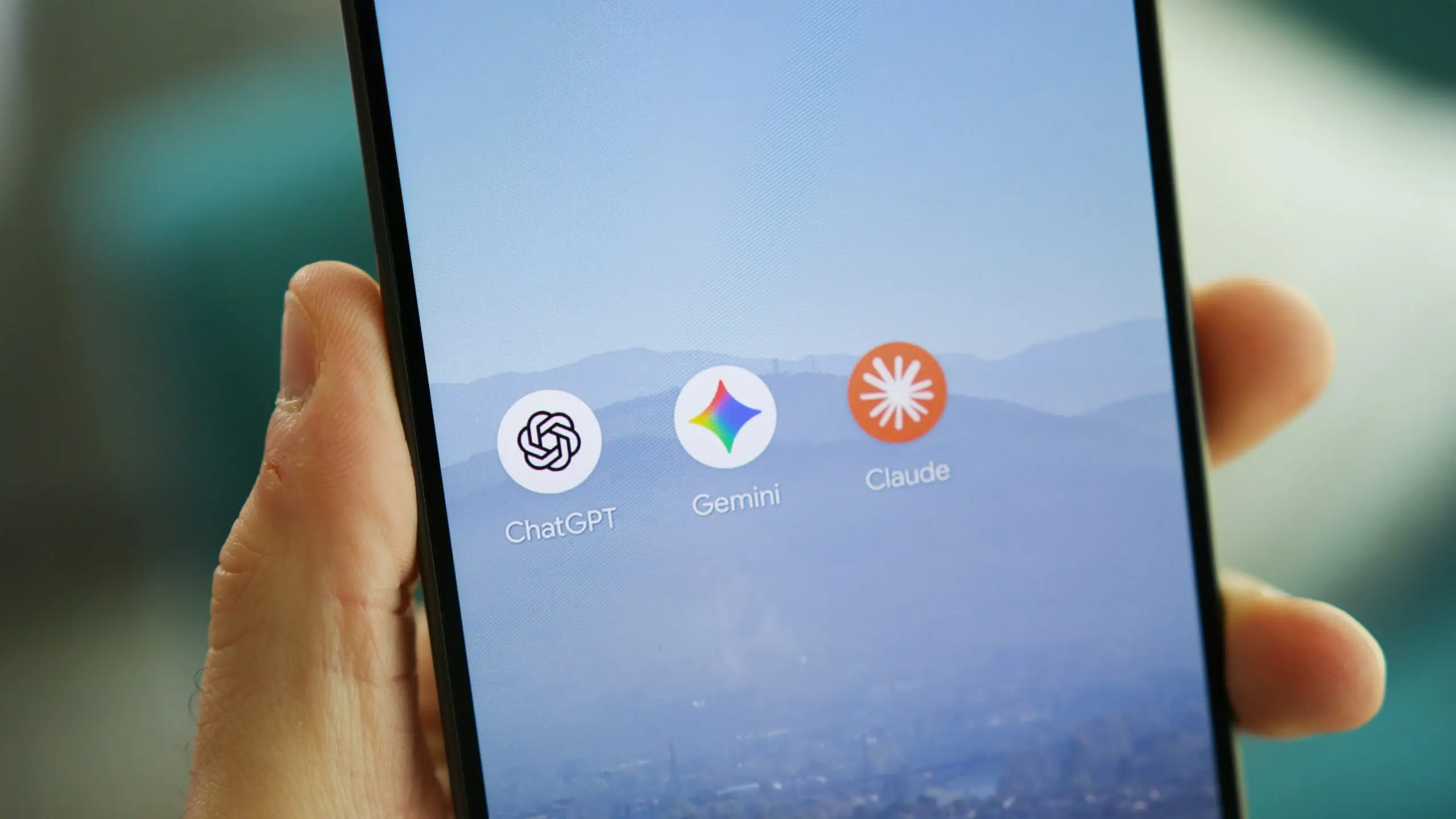
Google’s Gemini family is on the verge of a major new addition. According to a recent report, the search giant could launch Gemini 3.8 Flash as early as today, September 2, 2026. The new model is expected to deliver significantly improved coding performance, specifically in the area of “vibe coding,” where developers use natural-language prompts to generate and edit code with AI assistance.
Vibe coding has become one of the most talked-about use cases for frontier AI models, and Google is eager to strengthen its presence in this space. The company has spent much of the past year iterating on its Flash line of models, which are designed to balance speed, cost, and capability for real-world software development tasks. Gemini 3.8 Flash is said to be the next step in that evolution—and it could arrive much sooner than many observers anticipated.
What Is Vibe Coding?
Vibe coding refers to an informal but increasingly common approach to programming where developers describe tasks in plain language and let an AI model generate the corresponding code. The term first gained traction in late 2025 as a catchy description of a new workflow made possible by large language models. Instead of writing every line manually, developers now craft well-structured prompts, review the generated snippets, and integrate them into larger codebases.
Though the term “vibe coding” was first popularized in connection with a new generation of AI code generators, it has matured rapidly. What started as a fun experiment, where developers would prompt a model to produce a small script or game and then tweak the results, has become a professional workflow used by startups and large enterprises alike. Rather than replacing the developer, vibe coding shifts the developer's role to that of a reviewer, integrator, and architect, requiring a different set of skills. This is why model quality matters enormously: a small mistake in generated code can lead to subtle bugs that are difficult to trace.
For many developers, vibe coding is not just about speed. It also lowers the barrier to entry for people who may not have deep expertise in a particular language or framework. A well-crafted prompt can produce working code in Python, JavaScript, Rust, or SQL, allowing developers to prototype ideas quickly. As a result, AI model providers have begun optimizing their frontier models specifically for these coding workflows, with dedicated benchmarks and leaderboards tracking progress.
Google’s Declared Commitment
In March 2026, Google CEO Sundar Pichai said that 75% of Google’s code is generated and approved by engineers using vibe coding workflows. While that admission raised some eyebrows—particularly given the occasional messiness of Pixel software updates—it also signaled that Google is deeply committed to integrating AI into its own development processes. The company views vibe coding not as a novelty but as a fundamental shift in how software is built.
Pichai’s statement was widely interpreted as a message to both investors and the broader developer community: Google is not just building AI models as a side project; it is using them internally at scale. That type of deployment creates valuable feedback loops. When Google’s own engineers struggle with a generated piece of code, those insights can be folded back into the next model version. It also means that Google has a direct incentive to make its vibe coding tools excellent, because its own products depend on them.
What We Know About Gemini 3.8 Flash
According to a report citing internal testing at Google, the company’s engineers have found Gemini 3.8 Flash to be more capable than Anthropic’s Opus model, though the specific version of Opus was not disclosed. This is a significant claim, as Anthropic’s Opus line has long been regarded as one of the most powerful model families for reasoning and coding. If Gemini 3.8 Flash truly outperforms that class of model, it would represent a major leap for Google.
The report also reveals that Google could release the model to the public as soon as September 2. This would come just weeks after the launch of Gemini 3.7 Flash, which was itself positioned as a coding-focused model with capabilities above Claude Sonnet 5 but below the more powerful Opus tier. The rapid succession of releases suggests that DeepMind is operating on a fast cadence, likely in response to fierce competitive pressure.
The Gemini 3.8 Flash name itself is interesting. Google has used the “Flash” brand for models meant to be lightweight and efficient, often to the point of being deployable on edge devices. In the coding context, a Flash model can be used inside an editor environment where responsiveness is critical. But this time, Flash may not mean “small.” If Gemini 3.8 Flash is indeed superior to Anthropic’s Opus, it might be one of the most capable models Google has ever released, despite retaining a streamlined branding designed for developer consumption.
For context, Gemini 3.7 Flash currently ranks 17th on BencLM’s vibe coding leaderboard. The top ten is dominated by models like Anthropic’s Claude Fable, OpenAI’s GPT-5.6 Sol, and several specialized coding assistants. A jump from 17th into the top tier would be a significant achievement for Google and would immediately make Gemini 3.8 Flash a serious contender in the AI coding space. The fact that Google is reportedly confident enough to skip generic benchmark comparisons and aim directly at Anthropic’s Opus suggests that internal eval results are unusually strong.
Competitive Pressures from All Sides
Google is not the only company investing heavily in vibe coding. Anthropic has launched Claude Cowork, powered by its Fable and Mythos models, which is designed to operate as an autonomous coding agent. OpenAI offers Codex through ChatGPT for similar purposes. xAI has even acquired Cursor, one of the most popular AI-powered code editors, bringing its toolkit under the same umbrella as its Grok models and related research. Cursor became a favorite among developers for its seamless integration with LLMs, and the acquisition marked a clear sign that coding is now a central battleground in the AI industry.
More recently, z.AI’s GLM-5.3-Flash has taken the internet by storm after being previewed as a stealth model under the codename Ox Alpha on OpenRouter. That model quickly gained attention for its performance-to-cost ratio, further intensifying competition. OpenRouter is a popular platform that allows developers to test and compare models from many providers, and a stealth release can generate significant buzz if the model performs well enough to pique curiosity. GLM-5.3-Flash reportedly did exactly that, and its success has shown that even smaller players can disrupt the mainstream AI duopoly if they focus tightly on specific use cases like coding.
For Google, launching Gemini 3.8 Flash with a clear coding advantage is not just about staying relevant in benchmarks; it is about keeping developers inside the Gemini ecosystem. Many professional developers now choose their AI tools based on coding quality, and Google’s previous Flash models have not always been the first choice. A strong showing from Gemini 3.8 Flash could change that perception and persuade developers to migrate from ChatGPT Plus, Cursor, or Claude Pro to Google-powered tools.
DeepMind Reorganization and Strategic Direction
The upcoming release would be DeepMind’s second major model launch since a significant restructuring of the team’s leadership. Co-founder and CEO Demis Hassabis, a Nobel laureate, has been moved to a broader role overseeing AI development across Alphabet, parent company of Google. This change suggests that Google wants a more unified approach to AI research across its various divisions, and it likely places an even greater emphasis on models that have clear commercial applications, such as coding. Hassabis has long been an advocate for pushing frontier capabilities, but the new structure may also help streamline productization.
Google has also reportedly scrapped plans for a Gemini 3.5 Pro model. Internal evaluations supposedly found that the model did not offer enough improvement over the existing Flash models to justify a separate release. Instead, the company might jump straight to Gemini 4.0 Pro, though that model is said to be far from complete. This is a notable departure from the standard annual upgrade cycle that many model providers follow, and it underscores how rapidly the field is evolving. Rather than releasing a Pro model just to maintain a naming pattern, Google appears willing to let its smaller, faster Flash models take center stage while it continues work on the next truly large architecture.
If true, the decision to cancel Gemini 3.5 Pro would mark a strategic shift in the company’s naming and release cadence, reflecting a desire to avoid flooding the market with incremental updates. It would also place more pressure on Gemini 3.8 Flash to carry the company's coding story through the next several months. Without a Pro-tier alternative, developers who want to use Google’s latest models will have to rely on the Flash series for everything from quick autocomplete snippets to longer agentic coding sessions.
What This Means for Developers
For developers, the arrival of Gemini 3.8 Flash could bring new choices in AI-assisted programming tools. If the model performs as well in public as it reportedly has in internal tests, it might inspire a wave of new integrations and third-party tools that build on Google’s technology. Popular code editors, CI/CD pipelines, and project management platforms may all begin to offer Gemini-powered coding features, giving developers more options than ever.
Vibe coding, at its core, is about reducing friction between a developer’s intent and the implementation. Models like Gemini 3.8 Flash are designed to understand natural language instructions more precisely, fill in boilerplate code correctly, and generate more reliable suggestions when context is ambiguous. The result can be a significant productivity boost for teams that adopt these models early. However, the quality of the underlying model is still critical; a model that produces elegant-looking but incorrect code can end up costing more time than it saves.
There is also the question of how Gemini 3.8 Flash will be offered to consumers and businesses. Google currently distributes its Gemini models through several channels, including the Gemini app, Google AI Studio, Vertex AI, and various API endpoints. A new Flash model could be rolled out to all of these simultaneously, or it could start as an invite-only preview. The report suggests a public release is imminent, but Google has not yet made an official announcement. Developers are advised to keep an eye on the company’s developer blog and AI forums for the exact timing.
The rumored leap in performance over Anthropic’s Opus also suggests that Google may have made architectural or training breakthroughs that go beyond simple parameter counting. Some researchers speculate that advances in test-time scaling, reinforcement learning, or the integration of specialized code interpreters could explain the improvement. Others point to the possibility that Google has developed a more efficient tokenizer or training dataset specifically for programming languages. Without official benchmark numbers or public access, it is hard to know exactly what has changed. Observers will be watching closely for independent coding evaluations, community feedback, and real-world usage reports once the model is released.
The Road Ahead
Gemini 3.5 Pro may be dead, but the race to the next generation of AI models is more alive than ever. Google’s decision to focus on the Flash series is a telling sign of how it views the competitive landscape: speed, low latency, and strong coding performance are what matter most in the current market. A Pro model may be useful for some enterprise workloads, but the widespread, rapidly adopted vibe coding tools favor models that are cheap enough and quick enough to use interactively. Flash models are designed to meet that need, and Gemini 3.8 Flash appears to be the most ambitious iteration yet.
If Gemini 3.8 Flash launches as expected, it will mark yet another milestone in Google’s ongoing effort to close the gap with Anthropic and OpenAI. It could also reshape the vibe coding ecosystem—not by introducing a brand-new concept, but by making high-level AI assistance more accessible to ordinary developers who simply want to get work done. The combination of enhanced coding skills, a strong brand, and Google’s extensive cloud infrastructure could make the model an immediate success, particularly if the pricing is competitive with other frontier offerings.
For now, the exact release time remains unconfirmed, but reports suggest it could happen any moment. The wait might end soon, and if the internal test results are accurate, the generative coding landscape may look quite different by next week.
Source: Android Authority News