

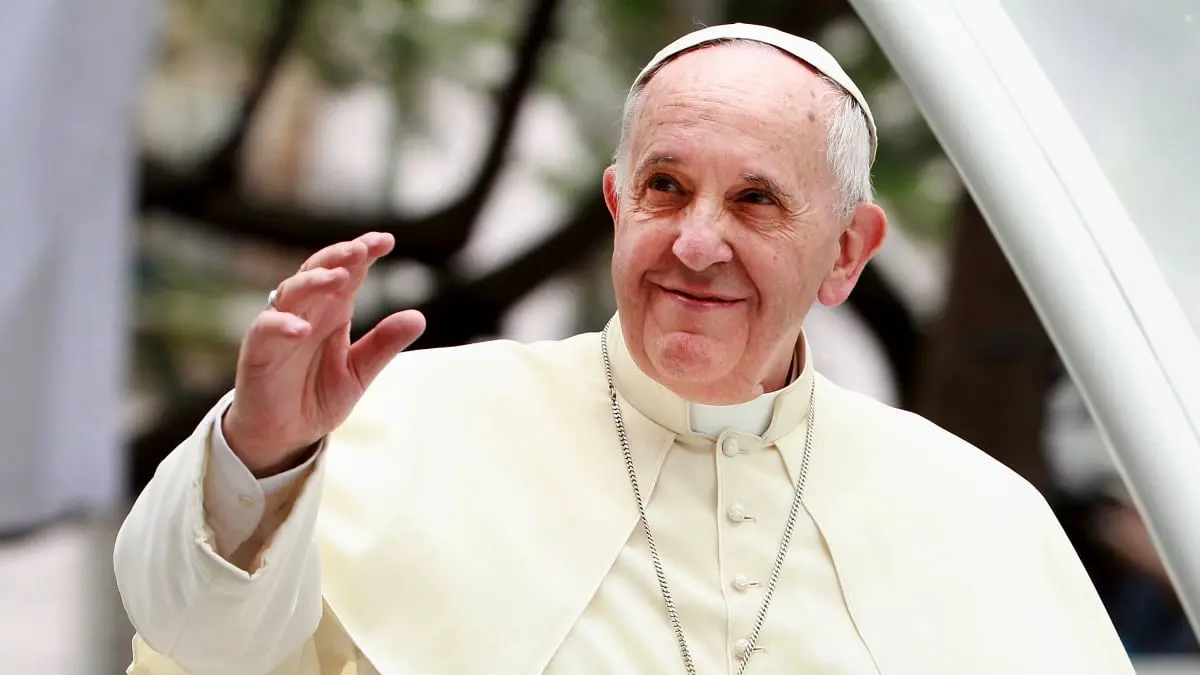
Pope Francis, the first Latin American pontiff and a transformative figure in the Catholic Church, passed away on Easter Monday at the age of 88. Known for his progressive stances on social and economic justice, his death marked the end of a papacy that sought to bring the Church closer to the poor and the marginalized. In his final weeks, he shared a powerful message that resonated far beyond the Catholic faithful: a warning about the growing dominance of technology and its potential to replace genuine human relationships.
The Pope's Final Public Message
Just three weeks before his death, Pope Francis released a video message as part of his "Monthly Intentions" for April 2025. This final intention was focused on new technology, specifically artificial intelligence, video calls, smartphones, and screen time. In his native Spanish, he said, "How I would like for us to look less at screens and look each other in the eyes more! Something's wrong if we spend more time on our cell phones than with people." The message was simple yet profound, encapsulated a concern that many share in an increasingly digital world.
The Pope's Worldwide Prayer Network published the intention along with reflections that called for a balanced use of technology. Pope Francis emphasized that technology is "the fruit of the intelligence God gave us" but insisted it must be used well. He warned against allowing technology to benefit only a few while excluding others, echoing his longstanding advocacy for inclusive progress. His words were not a rejection of innovation but a call for ethical stewardship, urging developers, policymakers, and users to prioritize human connection over virtual engagement.
A Legacy of Social Justice and Technology
Throughout his papacy, Pope Francis was an outspoken advocate for the poor, the environment, and human dignity. His 2015 encyclical Laudato Si' addressed the interconnected crises of climate change, pollution, and social inequality, calling for an integral ecology that respects both nature and humanity. In that document, he also touched on the role of technology, arguing that scientific progress must be paired with moral responsibility. "Technology tends to absorb everything into its ironclad logic," he wrote, echoing the concerns that would later dominate his final public addresses.
His April message built on this foundation, connecting technology to the broader challenges of the modern era. He called for technology to be used to unite, not divide, and to help the poor, the sick, and persons with disabilities. He also urged its application in caring for "our common home," a phrase he often used to emphasize environmental stewardship. Critics have noted that while the Vatican itself has embraced digital communication through social media and streaming services, the Pope remained cautious about its unintended consequences.
Pope Francis was also known for his personal humility and pastoral style. He often eschewed the trappings of papal luxury, living in a simple guesthouse rather than the Apostolic Palace. This authenticity lent weight to his warnings about screen addiction. He understood that while technology can foster global community, it can also create a false sense of intimacy. His message was timely: in an age of endless scrolling and algorithmic echo chambers, the risk of losing genuine human connection is ever-present.
The Broader Implications for Society
The Pope's April prayer intention came at a time when artificial intelligence was rapidly reshaping industries and daily life. Governments were grappling with regulations for AI ethics, while companies raced to integrate chatbots, deep learning, and automation into everything from healthcare to entertainment. The Pope's warning resonated with many who worry about the erosion of privacy, the spread of disinformation, and the mental health crisis linked to excessive screen time.
In his video address, Pope Francis said, "The screen makes us forget that there are real people behind it who breathe, laugh, and cry." This sentiment echoes research from psychologists who have documented the negative effects of social media on self-esteem and social skills. The Pope's call for more face-to-face interaction is supported by evidence that virtual communication often lacks the emotional depth of in-person contact. Nonverbal cues, shared physical presence, and spontaneous moments of empathy are difficult to replicate through pixels and speakers.
Moreover, the Pope highlighted the digital divide, noting that access to technology is still uneven across the globe. While many in developed countries own multiple devices, billions still lack reliable internet connectivity. This inequality undermines the potential for technology to be a force for good. The Pope urged that technological progress must be inclusive, ensuring that the benefits reach the most vulnerable. He called for a new kind of digital solidarity, where innovation serves humanity rather than the other way around.
Interestingly, within hours of his death, social media platforms buzzed with memes and commentary, many referencing the 2024 film Conclave about the secretive papal election process. Others noted that Vice President JD Vance had met with Pope Francis on Easter Sunday, just one day before the Pope passed. The irony was not lost on observers: even as the world mourned a champion of human connection, it did so through the very screens he had warned about. The Pope's own words seemed prophetic: "Let us pray that the use of the new technologies will not replace human relationships, will respect the dignity of the person and will help us face the crises of our times."
The Pope's legacy includes not only his teachings on poverty and peace but also his forward-thinking views on technology. He recognized that the digital revolution presents both opportunities and dangers. In his final months, he continued to urge restraint and intentionality, calling on individuals and institutions to prioritize people over profits and presence over performance. His message is especially relevant for young people who have grown up with smartphones and social media, many of whom report feeling lonely despite constant connectivity.
As the Church enters a period of transition, the spiritual and ethical questions raised by Pope Francis remain unanswered. How can technology be harnessed to enhance community without eroding authentic relationships? Can artificial intelligence be developed in a way that respects human dignity and the common good? These are not just Catholic questions but universal ones. The Pope's final public intention offers a starting point for dialogue across faiths and cultures.
In addition to his technology warning, Pope Francis used his last public appearances to emphasize themes of humility, service, and global cooperation. He celebrated Palm Sunday and Easter masses in a wheelchair due to mobility issues, yet his voice remained strong. His final video message was recorded in a simple room, without the backdrop of St. Peter's Basilica, further underscoring his message of simplicity. When he said, "It's true, technology is the fruit of the intelligence God gave us but we need to use it well," he was not condemning progress but calling for wisdom.
World leaders and religious figures paid tribute to the Pope, often citing his commitment to dialogue and peace. Cardinal Joseph Coutts of Pakistan remarked that Pope Francis "showed us how to blend modernity with tradition without losing our souls." The Dalai Lama offered condolences, noting that the Pope's emphasis on compassion transcends doctrinal differences. These tributes highlight the global impact of a man who, despite his age and health struggles, never stopped speaking out on critical issues of the day.
In the weeks since his death, many have revisited his April message, finding in it a kind of spiritual testament. The Pope's final prayer intention was not about theology or dogma but about everyday choices: how we spend our time, whom we engage with, and what we value. The screen, he suggested, can become a barrier or a bridge. It is up to us to choose wisely. As discussions continue about the future of AI and digital culture, Pope Francis's words offer a grounding perspective that may guide believers and non-believers alike.
Source: Mashable News