

AI Agents Are Flooding Open Source with Low-Quality Pull Requests
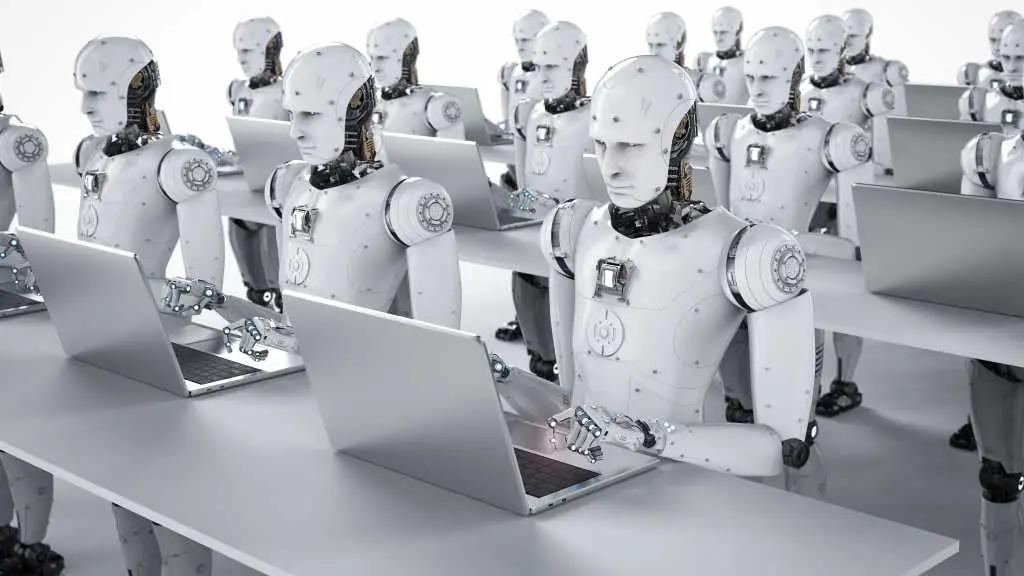
Open source has never been the sprawling community of contributors many imagine. Most essential software is maintained by a tiny core, often unpaid, as recent research from the Brookings Institution highlighted. This delicate balance worked when contributing required effort and knowledge—reproducing bugs, understanding codebases, risking public embarrassment. But AI agents are destroying that friction entirely. Mitchell Hashimoto, founder of HashiCorp, is now considering closing external pull requests completely. Not from losing faith in open source, but because he is drowning in 'slop PRs' generated by large language models and their AI agent henchmen.
The Economics of Review Asymmetry
The core problem is a brutal asymmetry in economics. It takes a developer 60 seconds to prompt an agent to fix typos and optimize loops across a dozen files. But it takes a maintainer an hour to carefully review those changes, verify they do not break obscure edge cases, and ensure they align with the project's long-term vision. When multiplied by a hundred contributors all using personal LLM assistants, the result is not a better project—it is a maintainer who walks away. Armin Ronacher, creator of the Flask web framework, describes this as 'agent psychosis': developers become addicted to the dopamine hit of agentic coding, spinning up agents to run wild through their own projects and, eventually, through everyone else's. The resulting pull requests are what he calls 'vibe-slop'—code that feels right because it was generated by a statistical model, but lacks the context, trade-offs, and historical understanding that a human maintainer brings.
This is not a niche annoyance. Even GitHub, the host of the world's largest code forge, is feeling the strain. The platform is actively exploring tighter pull request controls, including UI-level deletion options, because maintainers are overwhelmed by AI-generated submissions. If the world's most important code platform is considering a kill switch for pull requests, then we are witnessing a structural shift in how open source gets made.
Historical Context: From Cathedral to Bazaar to Automated Noise
The traditional open source model, famously articulated by Eric Raymond in 'The Cathedral and the Bazaar,' relied on the idea that given enough eyeballs, all bugs are shallow. Contributions flowed from humans who fixed problems they encountered. That model assumed friction—a natural barrier that ensured contributors cared enough to invest time. AI eliminates that friction. Now, anyone can prompt an agent to produce a plausible patch, but the responsibility to review and merge remains firmly human. The result is a mountain of digital noise that threatens to bring the entire pull request system to a halt.
The OCaml community faced a vivid example recently when maintainers rejected an AI-generated pull request containing more than 13,000 lines of code. They cited copyright concerns, lack of review resources, and the long-term maintenance burden. One maintainer warned that such low-effort submissions create a real risk of paralyzing the entire pull request process. This incident is a harbinger of what will become increasingly common as agentic coding tools proliferate.
The Obsolescence of Small Utility Libraries
AI is also killing demand for the kind of small, low-value utility libraries that form the long tail of open source. Nolan Lawson, author of blob-util—a library with millions of downloads that helped developers work with Blobs in JavaScript—recently explored this in a piece titled 'The Fate of Small Open Source.' For a decade, blob-util was a staple because it was easier to install the library than to write the utility functions yourself. But in the age of Claude and GPT-5, why take on a dependency? You can simply ask your AI to write a utility function, and it will spit out a perfectly serviceable snippet in milliseconds. Lawson's point is clear: the era of the small, low-value utility library is over. AI has made them obsolete. If an LLM can generate the code on command, the incentive to maintain a dedicated library for it vanishes.
Something deeper is lost here. These libraries were educational tools where developers learned how to solve problems by reading the work of others. When we replace those libraries with ephemeral, AI-generated snippets, we lose the teaching mentality that Lawson believes is the heart of open source. We are trading understanding for instant answers. Armin Ronacher offers a response: 'build it yourself.' He suggests that if pulling in a dependency means dealing with constant churn, the logical response is to retreat. Use the AI to help you, but keep the code inside your own walls. This is a weird irony: AI reduces demand for small libraries while simultaneously increasing the volume of low-quality contributions to the libraries that remain.
The Rise of Agentic Tools
The tools driving this change have moved beyond simple chat interfaces. As analysis from SemiAnalysis noted, we have entered the era of agentic tools that live in the terminal. Claude Code can research a codebase, execute commands, and submit pull requests autonomously. This is a massive productivity gain for a developer working on their own project, but a nightmare for the maintainer of a popular repository. The barrier to producing a plausible patch has collapsed, but the barrier to responsibly merging it has not. The result is a flood of low-quality contributions that consume the scarce time of volunteer maintainers.
Bifurcation: The Cathedral vs. The Provinces
All of this points to a state of bifurcation in the open source ecosystem. On one side, massive, enterprise-backed projects like Linux or Kubernetes have the resources to build sophisticated AI-filtering tools and the organizational weight to ignore the noise. These are the cathedrals, and they will increasingly guard themselves with automated gates that only allow verified human contributions. On the other side, we have the 'provincial' open source projects—those run by individuals or small core teams who have simply stopped accepting contributions from the outside. These projects will become quieter, more exclusive, and entirely dependent on a trusted circle of contributors.
The irony is that AI was supposed to make open source more accessible, and it has. But in lowering the barrier, it has also lowered the value. When everyone can contribute, nobody's contribution is special. When code is a commodity produced by a machine, the only thing that remains scarce is the human judgment required to say no. The future of open source is not dying, but the 'open' part is being redefined. We are moving away from the era of radical transparency—'anyone can contribute'—and heading toward an era of radical curation.
In this new world, the most successful open source projects will be the ones that are the most difficult to contribute to. They will demand a high level of human effort, human context, and human relationship. They will reject the slop loops and agentic psychosis in favor of slow, deliberate, and deeply personal development. The bazaar was a fun idea while it lasted, but it couldn't survive the arrival of the robots. The future of open source is smaller, quieter, and much more exclusive. That might be the only way it survives. We don't need more code; we need more care. Care for the humans who shepherd the communities and create code that will endure beyond a simple prompt.
Source: InfoWorld News