

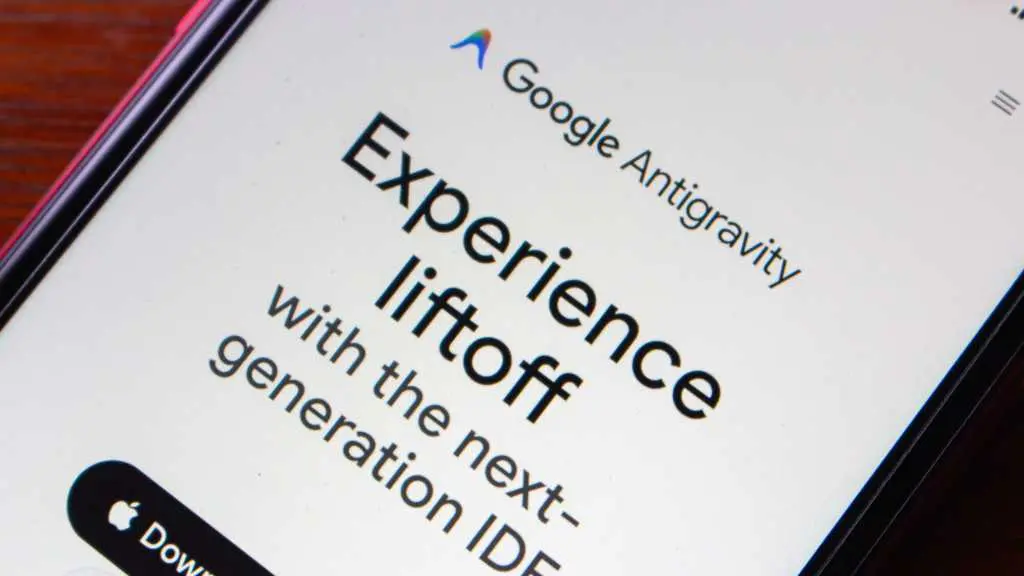
Google consolidates its AI coding toolset into a single platform
At Google I/O 2026, the company unveiled Antigravity 2.0, the second major iteration of its agent-first development platform. This new version comes with a desktop application, a command-line interface (CLI), expanded SDK capabilities, and tighter integration with the Gemini Enterprise Agent Platform. More significantly, Google announced it is beginning to consolidate its existing AI coding tools under the Antigravity umbrella, effectively phasing out separate products like Gemini CLI and Gemini Code Assist for individual developers and enterprise users alike.
The move signals a strategic shift from offering multiple overlapping coding assistants to a unified platform that handles everything from code completion to multi-agent orchestration. According to the company's blog post, customer feedback made it clear that pouring energy into a single product built for today's multi-agent reality would serve users best. As a result, Google is unifying its efforts into Antigravity, which now includes a powerful server-side harness and a brand-new terminal experience called Antigravity CLI.
Cleanup of overlapping tools could simplify procurement
While the transition does not mean an immediate shutdown of Gemini CLI or Gemini Code Assist for paying enterprise customers, it signals a long-term commitment to a single platform. Analysts and experts see this as a necessary cleanup of Google's fragmented AI developer tools. Advait Patel, senior site reliability engineer at Broadcom, noted that Google had too many overlapping tools—Code Assist, Gemini CLI, AI Studio—all doing similar things without a shared backend. Antigravity is the cleanup, betting that the future is not autocomplete in an IDE but fleets of agents running refactors, infrastructure changes, and code reviews in parallel across desktop, terminal, SDK, and Google Cloud.
Bhupendra Chopra, chief revenue officer at AI consultancy Kanerika, highlighted that the unification will simplify procurement for enterprise decision-makers such as CIOs. Previously, CIOs had to track three overlapping Google products with different pricing models, IAM configurations, and support contracts. A single platform eliminates that confusion and streamlines governance. Patel also pointed out that one platform solves the messy governance problem CIOs face when subscribed to multiple Google tools or solutions.
Abhisekh Satapathy, principal analyst at Avasant, noted that this move is likely to reduce AI tool sprawl, one of the biggest challenges currently plaguing CIOs. Tool sprawl leads to increased costs, security vulnerabilities, and integration headaches. By consolidating, Google aims to offer a cleaner, more manageable path for enterprises adopting AI-assisted development.
Could ease integration hurdles
Beyond procurement, the unification addresses deeper integration challenges. Satapathy observed that the disparate products previously behaved as if they were adjacent capabilities, with project context, execution history, and agent state resetting between tasks. Antigravity moves them toward a shared execution layer where context persists across coding, testing, debugging, and deployment activities. This reduces integration overhead, eliminates duplicated tooling connections, and minimizes context switching for development teams.
For enterprise software teams, this should mean less time spent stitching together pipelines and more time focusing on actual development. The platform strategy also puts Google in more direct competition with hyperscaler rivals Microsoft, OpenAI, and Anthropic, all of whom are positioning AI coding assistants as enterprise development platforms. However, each competitor is optimizing for a different gravity well. OpenAI leans on its model lead and Codex, which now has over two million weekly active users. Microsoft uses GitHub Copilot's massive installed base and Azure's enterprise contracts as distribution leverage.
Chopra believes Google's real differentiator is the line connecting Antigravity to Gemini 3.5 Flash, AI Studio, the Gemini API, and the Gemini Enterprise Agent Platform. That stack spans model, runtime, and managed infrastructure—something rivals cannot easily replicate. Satapathy added that small model improvements matter less if teams inherit additional systems, integrations, and support overhead. An integrated architecture is precisely what appeals to CIOs and enterprise decision-makers.
This emphasis on ecosystem integration is why Patel sees Microsoft, rather than standalone model providers or AWS, as Google's most significant rival in enterprise AI development. AWS has stronger infrastructure gravity but weaker workflow gravity, making it less of a direct competitor in the agent-first development space.
Pairing integration strategy with pricing incentives
Google is also making the Antigravity ecosystem more commercially attractive. The company announced a new $100-per-month Google AI Ultra plan, which provides five times higher Antigravity usage limits than the Google AI Pro tier. Bonus credits are available for developers who exceed their quotas. Chopra sees this as Google understanding what serious agentic workloads actually consume and catering to that reality.
Simultaneously, Google dropped the monthly price of its top Ultra tier from $250 to $200. Chopra commented that Google is trying to flatten the upper end and push serious users toward higher Antigravity limits at a lower per-dollar cost. The strategy is to make consumption-based usage feel cheaper at scale. However, he warned that CIOs must weigh these benefits against the risks of tighter platform dependence and long-term vendor lock-in. Patel echoed this caution, advising CIOs to ask hard exit questions before committing at scale.
Migration risks emerge
Some users may not have much time to evaluate those trade-offs. Google announced that starting June 18, 2026, Gemini CLI and Gemini Code Assist IDE extensions will stop serving requests for free individual users and subscribers on Google AI Pro and Ultra plans. The company is directing these users toward the Antigravity CLI. The transition also affects Gemini Code Assist for GitHub, where new installations for GitHub organizations will stop on the same date, with request serving gradually phased out in subsequent weeks.
Patel highlighted short cut-off timelines posing migration risks. Google has already stated there is no one-to-one feature parity at launch between the old and new offerings. Real risks lie in CI/CD pipelines that shell out to Gemini commands, internal plugins that need rewriting as Antigravity plugins, and IAM bindings that require remapping. To prepare, developers should inventory every place Gemini CLI is used, prioritize automation paths, and run both tools in parallel for a few weeks before flipping the switch.
Paul Chada, co-founder of agentic AI startup Doozer AI, warned of another risk: where the agent actually runs. The old setup ran on the developer's machine, but the new one runs on Google's servers. This means code leaves the building before the agent touches it—a security and compliance concern for enterprises handling sensitive code.
A brief reprieve for some enterprises
Enterprise customers using Gemini CLI or IDE extensions through Gemini Code Assist Standard or Enterprise licenses, or via Google Cloud integrations, get a longer window to transition. These users will continue receiving support, newer Gemini model access, and updates for now, though Google did not provide a specific timeline for phasing out support. The Antigravity CLI is available immediately within Google Cloud environments, and the company plans to release migration documentation and video walkthroughs to help developers transition.
Under the hood, Antigravity 2.0 represents a fundamental rethinking of how developers interact with AI. Instead of a simple autocomplete plugin, the platform is designed to orchestrate multiple agents that can handle complex workflows: refactoring large codebases, performing infrastructure changes, running parallel code reviews, and even managing deployments. The CLI is built for power users who prefer terminal-based workflows, while the desktop app provides a graphical interface for those who want more visual feedback. Both are backed by the same server-side harness that manages agent state and context.
Expanded SDK capabilities allow enterprises to build custom agents and integrate them into existing CI/CD pipelines, issue trackers, and collaboration tools. Deeper integration with the Gemini Enterprise Agent Platform means that these agents can tap into enterprise data sources, knowledge bases, and APIs, making them more context-aware and effective. The platform also supports multi-agent collaboration, where different agents can be assigned to different tasks and coordinate their actions automatically.
From a governance perspective, Antigravity introduces unified IAM policies, audit logs, and usage monitoring that span all agent activities. This is a significant improvement over the previous fragmented approach, where each tool had its own IAM model. CIOs and security teams can now define once how agents access resources, and that policy applies across the entire platform. The audit logs provide full traceability of every action taken by an agent, which is critical for compliance in regulated industries.
The competitive landscape is heating up. Microsoft has positioned GitHub Copilot as the centerpiece of its AI development strategy, with integrations into Azure DevOps, Visual Studio, and GitHub Actions. OpenAI continues to invest in Codex and the ChatGPT API ecosystem. Anthropic offers Claude for code generation with strong safety features. Amazon Web Services has CodeWhisperer and Amazon Q Developer, though they lack the unified agent-first approach that Antigravity is aiming for.
Google's bet is that the market is moving away from simple code completion toward autonomous agents that can plan and execute complex engineering tasks. The company is doubling down on the multi-agent paradigm, where multiple AI agents work together under human supervision. Antigravity provides the orchestration layer for this paradigm, positioning it as a platform for the next generation of software development.
For enterprises considering the switch, the immediate priorities should be inventorying current Gemini CLI usage, identifying custom plugins and integrations that depend on the old tools, and setting up a parallel trial of Antigravity CLI. Training developers on the new platform will be essential, as the shift from autocomplete to agent-based workflows requires a different mindset. The long-term benefits of a unified platform—reduced tool sprawl, simplified procurement, consistent governance, and integrated context persistence—may outweigh the short-term migration costs, but only if enterprises plan carefully and negotiate exit clauses.
As Google pushes forward with Antigravity, the success of the platform will depend not just on technical capabilities but also on how smoothly it accommodates the existing user base and how quickly it can achieve feature parity with the tools it is replacing. The June 2026 deadline for individual users is fast approaching, and enterprise customers should start preparing now. The broader implication is that the AI coding assistant market is consolidating around platforms rather than point solutions, and Google is making a bold bet that the future belongs to agent-first development environments.
Source: InfoWorld News