

Should You Buy the Apple Vision Pro?
The Apple Vision Pro, priced at $3,500, remains prohibitively expensive for most consumers. Despite its technological prowess, many reviewers note that it does not easily integrate into existing workflows. Some users have even expressed regret after purchasing the headset. However, the Vision Pro excels at watching movies, viewing 3D videos, and serving as a display for a Mac. At over 1.3 pounds, the headset can cause fatigue quickly, but the introduction of the Dual Knit Band with the M5 chip has improved comfort. The external battery pack and overall bulk make it less travel-friendly. Those considering a purchase should try it at an Apple Store and conduct thorough research on its capabilities. With the M5 refresh in October 2025, now is considered a good time to buy, as another update is not expected for at least two years.
What Is the Apple Vision Pro?
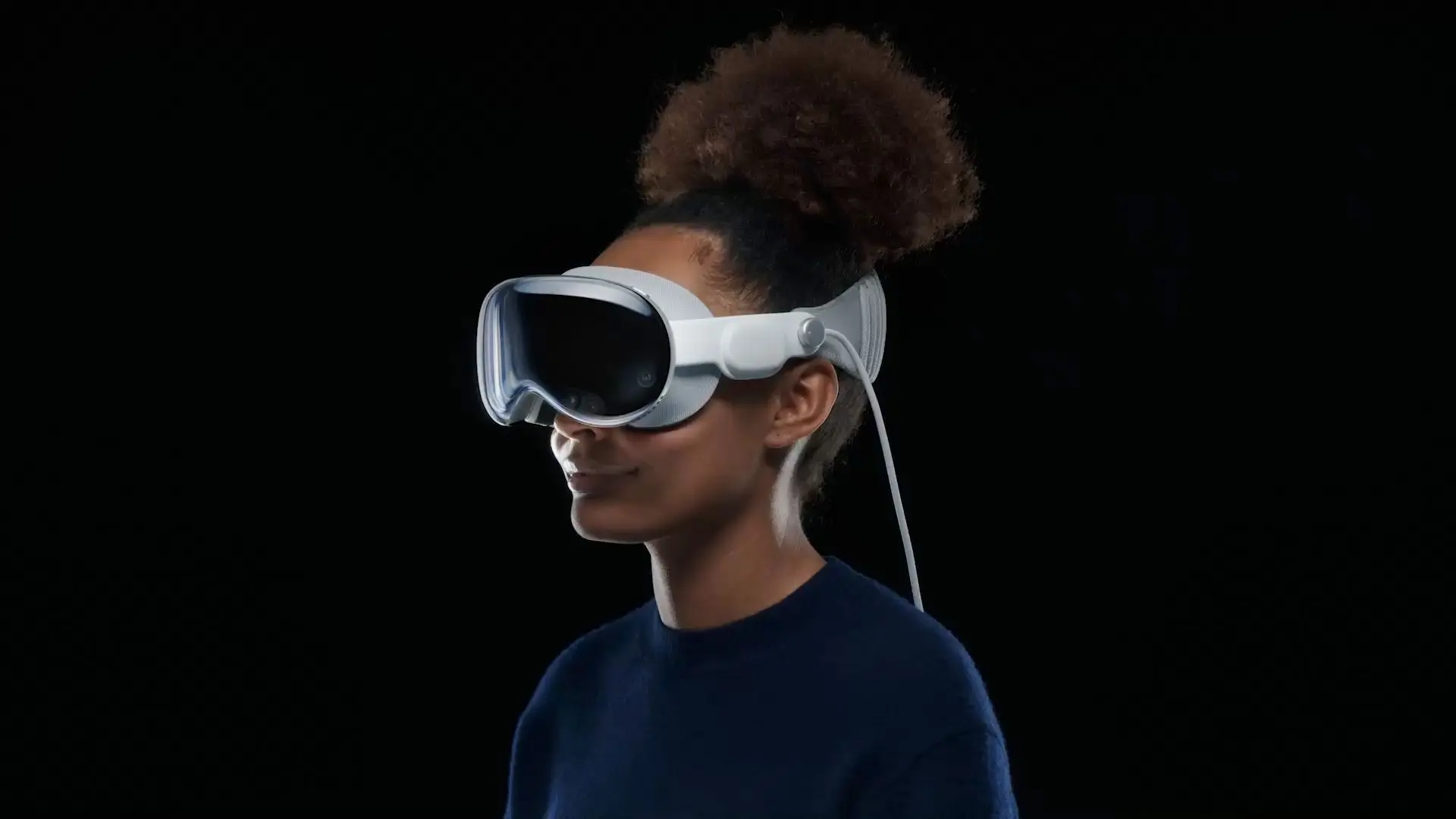
Apple Vision Pro is a mixed reality headset, often called a spatial computer. It launched in February 2024 with an M2 chip and received an M5 upgrade in October 2025. The device combines augmented and virtual reality, using external cameras to map the real world and project digital content onto it. For immersive VR, the cameras are turned off, and the Digital Crown controls the level of immersion. The headset features a laminated glass front, an aluminum alloy frame, and a Light Seal that blocks out light. Audio straps with spatial audio speakers, a 3D knitted band, and a Fit Dial complete the design. Inside, two micro-OLED displays offer over 4K resolution per eye, totaling 23 million pixels. EyeSight projects the user’s eyes on an external display to signal when they are in immersive mode. Zeiss Optical Inserts allow prescription lenses to be attached magnetically.
How It Works
The Vision Pro uses 12 cameras and five sensors to track hand gestures, eye movements, and the environment. Navigation is done through eye tracking, hand taps, and voice commands. Optic ID provides iris-based authentication, similar to Face ID. The headset includes an R1 chip dedicated to processing sensor data, ensuring a lag-free experience. The M5 chip handles the operating system, graphics, and AI tasks. With 16GB of RAM and storage options up to 1TB, the Vision Pro is a powerful computing device. Battery life is 2.5 hours for general use and 3 hours for video, with the option to plug in for unlimited use. The battery pack is worn at the hip and connected via a braided cable.
Design and Display
The Vision Pro resembles high-end ski goggles. The curved laminated glass front melds into an aluminum frame. The Light Seal is magnetic and comes in various sizes. The Dual Knit Band (new with M5) has two straps—one at the back and one over the top—with counterweights for better weight distribution. The display is a standout feature: micro-OLED panels with 23 million pixels and a refresh rate up to 120Hz (up from 90Hz). The M5 chip can render 10 percent more pixels, resulting in crisper visuals and reduced motion blur. EyeSight uses an external display to show the wearer’s eyes, enhancing social interactions.
Cameras and Sensors
Twelve cameras and five sensors work together. Two high-resolution cameras transmit real-world images to the user. Infrared cameras and LEDs track eye movements for precise navigation. LiDAR sensors map the environment, while a 3D camera captures spatial photos and videos. The camera button on top initiates recording, with a clear indicator on the external display to prevent covert use.
visionOS and Software
visionOS is the operating system, offering a three-dimensional interface controlled by eyes, hands, and voice. Users can position apps anywhere in space, resize them, and create an infinite canvas. The system supports iPhone and iPad apps, and integrates with Mac to act as a 4K display. visionOS 26, released in September 2025, adds persistent widgets, improved Personas (digital avatars), shared experiences with other Vision Pro users, and a Jupiter Environment. Spatial Scenes add depth to 2D photos, and spatial browsing hides distractions in Safari. FaceTime is redesigned for the headset, with Personas mirroring facial expressions in real time. Content consumption is a core feature: Apple TV+ offers 150+ 3D movies, and Apple Immersive Videos are 180-degree 8K recordings. Games from Apple Arcade are supported, along with Bluetooth controllers.
Performance and Battery Life
The M5 chip, built on 3-nanometer technology, has a 10-core CPU and 10-core GPU, with a 16-core Neural Engine that improves AI tasks by up to 50 percent. Unified memory bandwidth is 153GB/s. The R1 chip ensures low-latency sensor processing. Battery life improved from 2 to 2.5 hours for general use, and video playback reaches 3 hours. The headset can be used while plugged in indefinitely. Travel Mode allows usage on planes, trains, and cars.
How to Buy
The M5 Vision Pro is available in multiple countries, including the US, UK, Canada, Australia, Japan, and more. Pricing starts at $3,500 for 256GB, with 512GB and 1TB options. The purchase process includes a Face ID scan to determine the correct Light Seal and headband size. Zeiss prescription lenses cost $149, and readers are $99. No trade-ins are offered for the M2 model. The box includes the headset, Dual Knit Band, Light Seal and cushions, polishing cloth, battery, USB-C cable, and power adapter.
Medical Warnings
Apple advises consulting a doctor before using Vision Pro if users have heart conditions, migraines, dizziness, eye conditions, psychological issues, inner ear problems, dry eyes, seizures, balance issues, or skin allergies. Pregnant individuals should exercise caution due to increased nausea risk. The device and battery pack may interfere with pacemakers, hearing aids, and defibrillators.
Future Developments
Apple is reportedly pausing work on the next-generation Vision Pro to focus on smart glasses without a display, similar to Meta Ray-Bans, expected around 2026-2027. A cheaper headset is also in development but likely two years away. Long-term plans include AR glasses with in-lens displays, possibly connecting to Mac or iPhone. Apple has tested the Vision Pro for mental health monitoring via eye tracking and facial expression analysis. These future products highlight Apple’s commitment to spatial computing beyond the current headset.
Source: MacRumors News