

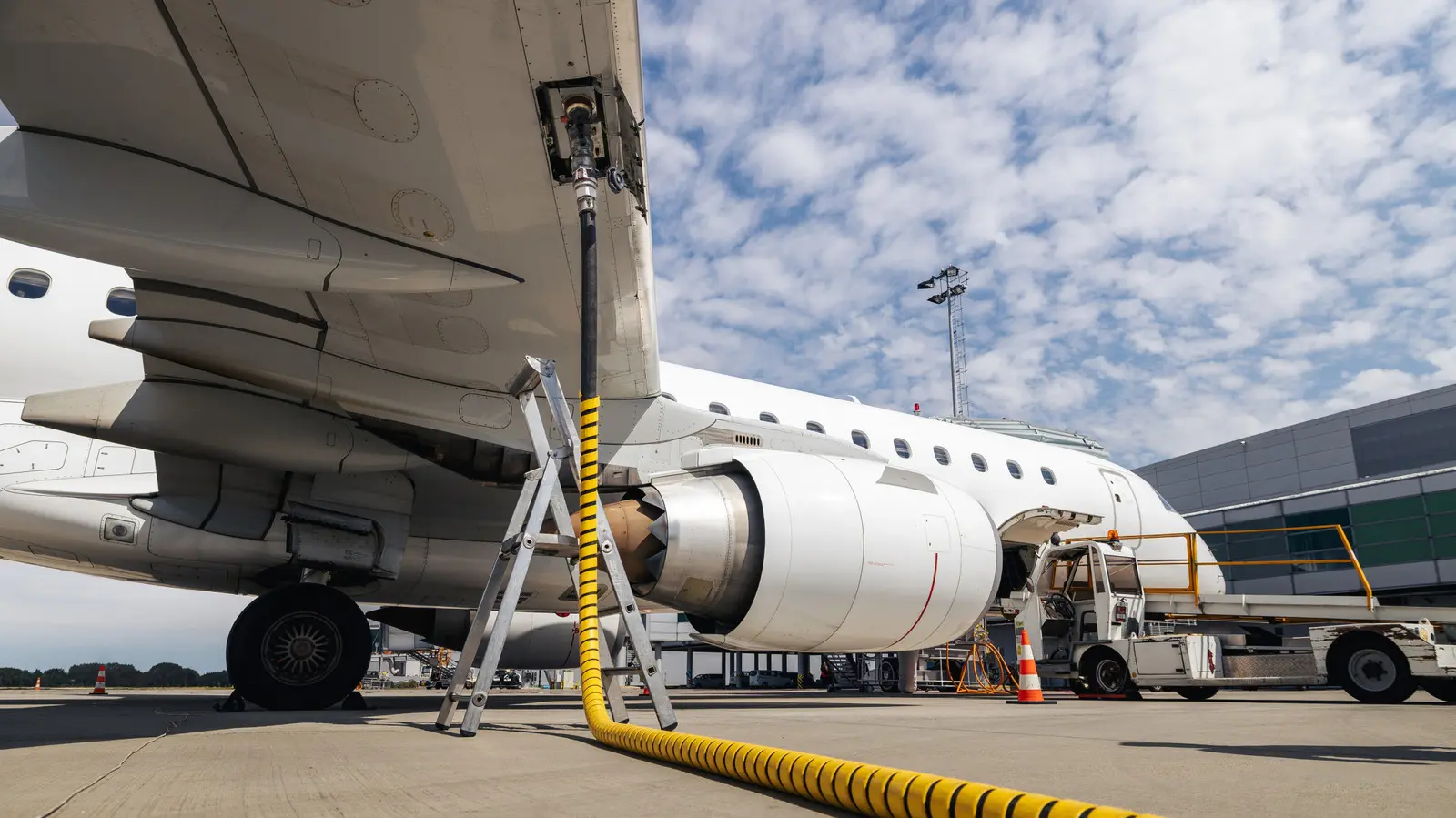
Most people measure liquid fuel like gasoline or diesel in gallons. It seems logical because fuel is a liquid, and gallons are a familiar unit for volume. However, in the world of aviation—whether you're a pilot, an aircraft mechanic, or a fuel truck operator—jet fuel is almost always measured in pounds. This might sound counterintuitive or unnecessarily complicated, but it is rooted in fundamental physics and safety considerations that govern flight.
The Physics of Volume at Altitude
At sea level, the volume of a liquid remains relatively constant under normal temperature and pressure changes. But when an aircraft climbs to cruising altitude—typically 30,000 to 40,000 feet—the surrounding temperature drops dramatically, often below -50°F (-45°C). Jet fuel, like all liquids, contracts when cooled. This means that a gallon of jet fuel at altitude occupies less physical space than the same gallon at ground level. If pilots measured fuel by volume, they would need to constantly recalculate fuel quantity as the plane ascended or descended, introducing complexity and potential error. By measuring fuel in pounds, aviation professionals bypass the volume fluctuation entirely. A pound of fuel is a pound regardless of temperature or altitude, providing a consistent and reliable measure of how much energy and weight is onboard.
Weight and Balance: The Core of Flight Safety
Weight distribution is arguably the most critical factor in aircraft performance. Every aircraft has a maximum takeoff weight (MTOW) and a maximum landing weight (MLW). For example, the Airbus A320neo has an MTOW of about 174,000 pounds and an MLW of around 148,000 pounds. Exceeding these limits can compromise structural integrity, handling, and braking during takeoff and landing. Fuel accounts for a significant portion of an aircraft's weight. In a fighter jet like the F-15 Eagle, internal and external fuel tanks can carry up to 36,200 pounds of fuel. Knowing exactly how much fuel is left—in pounds—allows pilots to calculate weight and balance with precision, ensure the center of gravity stays within safe limits, and plan fuel dumping if necessary during emergencies. Fuel is also distributed among multiple tanks (wings, fuselage, tail) to maintain optimal balance as it is consumed. Using pounds simplifies these calculations because weight is the direct variable that affects lift and thrust.
Fuel Burn Rates and Efficiency
The rate at which an aircraft burns fuel changes throughout a flight. During takeoff and climb, engines run at high power, burning fuel quickly to gain altitude. At cruise, the air is thinner, requiring less thrust, so fuel consumption decreases. These changes are best expressed in pounds per hour (pph). Pilots and flight management systems use fuel burn rates to predict remaining fuel, endurance, and range. If fuel were measured in gallons, they would have to account for the varying density of fuel at different altitudes—a gallon of fuel at sea level weighs about 6.7 pounds, but at altitude, that same volume might weigh 6.4 pounds due to temperature contraction. Such variances could lead to miscalculations. By using pounds, the arithmetic is straightforward: the total fuel weight, minus the weight burned per hour, equals the fuel remaining. This standardization improves safety and reduces cognitive load on pilots.
Fuel Dumping and Emergency Procedures
In an emergency shortly after takeoff, an aircraft may need to return to the airport quickly. If it is still heavy with fuel, it may exceed the maximum landing weight. To land safely, pilots can dump fuel over designated areas. The amount dumped is measured in pounds because that is what matters structurally for the landing gear and airframe. For instance, a Boeing 777 might jettison fuel at a rate of 2,000 pounds per minute. Pilots monitor the remaining fuel weight to ensure they reach the safe landing weight. Volume measurements would be useless because the fuel being dumped is at a different temperature and pressure than what the tanks hold. Weight gives an unambiguous number that the crew can rely on.
Global Industry Standardization
Aviation is an international industry, and standardization is essential for safety. While the United States uses the imperial system in many contexts, aviation globally uses pounds for fuel in most aircraft, especially those manufactured by Boeing, Airbus, and other major companies. Even in countries that use the metric system, fuel weight is often converted to pounds because many aircraft systems are calibrated in pounds. This consistency allows pilots from different nations to fly the same aircraft types without confusion. Fuel suppliers deliver fuel by weight rather than volume to ensure accurate billing and to match aircraft load sheets. The use of pounds also simplifies maintenance and performance calculations across different aircraft models.
Historical Context
The practice of measuring fuel in pounds dates back to the early days of aviation. Aircraft engines and structures were designed with weight limits derived from engineering calculations. As aircraft grew larger and more complex, the need for precise fuel measurement became paramount. Early aircraft used simple float gauges that measured volume, but these were unreliable at altitude. Over time, fuel quantity indicating systems (FQIS) evolved to measure fuel mass using capacitance probes and density compensation. These systems output fuel weight directly, further reinforcing the use of pounds. Modern aircraft like the Boeing 787 display fuel quantities in both pounds and kilograms, but pounds remain the standard for most operations.
Impact on Aircraft Design
Aircraft fuel tanks are designed to hold a certain weight of fuel, not a specific volume. The shape and size of tanks are determined by structural constraints and aerodynamic efficiency. For instance, wings are often used as fuel tanks because they can accommodate fuel without adding extra drag. The amount of fuel that can be carried is limited by the structural strength of the wing spars, which are rated for maximum load in pounds. Engineers calculate fuel capacity based on the density of jet fuel at standard conditions (about 6.7 pounds per gallon at 59°F), but the actual volume may vary with temperature. However, the weight limit remains fixed. Therefore, the aircraft's flight manual specifies fuel in pounds, and pilots never need to think about gallons.
Comparing to Other Industries
Other industries also face similar issues. For example, the shipping industry measures fuel oil in metric tons rather than barrels because weight determines stability and cargo capacity. However, in automobiles, the volume of gasoline is sufficient because altitude changes are small and safety margins are wide. Aviation's extreme operating conditions demand the precision that weight-based measurement provides. In spaceflight, propellants are measured in pounds or kilograms for similar reasons—weight changes with acceleration due to gravity, but mass is constant. So while it might seem odd at the gas station, in the cockpit, pounds make perfect sense.
Training and Procedures
Pilot training emphasizes fuel management in pounds from the very beginning. Flight simulators and checkrides require pilots to compute fuel required for a flight using pounds, not gallons. They learn to monitor fuel gauges that display weight, and they plan diversions based on remaining fuel weight. This consistency reduces errors when switching between aircraft types. Many regional jets and business jets also use pounds, and even smaller general aviation aircraft are increasingly adopting weight-based fuel measurement for safety. Fueling trucks and hydrant systems at airports are calibrated to deliver fuel by weight, and the fuel slip shows both weight and volume for cross-reference, but weight is the primary measure for the pilot's signature.
The Future of Fuel Measurement
As aviation explores sustainable aviation fuels (SAFs) and hydrogen, the measurement of fuel weight will remain crucial. SAFs have slightly different densities, so volume-based comparisons would be inaccurate. Using weight ensures that aircraft performance calculations remain valid regardless of fuel composition. Hydrogen fuel, which is gaseous or liquid, is also measured in pounds or kilograms. The industry's entrenched use of weight measurement is unlikely to change because it is deeply integrated into certification, training, and operational databases. Even as digital flight bags and electronic flight planning become more advanced, the fundamental unit for fuel will remain the pound for the foreseeable future.
In summary, measuring jet fuel in pounds eliminates the influence of temperature and pressure on volume, directly ties to aircraft weight limitations, simplifies fuel burn calculations, ensures safe fuel dumping procedures, and aligns with global aviation standards. It is a practice born out of necessity and refined over a century of flight. While it may seem arcane to the average driver at the pump, for those who operate aircraft, it is an essential and intuitive method that enhances safety and efficiency from takeoff to landing.
Source: SlashGear News