

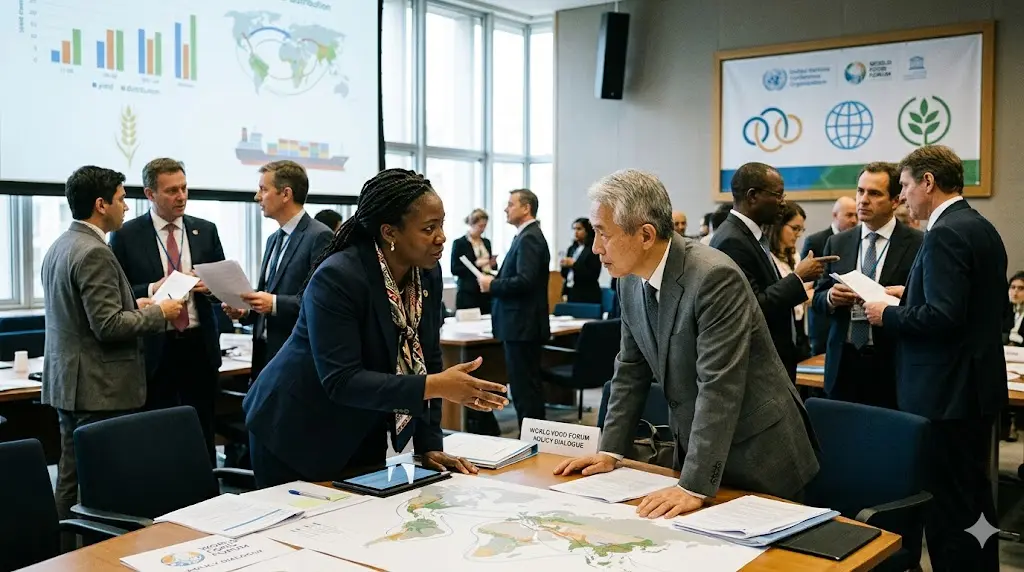
Food security is no longer just a farming issue or a humanitarian concern. It now shapes trade agreements, diplomatic partnerships, military strategies, and even regional conflicts. Countries that can secure stable food supplies often gain political influence, while nations facing shortages become more vulnerable to economic pressure and instability.
Food security is influencing international relations because nations depend on stable food supplies to maintain economic growth, social stability, and political power. Rising climate risks, trade disruptions, and population growth are pushing governments to form new alliances, control supply chains, and rethink global cooperation.
Why Food Security Is Influencing International Relations has become one of the biggest geopolitical discussions of the decade. Food is tied to national stability in ways many people underestimate. When food prices rise sharply or supply chains break down, governments face protests, migration pressure, and economic stress almost immediately.
I’ve seen analysts focus heavily on oil and energy politics while ignoring agriculture. That’s a mistake. Grain exports, fertilizer access, and water availability now affect diplomacy almost as much as military strength. In 2026, countries are treating food systems as strategic assets, not just economic sectors. That shift is changing how nations negotiate, cooperate, and compete across the world.
What Is Food Security and Why Does It Matter?
Food Security: A condition where people consistently have access to enough safe, nutritious, and affordable food for healthy living.
Food security sounds simple on paper, but it’s deeply connected to global politics. A country may produce enough food domestically yet still rely on imported fertilizer, animal feed, fuel, or shipping routes. Once one piece of that chain fails, the entire system can wobble.
Here’s the thing most people overlook: food insecurity rarely stays inside one border. Shortages in one region often trigger export bans, price spikes, migration, and political unrest elsewhere. That ripple effect pushes governments into new diplomatic decisions.
For example, when grain exports from major producing countries slow down, nations dependent on imports scramble to secure emergency agreements. Wealthier states often outbid poorer nations, creating tensions that spill into international negotiations.
Why governments treat food as a strategic issue
Food security affects:
National stability
Public trust in leadership
Inflation control
Trade partnerships
Migration patterns
Military preparedness
A government can survive high entertainment prices. It probably can’t survive widespread hunger for long.
Why Food Security Matters in 2026
The conversation around international food systems changed dramatically after supply chain disruptions, climate-related crop failures, and rising geopolitical tensions over the last few years. In 2026, nations are moving beyond short-term fixes and building long-term food resilience strategies.
Several factors are driving this shift.
Climate pressure is reshaping diplomacy
Extreme weather events now influence trade discussions directly. Droughts, floods, and heatwaves are reducing harvest predictability in many agricultural regions. Countries are entering agricultural partnerships not just for profit, but for survival.
Some governments are investing heavily in overseas farmland agreements. Others are funding irrigation systems abroad to secure future imports. That’s diplomacy through agriculture.
Food inflation creates political instability
When food prices rise, citizens react fast. Bread, rice, cooking oil, and basic staples affect households daily. A spike in prices can trigger protests within weeks.
In my experience, policymakers worry more about food inflation than many public speeches suggest. Rising grocery costs can damage public confidence faster than abstract economic indicators.
Strategic trade alliances are expanding
Countries are building regional food corridors and emergency reserve agreements. Nations that once focused only on energy security are now discussing grain storage, fertilizer access, and shipping lane protection during diplomatic meetings.
That’s a major shift.
Water scarcity is becoming a geopolitical issue
Freshwater access is tightly linked to food production. Rivers crossing national borders are increasingly becoming negotiation points between neighboring countries.
What most people miss is that future international disputes may revolve around agricultural water rights more than oil reserves.
How Food Security Shapes International Relations Step by Step
Understanding the process helps explain why governments now place agriculture at the center of foreign policy discussions.
1. Countries assess domestic food vulnerability
Governments first evaluate how dependent they are on imports, fertilizers, fuel, and external supply chains.
A nation importing most of its wheat faces different diplomatic pressures than one producing surplus grain domestically.
2. Strategic trade partnerships are formed
Countries then negotiate long-term agreements with exporters to secure stable supplies. These deals often include shipping guarantees, tariff reductions, or infrastructure investments.
Some agreements now prioritize food access over pure economic competition.
3. Governments invest abroad
Many nations finance agricultural projects overseas to secure future food sources. These investments include ports, storage systems, irrigation, and farmland partnerships.
This is where international relations become deeply tied to agriculture.
4. Food diplomacy influences foreign policy
Countries with strong agricultural exports gain political leverage. Food-exporting nations can strengthen alliances by supplying grain during crises.
Humanitarian food aid also shapes diplomatic influence.
5. Security and military planning adapt
Naval routes, fertilizer supply chains, and agricultural transport networks are increasingly treated as national security concerns.
That might sound dramatic, but modern food systems depend heavily on global logistics. One disruption can affect millions.
The Counterintuitive Reality Most People Ignore
Many people assume wealthy countries are automatically food secure. That’s not always true.
A nation can have strong finances while remaining vulnerable to fertilizer shortages, climate disruptions, or shipping bottlenecks. Meanwhile, some lower-income countries with strong local agriculture may prove more resilient during global disruptions.
That’s the strange part.
Economic power alone doesn’t guarantee food stability anymore. Supply chain resilience matters just as much.
I’d argue this is one of the most misunderstood parts of global politics today.
Real-World Examples of Food Security Influencing Diplomacy
Grain Export Negotiations
Several importing nations have recently expanded diplomatic relationships with large agricultural exporters to stabilize wheat and rice supplies. These partnerships go beyond simple trade deals. They often include infrastructure investments, port access agreements, and transport cooperation.
Fertilizer Dependency
Many countries discovered they were overly dependent on a small number of fertilizer-producing nations. Once prices surged, governments rushed to diversify suppliers.
That scramble created new alliances almost overnight.
Regional Food Corridors
Some neighboring countries are creating protected trade routes specifically for agricultural goods. These agreements aim to prevent shortages during future crises.
Honestly, a decade ago, many policymakers probably wouldn’t have imagined food corridors becoming a major diplomatic priority.
Expert Tips: What Actually Works for Countries
Nations trying to strengthen food security usually succeed when they stop relying on a single solution.
Diversification matters more than self-sufficiency
Total food independence sounds attractive politically, but it’s difficult in practice. Smart governments diversify suppliers instead of relying on one country or one crop source.
Local agriculture still matters
Global trade is important, but domestic farming capacity creates resilience during emergencies.
Countries investing in local farmers often recover faster from disruptions.
Infrastructure is underrated
Storage facilities, ports, rail systems, and refrigeration networks matter more than most headlines suggest.
Food loss during transportation remains a massive hidden problem.
Data and forecasting improve stability
Governments using climate forecasting and supply-chain analytics can respond earlier to shortages.
That proactive approach usually prevents panic buying and political instability.
A Personal Take on the Future
Here’s my hot take: food security will probably influence global politics more than energy policy in certain regions over the next decade.
That sounds bold, but think about it. Energy shortages hurt economies. Food shortages threaten social order directly. Governments know that.
I remember reading policy discussions years ago where agriculture was treated almost like a secondary issue compared to defense or finance. That mindset has shifted dramatically.
Now agriculture ministers often sit at the same strategic table as defense and trade officials.
That tells you everything.
How Businesses and Investors Are Responding
International companies are also adjusting to this new reality.
Food producers, logistics firms, fertilizer companies, and agricultural technology providers are expanding partnerships across borders. Investors increasingly monitor climate risk and agricultural resilience before entering new markets.
Businesses tied to food systems now influence diplomatic relationships indirectly through trade dependence and supply agreements.
Even multinational retailers are changing sourcing strategies to reduce geopolitical risk.
People Most Asked About Why Food Security Is Influencing International Relations
Why does food security affect global politics?
Food security affects global politics because shortages can create instability, migration, inflation, and public unrest. Governments often adjust foreign policy to secure reliable food imports and agricultural partnerships.
How does climate change impact food security?
Climate change affects rainfall patterns, crop yields, water availability, and extreme weather frequency. These disruptions reduce agricultural predictability and increase international competition for food resources.
Which countries benefit most from food exports?
Large agricultural exporters often gain diplomatic influence because food-importing nations depend on stable supply agreements. Export capacity can strengthen trade relationships and geopolitical leverage.
Is food security becoming a national security issue?
Yes. Many governments now treat food systems as strategic infrastructure. Shipping routes, fertilizer supplies, and grain reserves are increasingly connected to national security planning.
Why are countries investing in overseas farmland?
Some nations invest abroad to secure long-term food supplies and reduce dependence on volatile global markets. These partnerships often include infrastructure and trade agreements.
Can technology solve global food insecurity?
Technology helps improve yields, forecasting, and efficiency, but it doesn’t fully solve political instability, unequal distribution, or climate risks. Human cooperation still matters heavily.
What industries are affected most by food security concerns?
Agriculture, logistics, fertilizer production, water management, shipping, and food retail sectors are heavily influenced by food security trends.
Final Thoughts
Why Food Security Is Influencing International Relations is no longer a niche policy debate. It’s shaping trade alliances, economic strategies, and geopolitical priorities worldwide. Nations that secure stable food systems gain resilience, while countries that ignore agricultural vulnerability face rising political and economic risks.
Food has quietly become one of the strongest tools of global influence. And honestly, we’re probably only seeing the beginning of that transformation.
Our Network site provide reliable press release distribution services and trusted digital marketing services designed to boost brand visibility, improve SEO ranking, and generate organic traffic for businesses, startups, and agencies. With instant publishing, high authority backlinks, and powerful media coverage opportunities, our platform helps brands expand online reach through professional PR distribution services and performance-focused SEO solutions that actually drive measurable growth.