

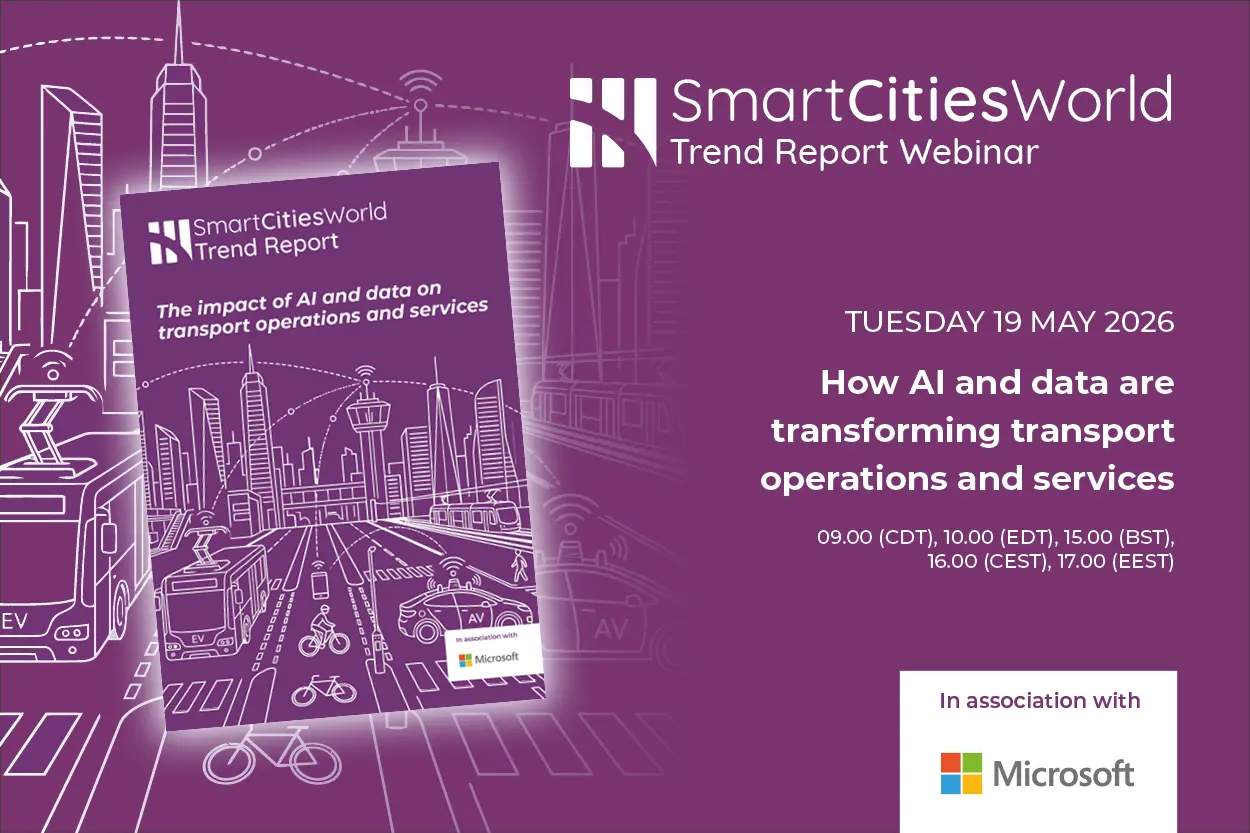
The Rise of AI-Driven Transport Operations
The integration of artificial intelligence (AI) and data analytics into urban transport systems is no longer a futuristic concept—it is a present-day reality reshaping how cities move people and goods. From predictive maintenance of fleets to real-time traffic optimization, AI is enabling transport agencies to operate smarter, more efficiently, and with greater resilience. This transformation was a central theme at the SmartCitiesWorld Summit 2026, where industry leaders, policymakers, and technologists converged to discuss the opportunities and challenges of AI in urban mobility.
Transport agencies across the globe are turning to AI to improve services, but as Microsoft’s Katherine Flesh noted during the summit, the greatest opportunities will depend on strong data foundations, workforce readiness, and responsible governance. Without these pillars, even the most sophisticated AI models risk falling short of their potential. This article explores the key insights from the summit and examines how cities are leveraging AI and data to transform transport operations.
Data Foundations: The Bedrock of AI in Transport
Before AI can deliver meaningful outcomes, transport agencies must establish robust data infrastructures. This involves collecting, cleaning, and integrating data from diverse sources—traffic cameras, GPS sensors, ticketing systems, weather feeds, and even social media. The goal is to create a unified data platform that provides a single source of truth for decision-making. At the summit, Sunderland’s experience was highlighted: the city has repositioned itself as a leading smart city by investing in digital infrastructure and low-carbon innovation. Its data groundwork, particularly in preparing for AI, was showcased as a model for other cities. Sunderland’s approach emphasizes interoperability and open standards, ensuring that data can flow seamlessly between different departments and systems.
Data quality is equally critical. Inaccurate or incomplete data can lead to flawed AI predictions, undermining trust and adoption. Agencies must implement rigorous data governance frameworks, including data validation, version control, and audit trails. This is especially important in transport, where decisions can have safety implications. For instance, AI used to predict equipment failures must be trained on high-quality historical maintenance records to avoid false alarms or missed failures.
Digital Twins: Virtual Replicas for Real-World Impact
One of the most promising applications of AI in transport is the use of digital twins—virtual replicas of physical assets, systems, or networks that can be simulated, analyzed, and optimized. A panel discussion at the summit, titled “Operating smarter: using digital twins and AI to reshape urban infrastructure management,” delved into how cities are leveraging this technology. Digital twins allow transport agencies to model traffic flows, test the impact of new infrastructure, and predict the outcomes of policy changes without disrupting real operations.
Dublin, for example, has been innovating to improve experiences and services for its communities, including digital twin projects, traffic reduction, and economic growth. The city’s digital twin of its transport network enables planners to visualize congestion hotspots, simulate the effects of road closures, and optimize public transit routes. Similarly, other cities are using digital twins for predictive maintenance of bridges, tunnels, and signaling systems. By feeding real-time sensor data into the twin, agencies can detect anomalies early and schedule repairs before failures occur, reducing downtime and costs.
The scalability of digital twins is increasing as cloud computing and edge AI become more affordable. However, challenges remain, particularly in securing these systems against cyber threats. As highlighted in the “Cities Thriving on Lighting” episodes, smart streetlight networks—often the backbone of urban IoT—present cybersecurity risks that must be addressed. Digital twins, which centralize data from many sensors, become attractive targets for attackers. Hence, responsible governance includes robust cybersecurity measures.
Predictive Maintenance and Operational Efficiency
AI’s ability to analyze historical and real-time data makes it ideal for predictive maintenance. Transport agencies can use machine learning models to forecast when components—such as train wheels, bus engines, or escalator motors—are likely to fail. This shifts maintenance from reactive (fix after breakdown) to proactive (repair before failure), minimizing service disruptions and extending asset life. At the summit, it was noted that transport agencies are increasingly adopting AI-powered condition monitoring systems that continuously analyze vibration, temperature, and acoustic data from critical assets.
For example, a public transit authority might deploy sensors on its bus fleet to monitor engine health. AI models trained on past failure data can issue alerts when certain patterns emerge, allowing mechanics to intervene during scheduled downtime. This not only improves fleet reliability but also reduces maintenance costs by avoiding emergency repairs. The same approach applies to rail networks, where predictive maintenance can prevent signal failures and track defects.
Beyond maintenance, AI optimizes operational efficiency in areas like route planning and scheduling. Dynamic scheduling algorithms can adjust bus and train frequencies in real time based on passenger demand, weather conditions, and traffic congestion. This improves service quality while reducing energy consumption. Some cities are even exploring AI-driven autonomous shuttles for last-mile connectivity, though full autonomy remains a regulatory and technical challenge.
Traffic Management and Real-Time Optimization
AI is revolutionizing traffic management by enabling real-time adaptation to changing conditions. Traditional traffic signals operate on fixed timings, but AI-powered systems use data from cameras, radar, and connected vehicles to adjust signal phases dynamically. This reduces congestion, travel times, and emissions. At the summit, experts discussed how cities are integrating AI with intelligent transportation systems (ITS) to create adaptive traffic control networks.
For instance, a city might deploy an AI platform that detects incidents—accidents, road closures, special events—and automatically reroutes traffic, adjusts signal timings, and provides real-time alerts to drivers via apps. This requires integration with multiple data sources and communication channels. The panel on energy systems also touched on how renewables, flexibility, storage, and smarter networks are being shaped by local authorities. Transport electrification adds another layer of complexity, as the grid must handle the variable demand from charging stations. AI helps optimize the charging schedule to balance load and use renewable energy when available.
Another key trend is the use of AI for predictive analytics in travel demand management. By analyzing historical patterns, weather forecasts, and event schedules, AI can forecast travel demand days or hours ahead, allowing agencies to deploy additional capacity proactively. This is especially useful for major events like concerts or sports games, where temporary spikes in demand can overwhelm the system.
Workforce Readiness and Responsible Governance
As Katherine Flesh emphasized, strong data foundations alone are not enough—workforce readiness and responsible governance are equally critical. Transport agencies must invest in training their staff to work alongside AI systems. This includes upskilling engineers, data scientists, and operations managers to interpret AI outputs, validate models, and intervene when necessary. A successful AI deployment requires a cultural shift toward data-driven decision-making, which can be challenging in organizations accustomed to traditional methods.
Responsible governance involves establishing ethical guidelines for AI use, ensuring transparency, and avoiding bias. In transport, biased AI could lead to unequal service provision—for example, prioritizing traffic light changes in wealthier neighborhoods. Agencies must audit their models for fairness and involve community stakeholders in the design process. Additionally, data privacy must be protected, especially when collecting location data from individuals. Anonymization and secure data handling practices are essential.
The summit also highlighted the role of strategic procurement, as argued by Sam Markey of Recurve. Cities can use procurement as a tool to build resilience, local capacity, and long-term climate impact. By specifying AI systems that are interoperable and scalable, cities avoid vendor lock-in and ensure that future advancements can be integrated. Climate finance and resilient infrastructure were also discussed, reinforcing the idea that AI in transport must align with broader sustainability goals.
Case Studies: Sunderland and Dublin Lead the Way
Two city profiles presented at the summit illustrate the practical implementation of AI and data in transport. Sunderland is repositioning itself as a leading smart city by leveraging digital infrastructure and low-carbon innovation. Its transport initiatives include AI-powered traffic management, electric bus fleets, and a data platform that shares information across departments. The city’s focus on data groundwork has been instrumental in preparing for AI adoption, and its experience offers valuable lessons for others.
Dublin, meanwhile, is innovating to improve experiences and services for its communities. Its digital twin projects enable the city to model scenarios like the impact of a new cycle lane or the congestion effects of a construction project. Dublin has also deployed AI to reduce traffic through adaptive signal control and to promote economic growth by optimizing public transit connectivity. Both cities demonstrate that success requires a holistic approach—combining technology, governance, and community engagement.
The Role of Climate and Energy in AI-Enabled Transport
Transport is a major contributor to greenhouse gas emissions, and AI can play a key role in decarbonizing the sector. The summit’s panel on energy systems discussed how local authorities can shape energy systems through renewables, flexibility, storage, and smarter networks. In transport, this translates to using AI to manage electric vehicle (EV) charging infrastructure, optimize the use of renewable energy, and reduce overall energy consumption. For example, AI can predict when solar or wind energy will be abundant and schedule EV charging accordingly, reducing strain on the grid and lowering costs.
Another area is the integration of mobility-as-a-service (MaaS) platforms, which combine multiple transport modes—public transit, ride-sharing, bike-sharing, and car-sharing—into a single app. AI algorithms can recommend the most efficient and sustainable routes, taking into account real-time traffic and emissions data. This encourages users to choose greener options, further reducing the carbon footprint of urban transport.
Cybersecurity remains a concern, as evidenced by the “Cities Thriving on Lighting” series. Smart streetlights, often part of transport infrastructure, are increasingly connected and vulnerable to attacks. A breach could disrupt traffic control or compromise data privacy. Hence, responsible governance includes investing in cybersecurity measures, such as encryption, network segmentation, and regular security updates.
Looking ahead, the SmartCitiesWorld Summit 2026 demonstrated that the future of cities will be defined by the ability to connect people, data, infrastructure, and investment into coherent, place-based strategies. AI and data are not ends in themselves but tools to achieve broader objectives: efficiency, sustainability, equity, and resilience. As transport agencies continue to adopt AI, they must prioritize strong foundations, workforce development, and ethical oversight. The journey is complex, but the benefits—reduced congestion, lower emissions, improved safety, and better service—are well worth the effort.
Source: Smart Cities World News