

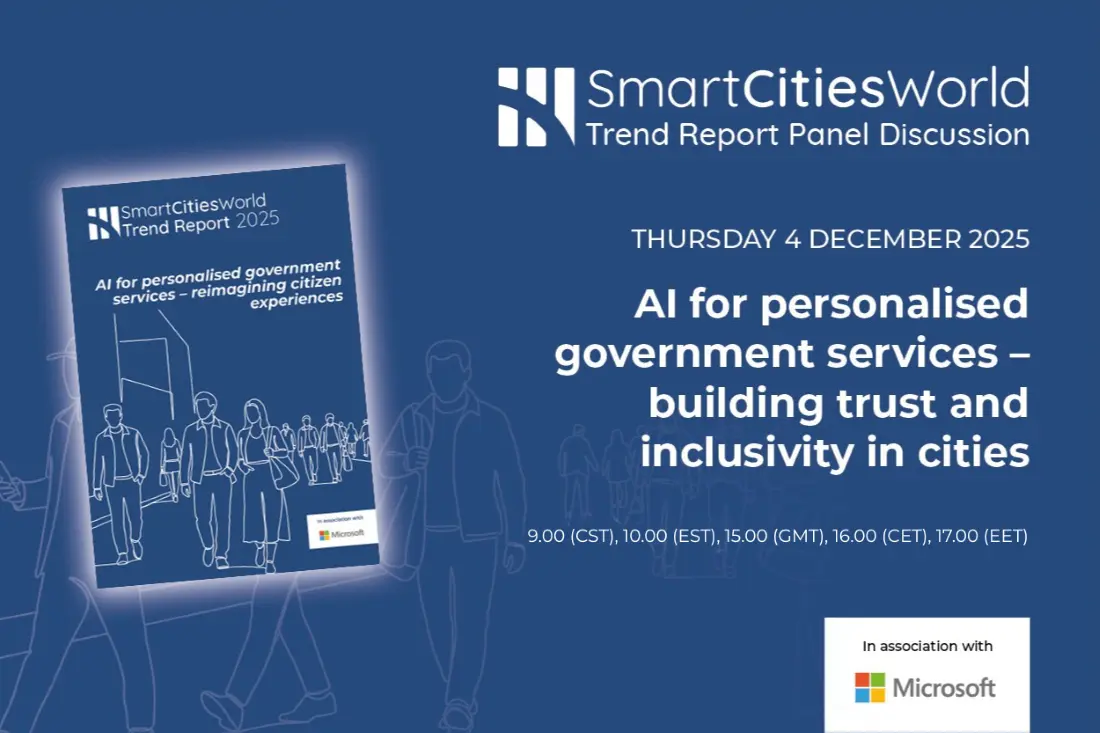
The rapid evolution of artificial intelligence and digital twin technology is reshaping how cities operate, plan, and engage with their citizens. From personalised government services to resilient infrastructure, the convergence of data, edge computing, and AI promises to build more inclusive and trustworthy urban environments. This article extracts key facts and insights from a series of recent discussions, reports, and city profiles that illustrate the current state and future direction of smart city innovation.
Digital Twins and AI as the Intelligent Operating Layer for Cities
Digital twins — virtual replicas of physical assets — are increasingly becoming the intelligent operating layer for urban management. By simulating real-world conditions in real time, cities can test scenarios, optimize resource allocation, and improve resilience. AI enhances these models by analyzing vast datasets from sensors, traffic cameras, and IoT devices to predict outcomes such as energy demand, traffic congestion, or infrastructure failure. This approach has been demonstrated in numerous pilot projects worldwide, where digital twins of entire districts enable proactive maintenance and emergency response planning.
Key facts from panel discussions reveal that cities adopting AI-powered digital twins see improvements in efficiency (often 15-30% reduction in operational costs), resilience (faster recovery from disruptions), and sustainability (lower carbon emissions through optimized energy use). The technology also supports personalised government services — for example, by tailoring public transport schedules or waste collection routes based on real-time citizen behavior patterns. However, building trust requires transparency in how data is collected, used, and protected.
Hybrid Edge and Cloud Computing for Real-Time Decisions
A regional smart city consortium in Greater Phoenix has been exploring how hybrid architectures combining edge and cloud computing can transform urban services. The core insight is that certain applications — such as traffic light control, air quality monitoring, or emergency alerts — require near-instantaneous processing that cloud-only solutions cannot provide due to latency. Edge computing processes data locally on devices or nearby servers, while the cloud handles long-term analytics and machine learning model training.
Key facts include that hybrid approaches reduce network bandwidth usage by up to 50% and lower response times from seconds to milliseconds. For example, a smart traffic system using edge AI can adjust signal timings based on live vehicle detection without sending data to a central cloud. This not only improves traffic flow but also enhances privacy by keeping sensitive data local. The consortium emphasized that cybersecurity must be embedded from the start, as edge devices become potential attack vectors.
Data and AI in Urban Transport Networks
Transport networks are among the most data-rich urban systems, and cities are leveraging AI to improve both planning and day-to-day operations. Intelligent transport systems use machine learning to predict travel demand, optimize route planning for public transit, and manage real-time disruptions. Passengers benefit from personalised arrival times, seamless multimodal journeys, and better information during service interruptions.
A recent deep dive into this topic highlighted several key facts: cities using AI in transport have seen up to 20% reduction in commute times and 15% decrease in emissions from smoother traffic flows. Data from ticketing systems, GPS, and social media feeds are combined to create demand models that help planners decide where to add bus lanes or bike-sharing stations. Importantly, the insights stress that community outcomes — such as equitable access to transport for low-income neighborhoods — must be a primary metric, not just efficiency.
City Profile: Sunderland’s Digital Transformation
Sunderland, UK, is repositioning itself as a leading smart city through strategic investments in digital infrastructure and low-carbon innovation. The city’s profile reveals a comprehensive approach that includes a city-wide fiber network, a digital twin platform for urban planning, and a focus on green technologies like solar-powered IoT sensors. Sunderland’s goal is to build a resilient, future-focused economy that attracts businesses and improves quality of life for residents.
Key facts from the profile: the city has deployed over 50 smart parking sensors, 100 air quality monitors, and a digital energy grid that optimizes renewable energy use. These systems are integrated through a common data platform that enables cross-departmental collaboration. Sunderland also launched a innovation hub that supports startups in developing smart city solutions, particularly around low-carbon housing and circular economy practices. The city’s leadership stresses that inclusivity is built through public engagement — residents were consulted on data privacy policies and service design.
City Profile: Dublin’s Innovation in Services and Growth
Dublin, Ireland, is innovating to improve experiences and services for its communities through a mix of digital twin projects, traffic reduction initiatives, and economic growth strategies. The city’s profile showcases how it uses digital twins to simulate flooding scenarios, optimize waste collection routes, and plan new building developments. These virtual models are fed by real-time data from over 200 sensors across the city.
Key facts: Dublin’s traffic reduction program, enabled by AI-powered traffic management, has cut average journey times by 12% during peak hours. The city has also deployed smart lighting that dims in response to low activity, saving 30% in energy costs. Economic growth is supported by a digital innovation district where tech companies collaborate with city hall on pilot projects. Dublin emphasizes that building trust requires clear communication about how AI decisions affect citizens — for example, why a particular street might be closed for construction based on simulation outputs.
Smart Lighting and the Cybersecurity Challenge
Smart lighting networks are becoming foundational infrastructure for smart cities, offering not just energy savings but also a platform for sensors and connectivity. A two-episode series on cities thriving on lighting delved into how cities are turning streetlight networks into secure, interoperable, and future-proof assets. The first episode covered the technology considerations: selecting open standards, ensuring interoperability with existing city systems, and planning for future upgrades. The second episode focused on cybersecurity risks, as connected lighting systems can be entry points for attacks on larger urban networks.
Key facts include that smart lighting can reduce energy consumption by 50-70% and serve as backbone for 5G small cells, environmental sensors, and public Wi-Fi. However, many cities neglect security during procurement, leaving doors open for ransomware or data breaches. The discussions emphasized that cybersecurity must be a continuous process, including firmware updates, network segmentation, and collaboration with national cybersecurity agencies. Cities that have implemented robust security frameworks have seen fewer incidents and higher public trust.
UN Virtual Worlds Day: AI, Spatial Intelligence, and the Citiverse
The United Nations hosted a Virtual Worlds Day event exploring how AI, spatial intelligence, and the emerging Citiverse ecosystem — virtual spaces integrated with real-world city data — can be turned into trusted, people-centred outcomes. The discussions highlighted that while the technology holds promise for immersive civic engagement, disaster simulation, and virtual tourism, its success depends on ethical design, inclusion, and sustainability.
Key facts: The event brought together technologists, urban planners, and policy makers to define principles for responsible virtual world development. A core message was that the Citiverse must avoid replicating real-world inequalities — for example, ensuring that low-income residents have access to virtual services through public terminals or low-cost devices. The UN is calling for global standards on data sovereignty and interoperability, so that a city’s digital twin can interact seamlessly with another country’s smart city platform without compromising privacy.
Smart Sensor Networks for Indoor Safety
Beyond outdoor environments, smart sensor networks are being deployed indoors to improve safety and well-being in buildings. These systems use a combination of temperature, humidity, motion, air quality, and acoustic sensors to detect risks early — such as gas leaks, fire hazards, or unauthorized access. AI analyzes the sensor data to provide situational awareness and trigger automated responses like closing ventilation dampers or alerting security.
Key facts: Early detection can reduce property damage by up to 40% and prevent injuries. Moreover, indoor sensor networks support healthier environments by monitoring CO2 levels and adjusting HVAC systems accordingly, which can boost productivity by 10-15%. The technology is particularly relevant for schools, hospitals, and government offices where occupant safety is paramount. Privacy concerns are addressed by anonymizing data and processing locally on edge devices rather than in the cloud.
OnDemand Panel Discussion and Webinar Resources
For professionals seeking deeper insights, two on-demand resources are available: a panel discussion titled “Digital twins and AI as the intelligent operating layer for cities” and a webinar on “Getting your data strategy right for smarter sites and safer operations.” These sessions bring together industry practitioners to share case studies, lessons learned, and best practices. The panel discussion emphasizes how digital twins are no longer just for engineers — they are becoming tools for city managers, communication teams, and even citizens. The webinar focuses on data quality, governance, and integration across different silos within a city administration.
Key facts from these resources: cities that have implemented a unified data strategy see a 25% increase in the ROI of smart city projects. However, many still struggle with legacy systems and fragmented data ownership. The resources recommend starting with a small pilot project that addresses a visible pain point, such as pothole detection or litter monitoring, and expanding from there. Stakeholder buy-in from both technical and political sides is critical for scaling.
Editorial Newsletter: Stay Informed
To keep up with the latest developments in smart cities, many professionals subscribe to editorial newsletters that curate top stories, city interviews, special reports, and guest opinions. A daily or weekly email can provide a snapshot of new projects, policy changes, and technological breakthroughs. These newsletters often include exclusive content such as case studies from leading smart cities and analysis from industry experts. Subscribing is a simple way to ensure you don’t miss critical insights that can inform your own city’s digital transformation journey.
Source: Smart Cities World News