

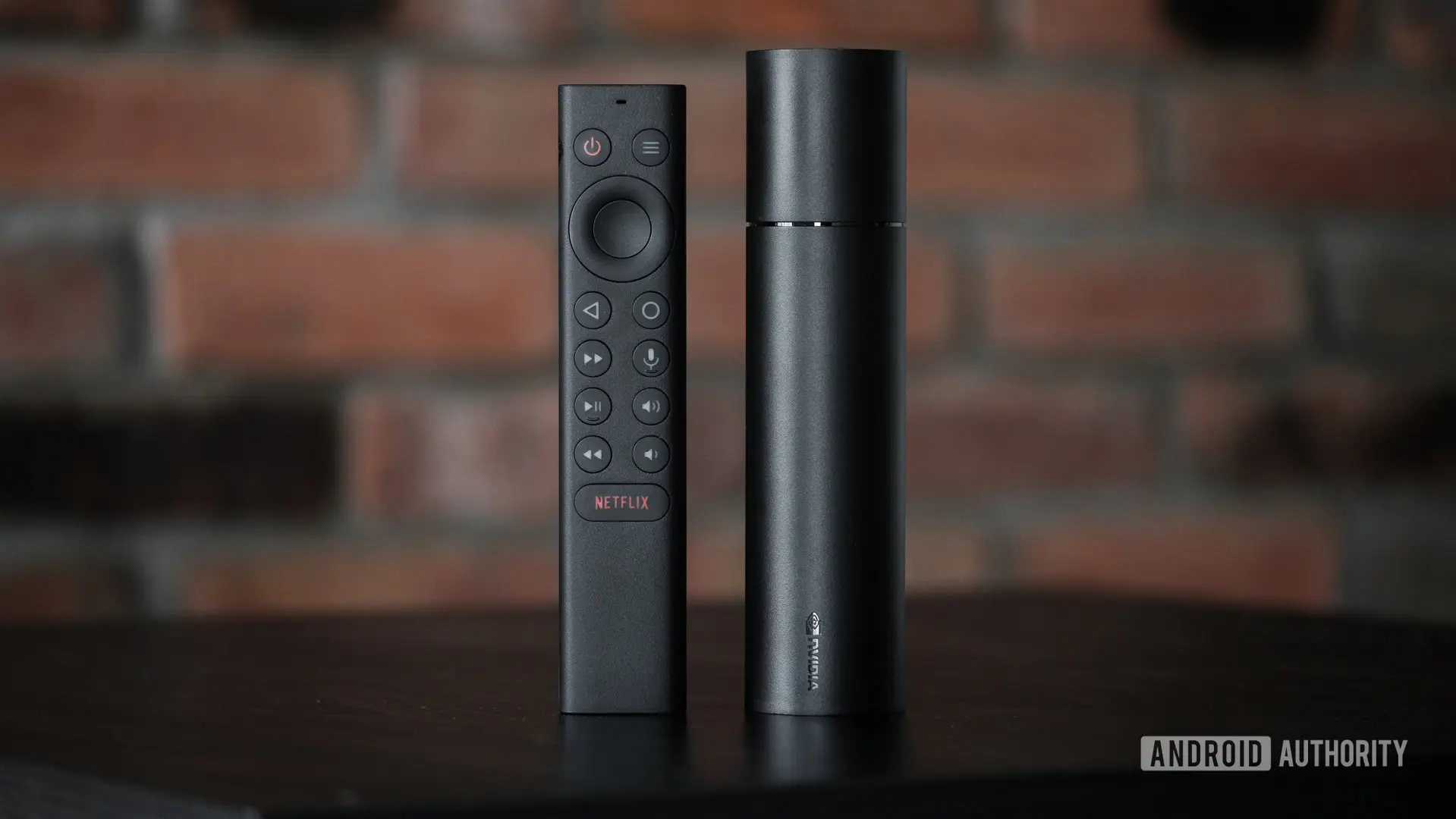
NVIDIA has finally broken its silence on the strange disappearance of the Shield TV base model from store shelves. In a statement sent to Android Authority, the company acknowledged that the $149 streaming device is "largely out of stock due to demand" but declined to offer any concrete information about future availability.
The statement reads: "The SHIELD TV base model is largely out of stock due to demand. We don’t have any updates to share regarding future availability at this time. SHIELD TV Pro remains available, and the SHIELD platform continues to be supported with ongoing updates for more than 10 years."
This careful wording does not explicitly say that NVIDIA is discontinuing the base Shield TV, but it equally fails to provide any reassurance that the device will ever return. The combination of widespread stockouts, suddenly reduced prices for the Shield Remote, and the company's emphasis on the remaining Shield TV Pro suggests that the base model may indeed be on its way out.
A brief history of the NVIDIA Shield TV
Introduced in 2015, the NVIDIA Shield TV line has been a mainstay in the Android TV ecosystem for nearly a decade. The original Shield TV and its updated 2017 and 2019 versions set a high bar for performance, offering Tegra X1 processors, 4K HDR playback, AI upscaling, and support for GeForce NOW cloud gaming. The 2019 refresh split the lineup into two variants: the cylindrical $149 Shield TV (remote included) and the rectangular $199 Shield TV Pro, which added a USB port and more RAM. Despite its age, the hardware has remained relevant thanks to NVIDIA's regular firmware updates and new features, such as support for Dolby Vision and Atmos.
The Shield TV's longevity is a key selling point. While many competing media players become obsolete after a few years, NVIDIA has promised over a decade of updates for the Shield platform. That commitment, combined with exceptional performance, has kept the device in high demand among both casual users and enthusiasts. However, the base model, despite being the more affordable option, never outsold the Pro in the way NVIDIA might have hoped, partly because the price difference was only $50, and the Pro offered more expandability and storage.
Reasons for the stock shortage
Industry analysts and commenters have offered several theories for why the base Shield TV has vanished. The most widely discussed is the rising cost of memory components. Like many consumer electronics, the Shield TV uses DRAM and NAND flash memory, both of which have seen price volatility due to supply chain constraints and increased demand from other sectors (automotive, AI, data centers). As the base model already had a slim margin, further cost increases might make it unprofitable to produce.
Another possibility is that NVIDIA is simply streamlining its product portfolio. The Shield TV Pro and the base model share the same processor, but the Pro has a fan, more RAM (3GB vs 2GB), and a USB port for external storage and peripherals. Enthusiasts often recommend the Pro, and the base model may have been seen as redundant. If NVIDIA can consolidate resources on one SKU, it reduces manufacturing complexity and support costs.
Some consumers have also pointed to NVIDIA's focus on its GeForce NOW cloud gaming service. The Shield TV line doubles as a client for GeForce NOW, and the base model, lacking USB, cannot easily connect a wired controller or keyboard without a hub. The Pro, with its USB port, offers a better gaming experience. As cloud gaming becomes more central to NVIDIA's strategy, it makes sense to prioritize the Pro.
However, NVIDIA's official explanation—demand exceeding supply—cannot be dismissed. The Shield TV still enjoys a loyal following, and during the pandemic, streaming device sales surged. If NVIDIA allocated chip allocations to other products (like RTX 30 series GPUs for PC and laptops), the Shield TV base model might have fallen by the wayside.
What this means for consumers
If you have been waiting to buy the Shield TV base model, the news is not encouraging. NVIDIA has not provided a restock date, and the silence hints that there may be none. Those who want a new Shield device can still purchase the Shield TV Pro for $199, which is widely available at major retailers like Amazon, Best Buy, and Walmart. The Pro offers essentially the same streaming performance but adds a USB port for expandable storage or connecting peripherals. It also includes a remote and comes in a rectangular form factor.
For buyers on a strict budget, the cheapest option might be to look for third-party sellers offering the base model at inflated prices or to consider other Android TV devices like the $49 Chromecast with Google TV or the $129 Apple TV 4K (though the latter runs tvOS, not Android TV). The Fire TV Stick 4K Max ($55) is another alternative, but it lacks the gaming performance and update longevity of the Shield.
It's also worth noting that NVIDIA continues to support the existing Shield TV base model with software updates. Owners of the base model need not worry about losing features; NVIDIA has confirmed ongoing support for over ten years. The only issue is for potential new buyers who cannot find the device in stock.
Competition and market context
The streaming device market has become increasingly crowded. Google's Chromecast with Google TV offers a simplified interface and voice control at a fraction of the price. Amazon's Fire TV lineup is aggressively priced and deeply integrated with Alexa. Apple TV 4K provides the smoothest experience within the Apple ecosystem. Roku dominates the lower end with its straightforward interface.
Yet none of these devices match the Shield TV's raw performance and gaming capabilities. The Shield TV is the only consumer streaming box that can play AAA games via GeForce NOW or Moonlight, and its AI upscaling is unmatched. For home theater enthusiasts, the Shield TV Pro remains the gold standard for local playback of high-bitrate files, thanks to its support for Dolby Vision and lossless audio codecs like DTS-HD and Dolby TrueHD.
The disappearance of the base model may not affect that niche significantly, but it does remove the entry-level price point for the brand. A $149 device that delivered near-Pro performance was an attractive proposition for many. Without it, the Shield TV Pro at $199 becomes the baseline, which might push some buyers toward cheaper alternatives.
Future prospects for the Shield platform
NVIDIA has not announced a next-generation Shield TV. The current hardware, while aged, remains capable, but there are signs that a successor may be in development. Leaks of a new NVIDIA SoC (T239, also known as the chip for the Nintendo Switch 2) have sparked rumors of a Shield TV Pro 2. Such a device could support Wi-Fi 6, HDMI 2.1, faster AI upscaling, and improved gaming performance. However, NVIDIA has not confirmed anything.
In the meantime, the existing Shield TV Pro continues to get updates. Android 12 is available for the Shield TV line, and Android 13 is on the horizon. NVIDIA's commitment to software longevity is rare in the Android ecosystem, where most phones get only two or three major updates. That advantage makes the Shield TV Pro a solid investment even if the hardware is from 2019.
For those who can find the base model on eBay or another secondhand marketplace, it can still be a good deal, especially if purchased at a discount from the original $149 price. But the uncertainty surrounding official availability means that the path forward for NVIDIA's affordable Android TV device is unclear. The company appears to be betting on the Pro model and, perhaps, a future update that could bring a unified device to replace both the base and Pro.
Source: Android Authority News