

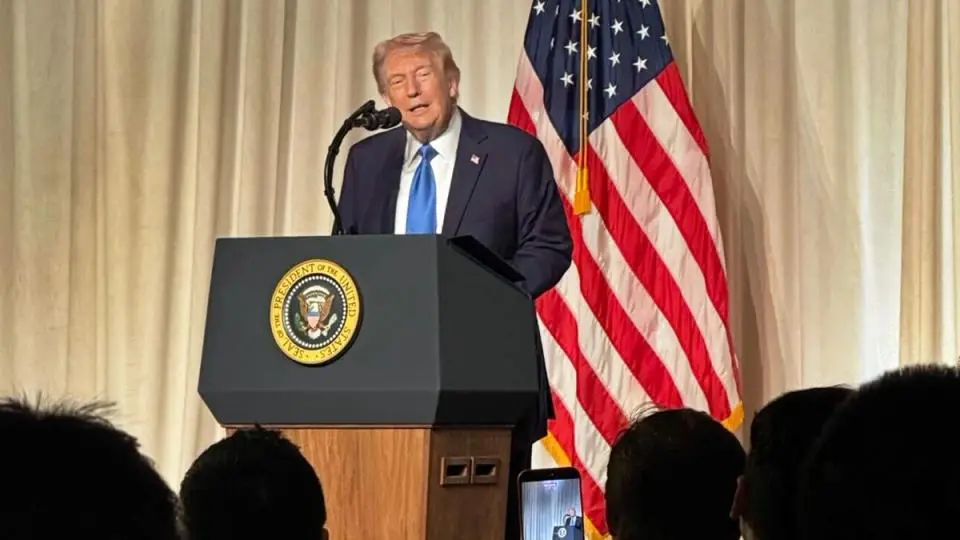
The final day of the second quarter proved to be a challenging one for cryptocurrency markets, with bitcoin dropping to $58,350—a level not seen since September 2024. The decline of roughly 3% on the day pushed bitcoin's quarterly performance to nearly -15%, marking its third consecutive negative quarter. Meanwhile, a newly released financial disclosure revealed that U.S. President Donald Trump earned over $1 billion from crypto-related activities last year, including $635 million in royalties from his memecoin business and more than $500 million from token sales tied to World Liberty Financial. Trump also disclosed holdings of at least $100 million in bitcoin and ether.
Trump's Crypto Empire and Market Signals
The disclosure underscores the growing entanglement between high-profile political figures and digital assets. Trump's earnings, drawn from licensing deals and token offerings, highlight how the memecoin craze and tokenization of political brands can generate massive revenue. At the same time, the broader crypto market continued to struggle. Bitcoin briefly flirted with sub-$58,000 territory, while ether (ETH), XRP, and solana (SOL) all suffered similar losses. XRP hovered near $1.03, within striking distance of falling below $1 for the first time since November 2024. The trend extended to crypto stocks: Coinbase (COIN) fell 4%, Galaxy (GLXY) dropped nearly 5%, and Strategy (MSTR) lost almost 7%, reversing a brief relief rally from the previous day. Strategy's preferred shares also declined across the board.
Institutional Demand Weakens
One of the most telling indicators of waning U.S. appetite for bitcoin was the Coinbase Bitcoin Premium Index, which fell 15% over 24 hours to -110. The metric has remained in negative territory since the end of April, signaling persistent selling pressure from U.S. investors. This index measures the price difference between bitcoin on Coinbase and the global average, often reflecting institutional and retail flow dynamics. Spot bitcoin ETFs also saw net outflows of $231 million on Monday, with BlackRock's IBIT accounting for $300 million of those outflows, partially offset by inflows into ARKB and GBTC. The lack of new buyers was echoed by market maker Wintermute, which noted that sentiment had washed out but buying pressure remained absent. “The market has never really bottomed in summer,” said Wintermute’s Jasper De Maere, suggesting further pain into September or October unless macroeconomic conditions shift.
Stablecoin Competition Heats Up
Circle (CRCL), the issuer of USDC, saw its shares tumble as much as 13% in midday trading after a consortium of over 140 companies—including Stripe, Coinbase, Mastercard, Visa, BlackRock, Google, and Cloudflare—unveiled a new stablecoin called Open USD. Unlike most existing stablecoins, Open USD allows participating businesses to keep the interest earned on reserves, less a small management fee, while eliminating minting and redemption fees. This model directly challenges one of Circle's key competitive advantages: earning interest on the U.S. Treasury reserves backing USDC. Circle CEO Jeremy Allaire downplayed the threat, welcoming “continued innovation and competition.” Despite the pushback, the market clearly saw the new entrant as a significant risk, as Circle shares sank further in the afternoon.
Gold and Crypto in Tandem Slump
The weakness extended beyond digital assets. Gold headed for its worst quarter in 13 years, falling around 13% in Q2 and dropping nearly 30% from its all-time high of $5,600 in January. The precious metal now trades near $4,000. A stronger U.S. dollar and expectations of higher interest rates have weighed on both gold and bitcoin. Meanwhile, U.S. stock indices like the Nasdaq and S&P 500 posted strong quarterly gains—up about 20% and 15% respectively—driven by a surge in AI-related stocks. This divergence underscored a rotation of capital away from safe havens and into technology, with the AI trade competing for liquidity that might have otherwise flowed into crypto.
Mining Sector Pivots to AI
The trend of bitcoin miners transitioning to artificial intelligence infrastructure continued, as Ionic Digital raised $400 million ahead of a planned Nasdaq listing. The company reported that AI and high-performance computing leasing generated $44 million in Q1 revenue, far exceeding the $7.4 million from bitcoin mining. Ionic repurposed its flagship Texas site for AI workloads, echoing moves by other miners like Coreweave, in which Trump disclosed a stake. This shift reflects the growing profitability of AI infrastructure over energy-intensive mining operations, especially amid bitcoin's price stagnation.
Tokenization and Exchange-Traded Products
One bright spot in the otherwise gloomy market was tokenization. Figure (FIGR), a blockchain firm focusing on home equity lines of credit, jumped 11%, while Cantor Equity Partners II (CEPT) added 2.5% to a 20% gain from the previous day ahead of its merger with tokenization platform Securitize. Meanwhile, Hyperliquid Strategies (PURR) was added to the Russell 3000 and Russell 2000 indexes, reflecting growing institutional acceptance of token-focused treasury companies. The token HYPE rose 3.4% on the week, bucking the broader downtrend. Exchange-traded funds offering HYPE exposure saw $164 million in inflows in June, in stark contrast to the $4.29 billion outflow from spot bitcoin ETFs.
Central Bank Policy and Dollar Strength
Robin Brooks, a senior fellow at the Brookings Institution, argued that the U.S. dollar has reached peak strength. The dollar index has risen to over 101.30 since the Iran peace deal announcement, contrary to expectations of a decline. Brooks noted that speculative positioning is max long the dollar, suggesting a potential reversal. A weaker dollar could provide a floor for both bitcoin and gold, especially if upcoming jobs data disappoints. The market's next test will come with Thursday's U.S. jobs report, which could either reinforce hawkish expectations or trigger a rally in alternative assets.
Ethereum and Layer 2 Developments
On the technology front, Ethereum's institutional adoption efforts gained momentum with the launch of a new nonprofit focused on institutional use cases. The Ethereum Foundation also released a policy guide outlining potential government and institutional applications. These moves aim to broaden Ethereum's appeal beyond retail speculation. Meanwhile, Taiko fully restored its cross-chain bridge just ten days after a $1.7 million hack, demonstrating resilience in decentralized infrastructure. Solana launched onchain governance with a 100,000 SOL staking entry fee, a step toward more formalized network decision-making.
Regulatory and Market Sentiment
The FBI Director Kash Patel faced scrutiny for failing to disclose a six-figure investment in Strategy (MSTR), highlighting ongoing conflicts of interest in public office. This comes as regulatory clarity around cryptocurrencies remains a key factor for institutional participation. Despite the selloff, some market participants pointed to accumulation by long-term holders returning, as on-chain data suggested renewed buying from wallets with a longer time horizon. Yet with no major catalysts on the horizon, the near-term outlook remained cautious. As one analyst put it, “The market has never really bottomed in summer,” suggesting that the pain may continue into the fall.
In the final hours of trading, bitcoin oscillated near $58,800, with the broader CoinDesk 20 index reflecting similar declines. The day ended with a mix of relief and resignation—a fitting close to a quarter where the crypto sector struggled to find its footing amid competing narratives of memecoins, AI-driven capital rotation, and macroeconomic headwinds. The stage is now set for the second half of the year, with all eyes on whether the bulls can find a catalyst strong enough to reverse the downward trend.
Source: Coindesk News