

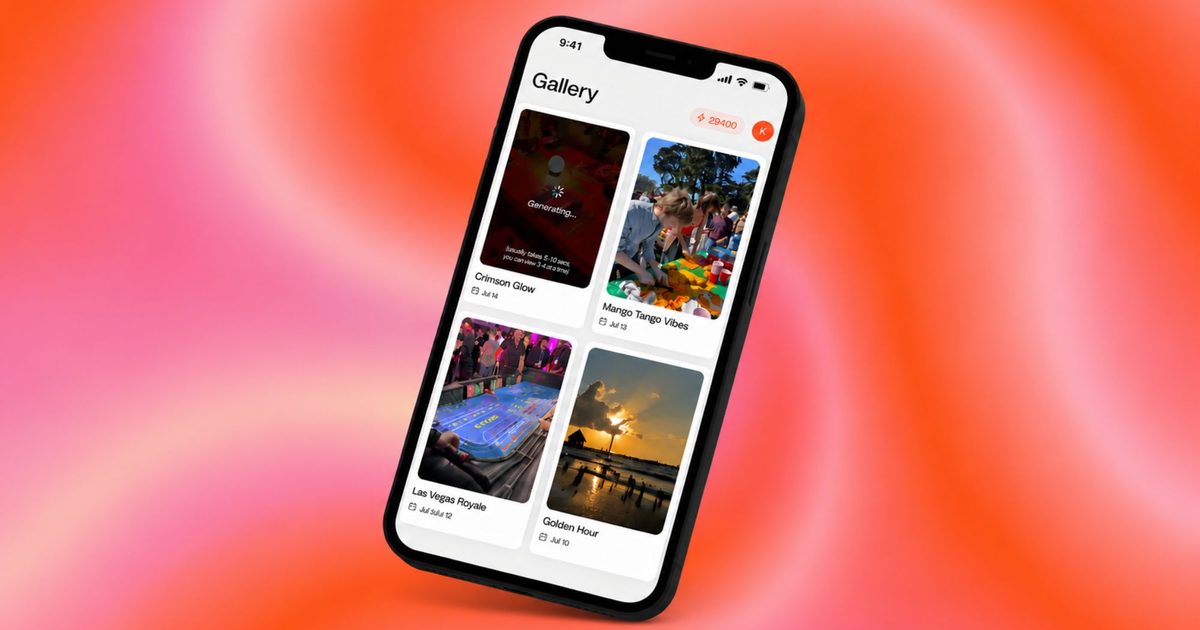
Your camera roll is probably packed with vacation photos, birthday videos, and random clips that never make it to Instagram or TikTok. If video editing has kept you from posting more on social media, a new app wants to take that job off your plate entirely. Reelful is an iOS app that uses AI to automatically turn your existing photos and videos into polished, ready-to-post reels for TikTok and Instagram, removing the technical barriers that often prevent casual users from sharing their content.
How does Reelful turn your clips into polished social media videos?
You start by typing a prompt where you describe the story you want to tell, whether that is a travel recap, a product demo, or an event highlight. Next, you record a 30-second voice sample so the app can create a voice clone to narrate your video. This voice cloning technology analyzes the cadence, tone, and inflection of your speech to generate a synthetic voice that sounds like you, adding a personal touch to the final reel. Then you simply select the photos and clips from your camera roll that you want included. Reelful takes over from there, planning the video, writing the script, adding your AI voiceover, and assembling the final cut complete with captions, music, and sound effects. The app can even animate still photos into short video clips, so a picture of someone holding a beer could turn into a brief moving clip of that same person taking a sip. Once your video is ready, you can keep refining it by chatting with the app to swap the music, tweak the script, or adjust other details. This conversational editing process makes iterative improvements accessible to users with no prior editing experience.
The underlying AI engine employs large language models for script generation and computer vision for scene detection and photo animation. The script is optimized for short-form social media, with hooks, pacing, and call-to-action elements that align with platform best practices. Music and sound effects are selected from a licensed library to avoid copyright issues. The entire process takes minutes, compared to the hours a manual edit would require using traditional software like Adobe Premiere Pro or DaVinci Resolve. Reelful also respects user privacy: the voice clone is created on-device, and the selected media is processed without permanent storage, according to the developer's privacy policy.
What does Reelful cost?
Reelful offers one-time credit purchases or monthly subscriptions, depending on how often you create content. Credit bundles start at five videos for $15, 15 videos for $43, or 33 videos for $90. This pay-per-video model suits infrequent creators who only need a few reels per month. Regular creators can choose the Creator plan at $25 a month for 10 videos or the Pro plan at $50 a month for 25 videos. Heavy users can opt for the Studio plan, which includes 60 videos a month for $100. These subscription tiers provide a per-video cost as low as around $1.67 for the Studio plan, undercutting professional editing services that can cost $50 to $150 per video. For comparison, other AI video apps like Clipchamp or Lumen5 charge around $19 to $79 per month for similar features but often require more manual input. Reelful's pricing is competitive, especially for individual content creators, small businesses, and social media influencers who lack the time or budget for professional editors.
The app is currently only available on iOS, with Android and web versions expected down the line. This iOS-first launch strategy is common for AI creative tools, as the iPhone's hardware and software ecosystem offer robust support for machine learning tasks. However, the eventual Android and web releases will broaden the user base significantly, given that Android holds over 70% global market share. Reelful's team has not announced specific release dates for these platforms, but beta testing for Android is rumored to begin in late 2025, with a stable release likely in early 2026. The web version may follow a similar timeline, allowing desktop users to upload media and receive reels without needing a mobile device.
The rise of AI-powered video editing tools like Reelful reflects a larger trend in content creation. Platforms like TikTok, Instagram Reels, and YouTube Shorts have made short-form video the dominant format for engagement. Yet, the barrier to entry remains high for many users who are not comfortable with complex editing software. Apps such as CapCut, InShot, and Adobe Premiere Rush have simplified mobile editing, but they still require manual timeline management and creative decisions. Reelful differentiates itself by removing that layer entirely: the AI makes the creative choices, from pacing to music to caption styling, based on the user's text prompt and voice sample. This is a paradigm shift from tool-based editing to intent-based creation, where the user focuses on the story and the AI executes the technical details.
Voice cloning technology, a key feature of Reelful, has seen rapid advancement in recent years. Companies like ElevenLabs, Respeecher, and Descript have popularized synthetic voices for narration and dubbing. Reelful's implementation is notable because it requires only a 30-second sample, far less than the minutes or hours needed by earlier systems. The voice clone can be reused across multiple videos, ensuring consistent narration without re-recording. However, concerns about voice cloning misuse—such as deepfake scams or unauthorized use—are valid. Reelful addresses these by requiring user authentication for each voice creation and by not storing the voice data permanently on its servers. Users retain control and can delete their voice profiles at any time.
Market adoption for such apps depends on user trust and the quality of output. Early reviews for Reelful on the App Store have been mixed: some praise the convenience and surprising creativity, while others note that the AI sometimes misinterprets the story or selects inappropriate music. The chat-based refinement feature mitigates this, allowing users to correct mistakes without starting over. Over time, the AI is expected to learn from user feedback and improve its recommendations. The app's developer, a small startup based in San Francisco, raised $4 million in seed funding in early 2025, indicating investor confidence in the AI content creation space.
In the broader context, Reelful competes with other AI-driven content tools like Peech, Descript, and Synthesia, but its focus on personal camera roll media and voice cloning gives it a unique value proposition. For personal users, it can turn a random collection of clips into a compelling travel diary or event recap. For small businesses, it can quickly produce product demos, testimonials, or behind-the-scenes content without a professional videographer. As social media algorithms increasingly favor video, tools that reduce friction for content creation will likely see sustained demand. The eventual expansion to Android and web will be critical for Reelful to scale beyond the iOS niche, especially in markets where Android dominates, such as Asia and Africa.
Ultimately, Reelful represents a new category of AI-assisted creativity where the user's role shifts from technician to director. Instead of worrying about cuts, transitions, or audio levels, users provide the raw material and a vision, and the AI assembles the final product. For anyone who has ever felt overwhelmed by video editing software or simply unable to find the time to post, Reelful offers a compelling shortcut—one that may well redefine how we think about creating and sharing video content in the age of AI.
Source: Digital Trends News