

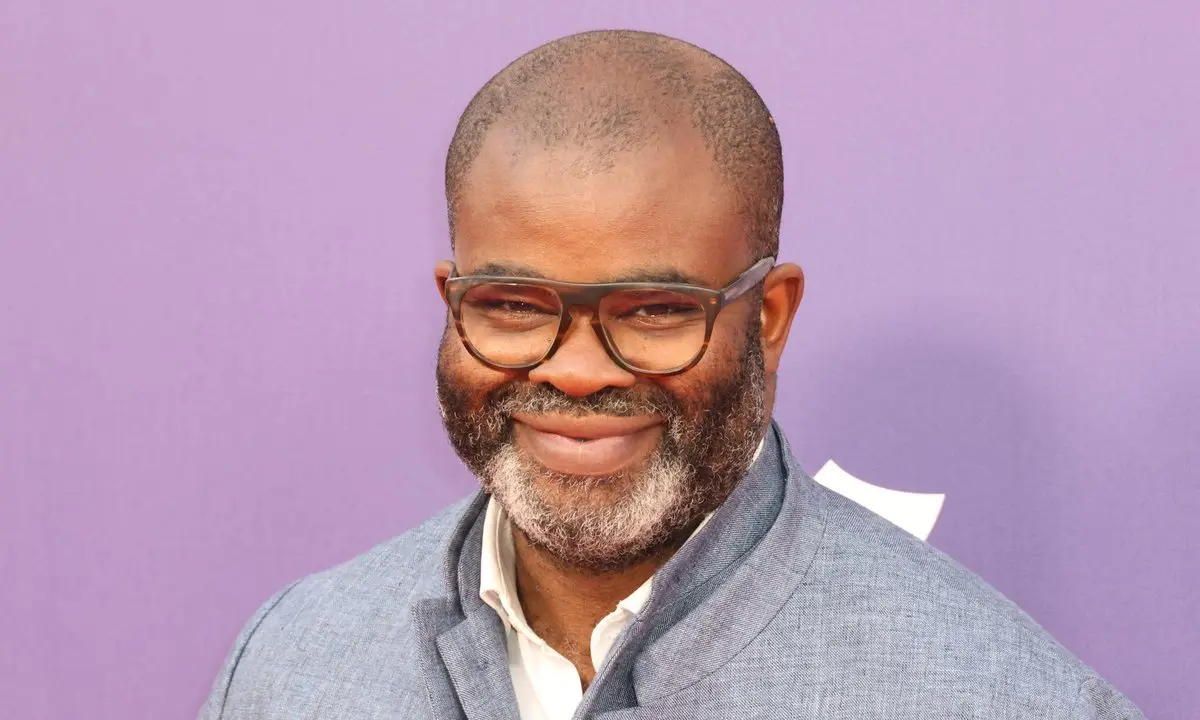
The Southbank Centre's chairman, Misan Harriman, has become the centre of a heated public debate after a series of articles in right-wing British newspapers accused him of making inflammatory statements about the Holocaust and the recent local elections. Now, a petition signed by prominent figures including climate activist Greta Thunberg and actor Hugh Bonneville is circulating in his defence, describing the coverage as a dishonest and coordinated smear campaign.
Harriman, a celebrated photographer who has captured portraits of figures ranging from the Duke and Duchess of Sussex to Naomi Campbell, has chaired the Southbank Centre since 2021. His tenure has been marked by efforts to diversify programming and reach new audiences, but recent weeks have seen him thrust into a political storm that threatens not only his reputation but the credibility of the institution he leads.
Origins of the controversy
The controversy began on 29 April 2026, when two Jewish men were stabbed in Golders Green, a predominantly Jewish area of north London. The same attacker had earlier stabbed a Muslim man. In the aftermath, independent MP Ayoub Khan posted a message on social media highlighting that the third victim—a Muslim man—had received far less media attention. Harriman shared Khan's post, adding his own comment that the disparity in coverage was concerning. This post was quickly seized upon by The Daily Telegraph, which published an article challenging Harriman's assertion that the Muslim stabbing had gone underreported. The Telegraph argued that the incident had been covered by multiple outlets, and suggested Harriman was promoting a false narrative.
The second flashpoint came on 7 May, the day after the UK local elections in which the right-wing populist Reform party made significant gains. Harriman posted a five-minute, forty-second video on Instagram in which he reflected on the results. In it, he recalled a conversation between authors Kurt Vonnegut and Susan Sontag about the Holocaust, in which Sontag reportedly said that roughly 10% of any population is cruel, 10% is merciful, and the remaining 80% can be swayed either way. Harriman applied this framework to contemporary politics, warning that the rise of Reform could normalise extremist views. He did not directly compare Reform voters to Nazis, nor did he equate the electoral success to the Holocaust itself.
Nevertheless, right-wing activists and politicians online quickly accused Harriman of doing exactly that. Within days, The Telegraph ran a story with the headline: "Southbank Centre chief 'compares Reform victory to Holocaust'." Other outlets including the Daily Mail and Daily Express followed suit, amplifying the allegation. Holocaust Educational Trust chief executive Karen Pollock publicly questioned how any electoral result could be comparable to the systematic murder of six million Jews, though she did not directly accuse Harriman of making that comparison.
Harriman's denial and the backlash
Harriman has firmly denied that his comments were intended to equate Reform voters or the election results to the Holocaust. In a statement to the media, he said: "I will never whisper about the oppressed. I stand with truth, I stand by my right to use my voice to help others." He emphasised that his remarks were about the dangers of political complacency, not about equating democratic choices with genocide.
Despite his clarifications, the damage had been done. A wave of complaints flooded the Independent Press Standards Organisation (IPSO), with nearly 70,000 people filing objections against The Telegraph, the Daily Mail, the Daily Express, and other publications. This is the largest campaign in IPSO's history, reflecting the intensity of feeling on both sides.
The petition and parliamentary support
In response, the Good Law Project launched a petition defending Harriman. Within a week, it had attracted over 15,000 signatures, including those of Greta Thunberg, Hugh Bonneville, and numerous other figures from the arts and activism. Poet Michael Rosen called the treatment of Harriman a clear example of cancellation, while Labour MP Diane Abbott voiced her support, describing him as a "highly respected and influential Black man." Broadcaster Mehdi Hasan urged The Telegraph to apologise for what he called a "shameful smear."
On 12 May, a group of more than a dozen UK MPs sent a letter to Culture Minister Lisa Nandy, expressing support for Harriman and calling for an investigation into the media's conduct. The letter argued that Harriman's free speech was being unfairly curtailed by a coordinated campaign of misinformation.
Institutional response and broader implications
The Southbank Centre itself has attempted to distance the organisation from the controversy. In a statement, it said that Harriman's personal views do not represent the institution, and that it "condemns all forms of anti-Semitism, hatred and discrimination." The statement did not call for Harriman's resignation, but it also did not offer explicit backing, leaving his position in a state of uncertainty.
Others, however, have been more critical. Labour MP David Taylor, representing Hemel Hempstead, called for Harriman's removal from the board, claiming that "antisemitism under the cover of solidarity with the Palestinian cause has been rife within the arts for too long." He suggested that Arts Council England should reconsider its funding arrangements with the Southbank Centre if Harriman remained in post. This line of attack taps into a broader culture war in the UK, where debates about free speech, political neutrality, and the role of publicly funded arts institutions have become increasingly polarised.
Harriman himself appears to be taking the support as a validation. On social media, he wrote: "I cannot thank everyone individually but please know that this means so much." He has not indicated any intention to step down from his role.
Background on Misan Harriman
Misan Harriman is a British-Nigerian photographer and activist who rose to prominence in the late 2010s for his powerful portrait work. He was the first Black male photographer to shoot a cover of British Vogue in the magazine's 104-year history, capturing Meghan Markle in 2019. He has also photographed figures such as David Attenborough, Stormzy, and the Obamas. His appointment as chair of the Southbank Centre in 2021 was seen as a landmark moment for diversity in the arts, as he became the first person of colour to hold that position.
Beyond photography, Harriman has been vocal on social and political issues, particularly those affecting marginalised communities. He has spoken out about racial injustice, the Black Lives Matter movement, and the Israeli-Palestinian conflict. This outspokenness has made him a target for conservative commentators who argue that publicly funded cultural leaders should remain politically neutral.
The current controversy is not the first time Harriman has faced criticism. In 2023, he was criticised by some Jewish groups for sharing a post that was seen as critical of Israel's actions in Gaza. He later clarified his position, stating that he opposed antisemitism in all its forms and that his criticism was directed at the Israeli government, not at Jewish people. Nevertheless, the episode left a lingering distrust among some in the Jewish community.
The role of the media
This case has also reignited debate about the power and responsibility of the press. IPSO complaints procedures are rarely used on such a scale, and the volume of responses suggests that many people feel the coverage of Harriman was disproportionate or misleading. Media watchdog groups have noted that both The Telegraph and the Daily Mail have a history of targeting prominent Black figures who speak out on race and politics, pointing to previous campaigns against figures such as Diane Abbott and Binna Kandola.
Harriman's supporters argue that the right-wing press deliberately misinterpreted his words to create a damaging narrative, and that the public's quick rejection of that narrative through IPSO complaints shows the power of collective action. The Good Law Project has indicated it may pursue legal action against the publications involved if IPSO finds in favour of the complainants.
On the other hand, some media commentators have defended the right of newspapers to report on public figures' statements, especially when those figures hold significant cultural power. They argue that Harriman's position as chair of a major arts institution, which receives public funding, makes his views on political matters a legitimate subject of scrutiny. The question, they say, is not whether his words were misrepresented, but whether they were appropriate for someone in his role.
Free speech versus institutional responsibility
The Harriman controversy touches on a fundamental tension in modern liberal societies: the right to free expression versus the expectations of neutrality imposed on individuals who lead publicly funded organisations. Artists and activists often rely on their platforms to advocate for social change, but when those platforms are tied to state-funded institutions, the line between personal opinion and institutional stance becomes blurred.
The Southbank Centre's statement that it "condemns all forms of anti-Semitism" while not directly endorsing Harriman suggests that the leadership is acutely aware of this tension. By distancing the institution from Harriman's personal views, they hope to protect the centre's reputation and its funding. However, critics argue that this approach fails to defend their chair against what appears to be a coordinated attempt to silence a prominent Black voice.
Harriman's case is likely to be studied for years as an example of how social media, traditional media, and institutional politics interact in an age of heightened polarisation. The outcome may have implications for how other cultural leaders navigate their public roles.
Looking ahead
As of mid-May 2026, no formal action has been taken against Harriman by the Southbank Centre or Arts Council England. IPSO is still processing the complaints, and the parliamentary letter has not yet received a formal response from the culture ministry. The Daily Telegraph has stood by its reporting, stating that its articles were accurate and based on Harriman's own social media posts.
Harriman continues to post on Instagram, though his recent posts are more circumspect, focusing on his photography and artistic projects rather than political commentary. It remains to be seen whether the controversy will permanently alter his public engagement or whether it will fade as the next news cycle dominates.
For now, the petition with 15,000 signatures and the support of figures like Greta Thunberg, Hugh Bonneville, and numerous MPs provides a powerful counter-narrative to the accusations in the right-wing press. Whether that will translate into lasting change in how the media covers figures like Harriman is uncertain, but the episode has already demonstrated the mobilising power of collective action in defence of free speech and against perceived media bias.
Source: The Art Newspaper - International art news and events News