

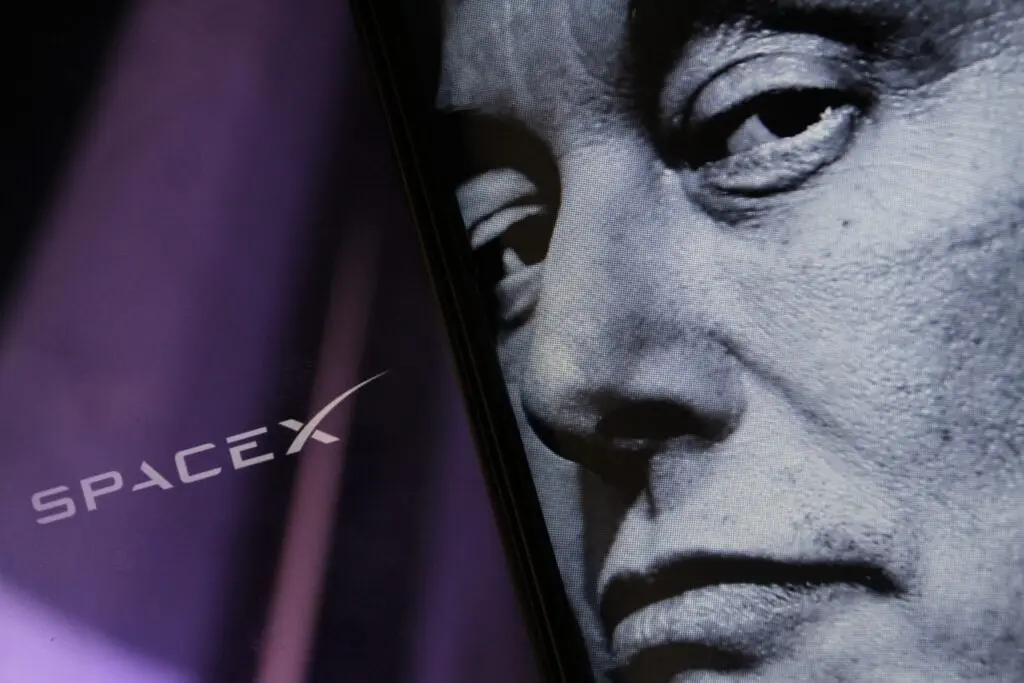
In an unexpected alignment, Google CEO Sundar Pichai has publicly endorsed Elon Musk's vision of deploying artificial intelligence data centers in orbit. The tech moguls' agreement, highlighted by entrepreneur Peter Diamandis, has sent ripples through the space and AI communities, suggesting that the era of space-based computing may arrive sooner than most analysts anticipate.
The original spark came from a social media exchange in which Diamandis posted: “When the CEO of Google starts agreeing with Elon, pay attention.” Musk simply replied “True,” acknowledging the convergence of thought between two of the world's most influential technology leaders. Pichai's backing adds significant credibility to a concept that has long been dismissed as science fiction.
Why Orbit? The Promise of Space-Based AI
Proponents of orbital data centers argue that space offers unique advantages for AI workloads. The most compelling is energy: in orbit, solar power is available 24/7 with no atmospheric interference, potentially allowing vast arrays of servers to run on renewable energy without terrestrial constraints. Additionally, the cold vacuum of space provides natural cooling, dramatically reducing the power needed for thermal management—a major expense for ground-based data centers.
Latency is another factor. For AI applications that require near-real-time processing of global data—such as autonomous shipping, disaster response, or climate modeling—a network of satellites with embedded compute could bypass the bottlenecks of fiber optic cables and ground stations. By processing data in orbit and beaming only results to Earth, these satellites could serve as a distributed, low-latency AI cloud.
Musk's SpaceX has already demonstrated the feasibility of large satellite constellations with Starlink, which now has over 7,000 operational spacecraft. The next logical step is to place AI compute nodes—essentially, data centers in space—on a new generation of larger satellites. Recent filings suggest that SpaceX is actively researching how to deploy such infrastructure, though the company has cautioned investors that the technology remains unproven and commercial viability is uncertain.
The Kardashev Dimension: A $10 Trillion Bet
Musk's long-term ambition extends far beyond orbital computing. He has repeatedly articulated a vision of transforming humanity into a multi-planetary species, ultimately reaching what astrophysicist Nikolai Kardashev defined as a Type II civilization—one that harnesses the total energy output of its star. For Earth, that would mean capturing and utilizing the entire energy of the Sun, which Musk believes could be achieved through a massive orbiting solar array system.
In a recent interview, Musk jokingly referenced a “$10 trillion SpaceX package” to take humanity to Kardashev II, saying it sounded like a great deal. However, he also predicted that at that level of development, money would become obsolete—a nod to the post-scarcity economy that a Kardashev II society would presumably enjoy. While the number seems astronomical, it underscores the scale of investment Musk believes is necessary to secure humanity's future beyond Earth.
The orbital data center initiative is a stepping stone on that path. By demonstrating that large-scale compute can operate in space, SpaceX would not only capture a lucrative market for AI services but also prove the reliability and cost-effectiveness of space-based infrastructure. That, in turn, could pave the way for the construction of orbital solar power stations, lunar bases, and eventually Mars colonies.
Google's Role and Industry Reactions
Sundar Pichai's endorsement is particularly significant given Google's own heavy investment in AI and cloud computing. Google operates some of the largest data centers in the world and is a leader in AI research through DeepMind and other divisions. If Pichai sees value in moving some of that infrastructure to orbit, it validates the concept from both a technical and business perspective.
Industry analysts have been divided. Some, like astrophysicist Dr. Emily Lakdawalla, caution that the practical challenges are immense: launching enough mass to orbit to create a meaningful AI compute cluster is still extremely expensive, even with reusable rockets like the Falcon 9 and Starship. Moreover, the harsh radiation environment in orbit requires specialized hardened electronics, which are more costly and less powerful than terrestrial counterparts.
Others, such as venture capitalist Chamath Palihapitiya, find the idea compelling. “If you can solve the launch cost and reliability issues, space becomes the ultimate data center—unlimited solar power, no land costs, no property taxes, and global coverage,” he noted in a recent podcast. “But it's a decade-long play at best.”
SpaceX has not publicly detailed its plans for orbital AI data centers, but the company's job listings have included positions for satellite networking, edge computing, and AI optimization. Additionally, the company's Starship vehicle—currently under development and already successful in test flights—is designed to lift over 100 metric tons to low Earth orbit, making large-scale assembly of space data centers feasible.
Challenges and Skepticism
Not all voices are optimistic. Critics point to the recent filings that warned investors that goals such as Mars colonization and orbital data centers rely on “unproven technology” and “may not be commercially viable.” This candid disclosure, while legally prudent, also reflects the immense technical hurdles.
Radiation damage is a major concern: without the protection of Earth's magnetic field and atmosphere, solid-state electronics degrade quickly. While SpaceX could use redundant systems and radiation-hardened chips, those components are slower and more expensive. Another obstacle is maintenance. A data center on Earth can be repaired by technicians within hours; a satellite in orbit would require costly and dangerous robotic or crewed missions.
Data security is also a question mark. Beamed information between satellites and ground stations is susceptible to interception or jamming unless heavily encrypted, and the physical security of an orbital asset is difficult to guarantee. However, advocates argue that these risks are manageable with current technology, given that military and intelligence satellites have operated securely for decades.
SpaceX's IPO and Market Implications
Although SpaceX remains private, rumors of an initial public offering have swirled for years. The company's valuation has soared past $200 billion, driven by the success of Starlink, the reliability of the Falcon 9, and the promise of Starship. An IPO would give retail investors a chance to own a piece of the company that is arguably the leader in space transportation and satellite services.
However, the addition of AI data centers to SpaceX's business model could complicate the narrative. On one hand, it offers a new, high-margin revenue stream beyond launch services and internet connectivity. On the other, it introduces regulatory and technical risks that could deter some investors. Elon Musk has stated that he prefers to keep SpaceX private to focus on long-term goals rather than quarterly earnings, but a future public offering remains possible if the company needs capital for its most ambitious projects.
Broader Implications for AI and Space Technology
The convergence of AI and space is not entirely new. Machine learning is already used for satellite image analysis, autonomous navigation of spacecraft, and predictive maintenance of ground systems. But placing AI servers in orbit would represent a paradigm shift: instead of sending data to Earth for processing, decisions could be made in space, reducing latency and enabling real-time applications like drone swarms, global surveillance, and autonomous orbital manufacturing.
Some experts envision a “space edge” where constellations of smart satellites form a unified computing fabric. This network could support everything from high-frequency trading in financial markets to monitoring global supply chains, and could even run large language models like GPT-6 or beyond without reliance on terrestrial data centers. The environmental benefits are also notable: space-based computing could offload energy demands from power grids, particularly if paired with orbital solar arrays that beam clean energy to Earth.
The endorsement from Sundar Pichai and the agreement from Elon Musk have injected new momentum into these discussions. While the path is fraught with technical and economic challenges, the combination of SpaceX's launch capabilities, Google's AI expertise, and the growing demand for compute power makes orbital data centers a plausible future—perhaps even the next frontier for the internet.
As Peter Diamandis put it, “the era of space-based AI is closer than you think.” Whether that timeline is measured in years or decades, the first steps are already being taken, and the world's most powerful technology leaders are paying close attention.
Source: Benzinga News