

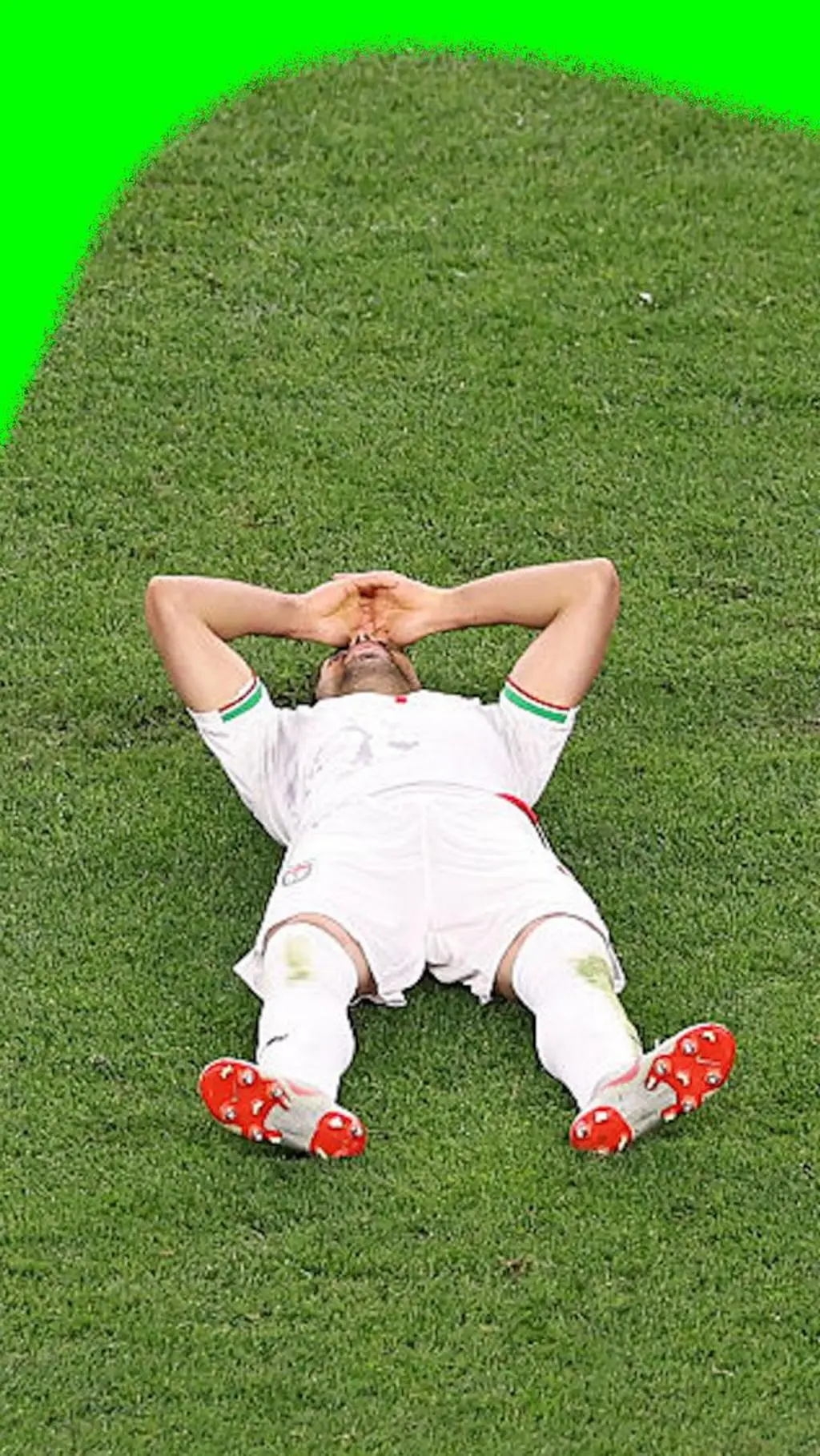
The Dawn of VAR and the Death of Spontaneous Joy
Football is a sport built on emotion. The roar of the crowd, the embrace of teammates, the sheer release of a goal – these moments are the lifeblood of the game. For decades, the act of celebrating a goal was instantaneous: the ball hit the net, and within a split second, joy erupted. But since the widespread adoption of the Video Assistant Referee (VAR), that spontaneity has been irrevocably altered. Now, even after the most spectacular strike, players hesitate, fans hold their breath, and everyone looks to the referee for a signal. The phrase “when VAR ruins your celebration” has become a common lament, encapsulating a unique frustration that technology has introduced to the beautiful game.
VAR was introduced to correct clear and obvious errors, particularly regarding goals, penalties, red cards, and mistaken identity. Its primary aim was to reduce injustice and improve accuracy. However, an unintended consequence has been the chilling effect on one of the most cherished aspects of football: the unfiltered celebration. This article explores the history, key incidents, psychological impact, and ongoing debate around how VAR has turned goal celebrations into tentative, delayed, and sometimes heartbreaking experiences.
From Pure Euphoria to Nervous Anticipation
The Pre-VAR Era: Unadulterated Passion
Before VAR, a goal was a goal. The referee’s whistle blown, the arm pointed to the center circle, and the celebration commenced without question. Players could slide on their knees, perform choreographed dances, or pile onto the scorer – all without a second thought. Fans could jump, hug strangers, and scream themselves hoarse. The certainty of the moment amplified the joy. Incidents of mistaken offside or fouls in the buildup existed, but they were accepted as part of the game’s human fallibility.
Think of iconic celebrations: Marco Tardelli’s crazed run in 1982, Jurgen Klinsmann’s dive, or Cristiano Ronaldo’s trademark “Sii” – all were performed in the immediate aftermath of a goal. The emotional arc was simple: score, celebrate, reset. There was no period of suspense where the joy could be suspended. That simplicity is now a thing of the past.
The VAR Era: A Delayed Exhale
Since VAR’s introduction in top leagues such as the Premier League (2019-20), Serie A, Bundesliga, and international tournaments, the celebration has become a multi-stage process. A goal is scored, and while players might initially celebrate, many now instinctively pause, glancing at the referee’s ear for a signal from the VAR room. They know that a check for offside, a handball, or a foul in the buildup could take 30 to 90 seconds. During that time, the initial joy is replaced by anxiety. Teammates might pull the scorer aside, warning “don’t over-celebrate, wait for the decision.” Fans watch giant screens displaying the VAR check graphic, hearts pounding not with pure joy but with dread that their happiness might be taken away.
This shift has fundamentally changed the emotional experience of scoring. A goal is no longer a moment of release but a cliffhanger. The wait turns a celebration into a judgment; the joy is conditional on the technology’s verdict. And when that verdict goes against the scorer, the result is not just disappointment but a uniquely bitter feeling: a celebration that was prematurely unleashed, only to be snatched back.
Infamous Incidents: When the Buzz Was Killed
Griezmann vs. Real Madrid (El Clásico, 2021)
One of the most vivid examples came in April 2021 during a La Liga clash between Barcelona and Real Madrid. Antoine Griezmann scored what appeared to be a well-taken goal, turning in a cross from Jordi Alba. The Barcelona players celebrated wildly – Griezmann slid on his knees, teammates mobbed him, and the Camp Nou roared. But then the VAR referral came. After a lengthy review, the goal was disallowed for a marginal offside in the buildup. The celebration turned to disbelief. Griezmann’s face collapsed from joy to anguish. The incident sparked furious debate about the precision of offside calls and the emotional cost of reviewing such fine margins.
Laporte’s Handball vs. Tottenham (Premier League, 2019)
In a crucial match between Manchester City and Tottenham Hotspur in November 2019, Gabriel Jesus scored a dramatic late winner that would have kept City’s title hopes alive. The away end exploded; players ran to the corner flag. However, VAR intervened to check for a handball by Aymeric Laporte in the buildup. The replay showed the ball had brushed Laporte’s arm, which was considered an accidental handball under the then-laws. But the goal was disallowed. The joy of the City players and fans was visibly punctured. The incident was a watershed moment, showcasing how VAR could overturn a last-minute winner and turn ecstasy into despair.
World Cup 2022: Emotional Rollercoasters
International football has also seen its share of celebrations ruined. During the 2022 FIFA World Cup in Qatar, multiple goals were checked by VAR after celebratory moments. One notable instance was Japan’s second goal against Spain in the group stage – a ball that seemed to go out of play before the cross. The goal was initially celebrated wildly, then subjected to a prolonged check that left everyone on edge. Eventually, it stood, but the celebration was fragmented. Similarly, in the semi-final between France and Morocco, a French goal was checked for offside, causing a nervous wait that muted the initial joy.
Other leagues around the world have their own stories. In the Bundesliga, a goal by Robert Lewandowski for Bayern Munich was disallowed after a check for offside moments after he had celebrated with his trademark knee-slide. In the Champions League, a last-minute winner by AC Milan’s Ante Rebić was disallowed due to a foul in the buildup, leaving him and his teammates in shock. These incidents are not rare; they have become a recurring theme in modern football.
The Psychological Impact on Players and Fans
Players: The Inhibition of Instinct
Players are now trained to temper their reactions. Many report that they no longer fully commit to a celebration until they see the referee signal that the goal has been given. This self-censorship is psychologically draining. The immediate emotional release – a crucial part of a player’s expression – is suppressed. Some players, like Harry Kane, have developed a habit of briefly celebrating but then quickly looking to the referee. Others, like Liverpool’s Mohamed Salah, have admitted in interviews that VAR makes scoring “less spontaneous.”
This inhibition has performance implications. The energy and momentum gained from a euphoric celebration can lift a team for the remaining minutes. When that celebration is interrupted, the emotional wind is knocked out. Conversely, when a goal is later overturned after a celebration, the psychological blow is severe – akin to having a victory snatched away twice.
Fans: The Split Reality
For fans in the stadium, the experience is equally jarring. In the stands, a goal triggers an immediate, instinctual outburst. But within seconds, the mood shifts. Fans look to the referee, to the big screen, or to others who might have information. The noise becomes a mix of celebration and uncertainty. Some fans have even stopped celebrating fully, waiting for the VAR confirmation before releasing their emotions. This hesitation undermines the atmosphere. The spontaneous roar is replaced by a ripple of cheers followed by a tense hum.
For viewers at home, the effect is different but still negative. Broadcasters often cut to the VAR check graphic just as the celebration is reaching its peak. The commentary shifts from excitement to caution: “But they’re checking with VAR for a possible offside.” The viewer is put in a state of suspension. When the goal is finally awarded, the celebration feels anticlimactic. When it is disallowed, the frustration is magnified because the viewer has already experienced the goal visually and emotionally.
The Broader Debate: Accuracy vs. Emotion
The phrase “VAR ruins your celebration” is not just a fan complaint; it touches on a fundamental debate about the direction of football. Advocates for VAR argue that ensuring the correct outcome is more important than preserving the purity of a moment. They point out that wrong decisions can cost teams titles, relegation survival, and millions of pounds. For them, the sacrifice of spontaneous celebrations is a price worth paying for justice.
Critics counter that football is not just about correctness; it is about emotion, narrative, and human drama. The mistakes and controversies of the past were part of the game’s charm. They argue that the current system creates a sterile environment where technology is the ultimate authority. The celebration ruination is a symptom of a deeper issue: football is being algorithmized. Moreover, the delays frustrate players and fans alike, and the long pauses break the flow of the match.
There is also the issue of marginal calls. Offsides by millimeters or handballs that had no intent are scrutinized to a degree that feels absurd to many. When a goal is disallowed for a toenail offside after a minute of bated breath, the reaction is not “justice” but “pedantry.” The celebration that was ruined was for something that, in previous eras, would have been a legitimate goal. The balance between accuracy and the spirit of the game has not yet been found.
Possible Solutions and Future Changes
Governing bodies have attempted to mitigate the celebration problem. In 2021, the International Football Association Board (IFAB) introduced a protocol that allowed players to celebrate freely, with the understanding that if the goal was later disallowed, the celebration would be seen as premature. This was a step toward restoring spontaneity, but it has not fully taken hold. Players still fear the embarrassment of celebrating a goal that doesn’t count, so they often hold back.
Some have suggested that VAR checks should be completed within a strict time limit (e.g., 30 seconds) to minimize the delay. Others propose that only clearly obvious errors should be overturned, leaving marginal decisions to the referee’s original call. The Premier League has introduced “mesh offside” technology to speed up checks, but this only addresses part of the problem.
Another radical idea is to leave the referee’s decision final during open play and use VAR only to correct red card or penalty errors after the match. But this would undo the very purpose of VAR. The reality is that technology is here to stay, and the challenge is to find a way for celebrations to coexist with accurate decision-making.
Perhaps the answer lies in changing the culture. If players and fans accept that a goal is provisional until the check is over, they might learn to throttle their enthusiasm. But that seems contrary to human nature. The raw joy of a last-minute winner cannot be rationally suppressed. The tension between spontaneity and surveillance is now an inseparable part of modern football.
In the future, we may see further refinements: real-time automated offside calls (like in tennis) that eliminate the wait; or a system where the referee immediately signals that a check is in progress, preventing the initial celebration altogether. But no solution will fully erase the moment when a player throws his arms in the air only to bring them down slowly as the VAR verdict arrives. That image has become an emblem of the digital age in sports.
As football continues to evolve, the celebration remains a battlefield. Every goal scored carries a shadow of doubt. The beautiful game has become beautiful, but with a pause button. The next time you see a player sprinting toward the corner flag, pause before you cheer. Check if the referee is touching his earpiece. The celebration might just be delayed, or worse – it might never truly come.
Source: BBC Sport News