

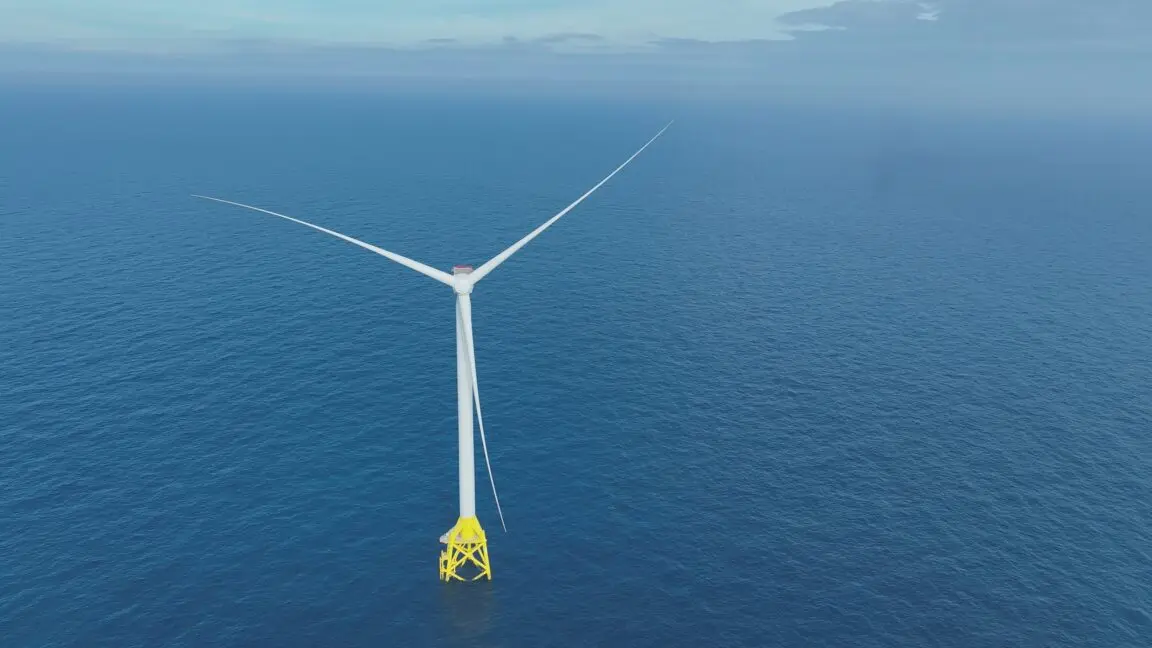
Taiwan Semiconductor Manufacturing Company (TSMC), the world's leading producer of advanced chips used in artificial intelligence (AI) applications, is taking bold steps to secure renewable energy as demand for its products surges. In late April 2025, TSMC announced a landmark 30-year corporate power purchase agreement (PPA) with Northland Power, a Canadian power producer, to purchase 100% of the electricity generated by the Hai Long offshore wind project. The project, located in the Taiwan Strait off the central coast of Taiwan, will have a total capacity exceeding 1 gigawatt (GW) across three wind farms. Once fully operational by 2027, it is expected to supply enough energy to power more than 1 million Taiwanese households.
Energy crisis drives TSMC’s renewable push
The agreement is part of a broader strategy by TSMC to mitigate risks from Taiwan's fragile energy grid. The island nation relies heavily on imported fossil fuels—nearly 97% of its energy needs, including electricity, transport, and heating, come from overseas sources. Natural gas plants generate about half of Taiwan's electricity, and the country typically holds only a two-week supply of liquefied natural gas (LNG) in reserve. The vulnerability was starkly highlighted in March 2026 when an Iranian drone strike damaged Qatar's natural gas facilities, leading to a shutdown of production. Bloomberg reported that Taiwan's power grid lost one-third of its usual LNG supply, sparking an energy crunch countdown. Reuters noted that the government has since scrambled to secure alternative suppliers from Australia and the United States, managing to stave off immediate shortages through August or September 2026, according to Taiwan's vice minister of economic affairs.
AI chip boom multiplies TSMC’s energy appetite
TSMC's energy consumption already accounts for nearly 10% of Taiwan's total electricity usage, according to the International Energy Agency (IEA). But the AI boom is accelerating demand for advanced chips manufactured using energy-intensive processes like extreme ultraviolet (EUV) lithography. S&P Global estimates cited by Data Center Dynamics suggest that TSMC's share of Taiwan's electricity could rise to nearly one-quarter (25%) by 2030 as the company invests in new fabrication plants (fabs) to meet global AI demand. This growth places immense pressure on Taiwan's grid, which is already strained by the energy crisis. To counterbalance its rising consumption, TSMC has set ambitious renewable energy targets: 60% of its global operations' needs met by renewables by 2030, and 100% by 2040.
TSMC’s renewable portfolio expands
The Hai Long deal is not TSMC's first major renewable energy commitment. In 2020, the chipmaker signed a PPA with Danish renewable energy giant Ørsted for 920 megawatts (MW) of power from the Greater Changhua offshore wind farm project, which is expected to become fully operational later in 2026. TSMC also struck a deal in 2021 with German developer WPD to develop over 1 GW of onshore and offshore wind power. These three agreements together represent more than 3 GW of renewable capacity, positioning TSMC as a key driver of Taiwan's green energy transition.
Taiwan’s government accelerates energy diversification
The energy crisis has spurred the administration of President Lai Ching-te to accelerate efforts to diversify Taiwan's energy mix. The government has outlined a plan to make 15 GW of offshore wind capacity available to developers by 2035. Additionally, the government is considering restarting shuttered nuclear power plants as a baseload power source. Taiwan previously operated six nuclear reactors, but four have been decommissioned or are offline due to public safety concerns. The Global Taiwan Institute, a think tank in Washington, D.C., notes that restarting nuclear plants could provide stable, carbon-free electricity to complement intermittent renewables like wind and solar. However, nuclear power faces strong opposition from environmental groups and some local communities.
Historical context: Taiwan’s energy vulnerability
Taiwan's dependence on imported energy has deep historical roots. Lacking significant domestic fossil fuel reserves, the island has long relied on imports for nearly all its energy. During the 1970s oil shocks, Taiwan rapidly expanded its industrial base, becoming a manufacturing powerhouse while increasing its energy imports. By the 1990s, nuclear power was introduced, but public opposition after the 2011 Fukushima disaster in Japan led to a gradual phase-out plan. The Democratic Progressive Party (DPP) government, in power since 2016, originally pledged a “nuclear-free homeland” by 2025, but the current crisis has forced a policy reevaluation. The vice minister of economic affairs stated in May 2026 that the government is now open to extending the life of existing nuclear plants if safety conditions can be met.
Implications for global chip supply
TSMC's energy challenges have direct consequences for the global semiconductor supply chain. The company produces advanced chips for companies like Apple, NVIDIA, AMD, and Qualcomm. If Taiwan faces a power shortage, chip production could be disrupted, affecting everything from smartphones and laptops to AI servers and automotive electronics. The IEA report on energy and AI emphasizes that data centers and chip manufacturing are among the fastest-growing electricity consumers worldwide. TSMC’s move to secure renewable energy is not only an environmental initiative but also a strategic hedge against potential grid instability. By investing in wind power, TSMC ensures a stable, long-term energy supply that aligns with its sustainability goals and operational needs.
Offshore wind potential in the Taiwan Strait
The Taiwan Strait is one of the world's best locations for offshore wind energy, thanks to strong and consistent winds driven by the Asian monsoon system. The Hai Long project, developed by Northland Power in partnership with local entities, is expected to set a benchmark for large-scale offshore wind in Asia. The project’s three sites collectively will have capacity factors exceeding 40%, significantly higher than many European wind farms. The development also supports Taiwan's goal of creating a local supply chain for wind turbine manufacturing, installation, and maintenance. Jobs and economic benefits are expected to flow to coastal communities in central Taiwan.
TSMC's sustainability roadmap
Beyond wind power, TSMC is exploring other renewable and energy-saving technologies. The company has invested in solar panels at its facilities, improved energy efficiency in its fabs, and purchased renewable energy certificates. Its Science-Based Targets initiative (SBTi) commitment aims to reduce greenhouse gas emissions by 25% by 2030 compared to 2020 levels. TSMC also participates in a virtual power purchase agreement (VPPA) model that supports the construction of new renewable energy projects in Taiwan. The chipmaker's scale means its actions can catalyze broader energy transformation on the island.
TSMC’s aggressive renewable energy strategy underscores the critical intersection of technology, geopolitics, and climate change. As AI drives exponential growth in chip demand, energy security becomes as important as manufacturing excellence. Taiwan, sitting on a geopolitical fault line and dependent on imported fuels, must navigate these challenges carefully. The Hai Long deal is a significant step, but the road to a sustainable and secure energy future for TSMC and Taiwan is still long. The next few years will test both the company's and the country's ability to balance rapid technological advancement with resource constraints.
Source: Ars Technica News