

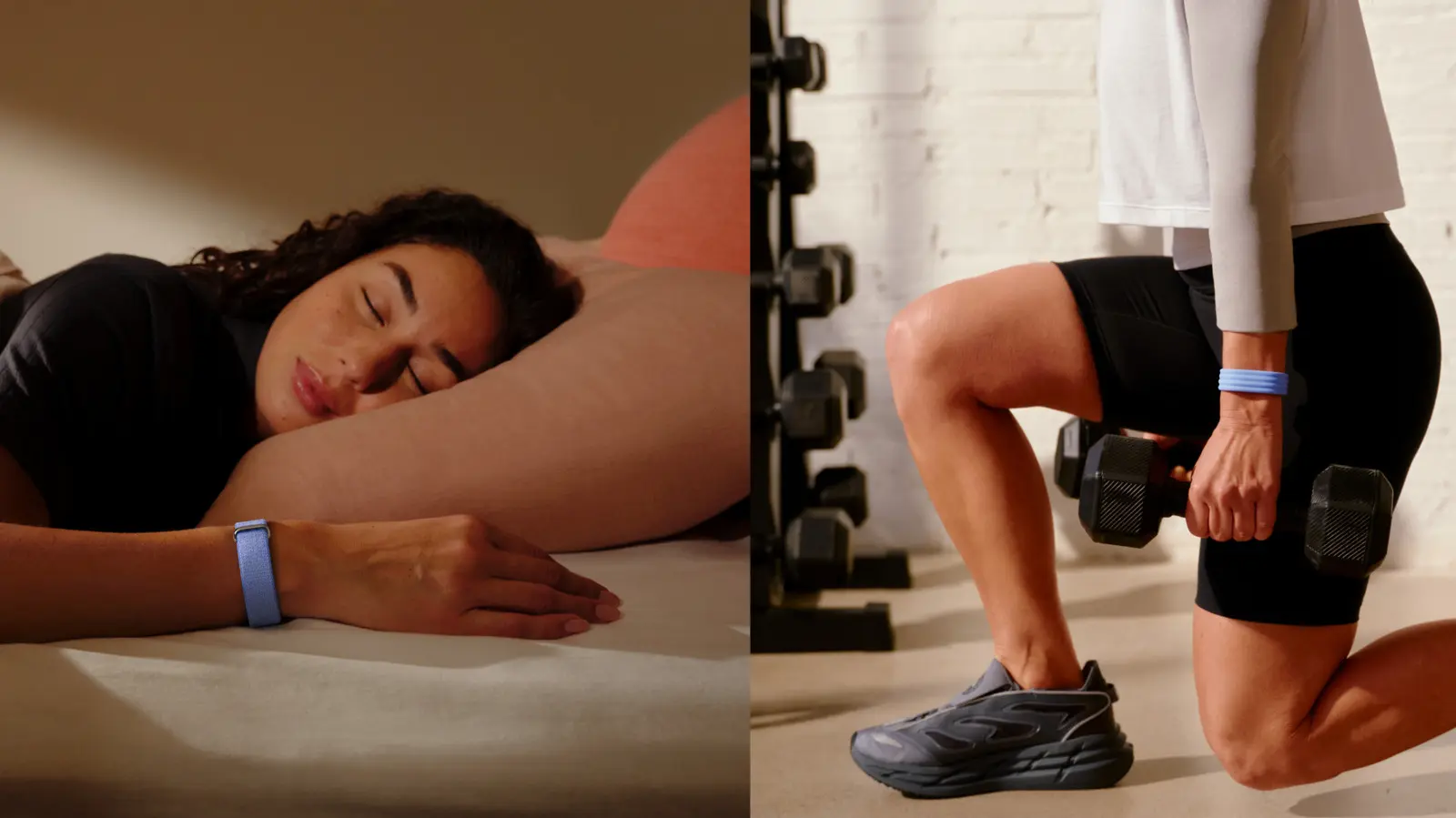
Google has officially unveiled the Fitbit Air, a screenless wearable that marks a significant shift in the company's fitness tracking strategy. First teased in March, the Fitbit Air is essentially a standalone tracker that can be worn on a wristband, chest strap, or even clipped to clothing, depending on the accessory. Priced at $100 for pre-order, it represents Google’s most direct attempt yet to compete with devices like the Whoop Strap, which have popularized the screenless, data-first approach to health monitoring.
Design and Comfort
The Fitbit Air is notably smaller and lighter than previous Fitbit models. According to Google, the Air is 25 percent smaller than the Fitbit Luxe and 50 percent smaller than the Inspire 3. At just 12 grams (0.42 ounces) with a band and 5.2 grams (0.18 ounces) without, it is designed to be nearly imperceptible during daily wear. Google claims that in an independent consumer perception study conducted last year, the Air was rated as more comfortable than leading competitors presently popular in the US market. The device uses a “micro-adjustable” fit system, ensuring the band can be tightened or loosened in small increments for a secure but comfortable fit.
The wearable is water resistant up to 50 meters, though it is not officially waterproof. Initially, Google is offering three band options: a Performance Loop Band with micro-adjustable fabric, an Active silicone band that is sweatproof and wetproof for workouts, and an Elevated Modern Band designed to turn the Air into a fashionable bracelet. The general manager for Google Health, Rishi Chandra, confirmed that more accessories, including a chest strap option, are being explored for future release.
Health and Activity Tracking
Without a screen or buttons, the Fitbit Air operates as a passive data collector. It continuously monitors heart rate, and uses that data alongside Google's long-established algorithms to track sleep stages, provide a nightly Sleep Score, and help users understand their heart rate variability (HRV) and its impact on overall wellbeing. The device can also detect signs of atrial fibrillation (AFib) with irregular heart rhythm notifications, a feature that expands its utility beyond fitness into general health monitoring.
For activity tracking, the Air includes auto-detection for common exercises such as biking (both stationary and outdoor), running, walking, rowing, elliptical training, and other high-heart-rate sports. Users can manually start logging sessions for about 40 different activities through the companion app, including aerobics, circuit training, canoeing, dancing, kickboxing, walking, and yoga. Additionally, the app allows users to add over 140 activities that were not automatically detected, ranging from archery and assault biking to household chores. During a workout, real-time stats like heart rate appear on the phone screen.
Beyond workouts, the Fitbit Air provides weekly summaries of cardio load, readiness scores, and basic metrics such as steps, distance, and active minutes. A vibration motor enables silent alarm functionality, and Google’s Smart Wake feature uses the motor to rouse users at the optimal point in their sleep cycle for a more refreshed awakening.
AI and the Google Health Coach
The “AI” in Fitbit Air is not just a marketing term. The device is built around the Google Health Coach, a Gemini-powered conversational interface that was first introduced in public preview in October of last year. This AI assistant analyzes personal health data—including sleep, heart rate, HRV, cycle health, and even vital medical information—to offer personalized suggestions, dynamic fitness plans, and proactive insights that adapt to real-time performance and schedule changes. According to Google, the Health Coach can create tailored workout plans that fit individual goals and lifestyles, and it adjusts recommendations based on how the user is progressing.
The company emphasizes that all data processed by the Health Coach remains private and secure. The Air is also powered by new machine learning models that Google claims are 15 percent more accurate than previous generations. The Sleep Score algorithm has been updated to better reflect recovery, making the data more actionable for users aiming to optimize rest and performance.
Background and Market Context
The launch of Fitbit Air comes after Google’s acquisition of Fitbit in 2021, a deal that faced intense regulatory scrutiny over data privacy concerns. Since then, Google has integrated Fitbit’s technology with its own hardware and AI capabilities, gradually moving beyond traditional smartwatches. The screenless form factor directly challenges Whoop, a company that built its reputation on continuous, long-term health monitoring without the distraction of a display. Whoop devices are often worn by athletes and fitness enthusiasts who prioritize raw data over on-wrist notifications.
Fitbit’s decision to drop the screen also aligns with broader industry trends. As wearables become more specialized, many users are seeking devices that offer deep health insights without adding another screen to their lives. The Fitbit Air can be worn around the clock—during work, exercise, and sleep—without the bulk of a smartwatch. Its small size and light weight aim to make it a device users forget they are wearing, thereby improving adherence to continuous monitoring.
Google’s strategy with the Air appears to be one of accessibility. At $100, it is significantly cheaper than Whoop’s subscription-based model (which starts at $30 per month after a hardware purchase). The Fitbit Air does not require a subscription for basic features, though it comes with three months of Google Health Premium for those who want advanced analytics and the full Health Coach experience. After that, users can decide whether to subscribe.
Charging and Battery Life
Battery life is rated at up to a week on a single charge, which is on par with many dedicated fitness trackers. The device supports fast charging: a five-minute charge provides up to one day of power, and a full charge takes approximately 90 minutes. The charger uses a magnetic, bi-directional design similar to the Pixel Watch 4’s dock, making it easy to snap the Air into place without worrying about orientation. This convenience is a small but meaningful improvement for daily use.
Special Edition: Steph Curry Collaboration
Google has also announced a special edition of the Fitbit Air in collaboration with basketball star Stephen Curry, who serves as the company’s “Performance Advisor.” This version features a raised interior print for increased airflow, signature Curry design details, and an additional water-resistant coating. The Fitbit Air Special Edition is priced at $130 and includes the same health-tracking capabilities as the standard model. Each purchase of any Fitbit Air variant also includes three months of Google Health Premium.
The devices are available for pre-order starting today, with shipments scheduled to begin on May 26. As the wearable market continues to evolve, the Fitbit Air represents Google’s bet that the future of health tracking is not in bigger, brighter screens but in smaller, smarter sensors paired with powerful AI. Whether that bet pays off will depend on how well the software and ecosystem can deliver on the promise of personalized, actionable health insights.
Source: Engadget News