

If summer is 'the promise that life can begin again,' as Francis Scott Fitzgerald assured, a good way to accompany this rebirth is reading. The rich vitality of today’s publishing landscape allows readers to embark on countless journeys—geographical and temporal—without leaving home. The following ten intrepid books, which have arrived in bookstores over the past months, invite you to explore diverse cultures, histories, and emotional landscapes.
1. 'Odyssey' by Homer
Ancient Greece remains the principal setting of Homer's Odyssey, one of the earliest epic poems in the Western literary canon, recently reimagined cinematically by Christopher Nolan. A new translation by Pau Sabaté, published by Bernat Metge Universal, brings fresh vibrancy to the tale of the heroic and cunning Odysseus after the Trojan War. His journey to Ithaca, to reunite with Penelope and Telemachus and reclaim his throne, is composed of twenty-four cantos and over twelve thousand hexameters. Sabaté’s verse translation captures the essence of the most human of heroes—one who prefers the warmth of family to eternal battlefield glory. Along the way, Odysseus must deceive the cyclops Polyphemus, survive the Sirens’ song, and resist the temptations of Nausicaa, Circe, and Calypso. This epic remains a cornerstone of literary history, exploring themes of perseverance, identity, and the yearning for home.
2. 'The Vegetarian' by Han Kang
“When someone says they love me, the first thing I feel is fear,” says Inju, the painter who dies in a suspicious car accident, whose story is revealed through the eyes of her best friend, playwright Lee Jeonghui. Ink and Blood, published in Korean in 2010 but only now translated into Catalan, is a mystery that seeks to unravel whether Inju’s death was accidental or intentional, delving into existentialist dilemmas of suffering and restlessness. Han Kang, awarded the 2024 Nobel Prize in Literature for her “intense poetic prose confronting historical traumas and exposing the fragility of human life,” has captivated global readers with works like The Vegetarian, Human Acts, and The White Book. Her exploration of violence, identity, and the body continues to resonate, offering profound insights into the human condition.
3. 'Herscht 07769' by László Krasznahorkai
While Carles Dachs works on the first Catalan translation of Melancholy of Resistance, Adan Kovacsics has adapted into Spanish the single 400-plus-page sentence that constitutes Herscht 07769, the penultimate novel by Hungarian writer László Krasznahorkai. The protagonist, the harmless clairvoyant orphan Florian Herscht, lives in a small Thuringian town obsessed with the universe’s imminent collapse. He tries to warn Angela Merkel—then Chancellor—by writing letters. The discovery of Bach’s music offers him calm as he awaits an institutional response, while neo-Nazis settle in his community. This feverishly paced book, by the latest Nobel laureate in literature, showcases Krasznahorkai’s meticulous prose and deep psychological insight into characters on the edge, creating a haunting exploration of isolation and extremism.
4. 'The Diviners' by Margaret Laurence
Margaret Atwood described The Diviners as “an immense, risky, ambitious book.” Margaret Laurence (1926–1987) revisits the town of Manakawa to trace the journey of Morag Gunn—from losing her parents at age five and being adopted by the gravedigger to the day she decides how to live as an adult. Years in Toronto include a marriage to an English literature professor who tries to suppress her writing vocation, followed by stays in England and Scotland with the illegitimate daughter of a former lover. This novel, published in Catalan for the first time by Edicions del Periscopi, speaks of class wounds, ancestral acceptance, writing as self-knowledge and resistance, and the fundamental need to feel loved. Laurence’s voice, long overlooked, now reaches new readers with powerful relevance.
5. 'I won’t see this anymore' by Jordi Masó
Writer and pianist Jordi Masó (Grandollers, 1967) flees the present in this collection of nine stories set in oppressive or catastrophic near futures. Blending science fiction, detective fiction, and satire, the stories use unique devices—administrative reports, social media messages, establishment reviews, documentary scripts, and dramatis personae. Masó, author of Polpa (2017), Winter in Corfu (2019), and Xacona (2023), explores themes of human organ regeneration, a grandparent adoption system, and the atmosphere of cyborg brothels. His narratives challenge readers to imagine the boundaries of humanity and technology.
6. 'Typee' by Herman Melville
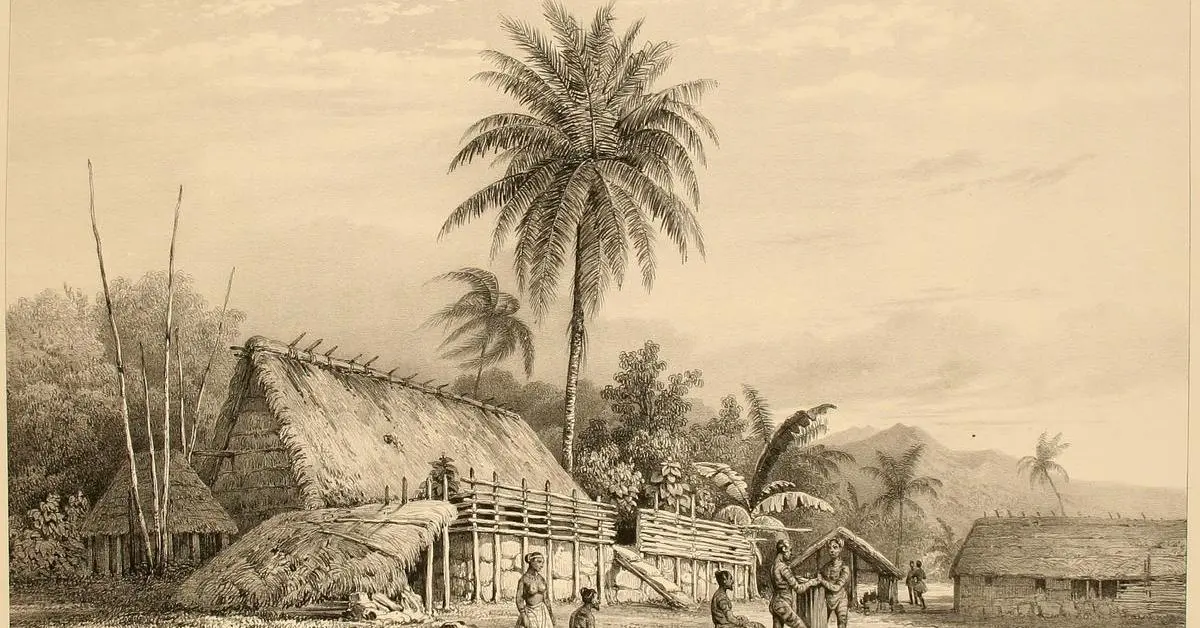
“Nowadays, sailors are the only men who glimpse exciting adventures,” writes Herman Melville (1819–1891) in the prologue of Typee, drawing on his experiences on merchant and whaling ships in the South Seas between ages twenty and twenty-five. After voluntarily leaving the Acushnet, he ended up on the Polynesian island of Nuku Hiva. In Typee, now translated into Catalan by Teresa Bauzà Bosch for Quid Pro Quo Editions, Melville narrates his weeks among the natives and his attempt to adapt to their atavistic customs, hinting at cannibalism. Published in 1846 when Melville was only twenty-six, it launched a dazzling but controversial career that peaked with Moby Dick (1851). The commercial and critical failure of that novel led Melville to abandon narrative, making Typee a vivid reminder of youthful exploration and literary promise.
7. 'Beloved' by Toni Morrison
When Toni Morrison (1931–2019) became the first African American winner of the Nobel Prize in Literature in 1993, the Swedish Academy praised her “visionary and poetic force” in recreating the American reality, particularly the complex experiences of Black women. Beloved is a pinnacle of her work, translated into Catalan for the first time by Esther Tallada for La Segona Perifèria. The story begins in a Cincinnati house in 1873, where a mother and her teenage daughter, both survivors of a larger family, take refuge. The arrival of Paul D., a man the mother knew years earlier on a Kentucky slave plantation, triggers memories of the past, forcing them to confront the hell they thought they had escaped. Morrison’s exploration of trauma, memory, and motherhood remains a powerful testament to the enduring scars of slavery.
8. 'Tots tres surten per l’Ozama' by Vicenç Riera Llorca
“Suddenly, the Dominican Republic has opened its doors to European exiles. They do not know what possibilities Santo Domingo offers them; they know only that it is America, and for that alone it is worth coming.” Vicenç Riera Llorca (1903–1991) described the country where, fleeing Franco’s Spain, the protagonists of Tots tres surten per l’Ozama find themselves. The novel, set in the 1940s under dictator Rafael Leónidas Trujillo, portrays a world of material misery, political corruption, racial prejudice, and passionate sensuality through the eyes of three men who eke out a living doing odd jobs. Surrounded by Dominicans and other exiles, they struggle to forget the past. This work offers a poignant look at displacement and survival, highlighting the complexity of exile in a troubled land.
9. 'The Trophy' by Gaea Schoeters
A North American hunter named Hunter White, who made a fortune in stock market investments, buys a permit to hunt a black rhinoceros in Africa—the missing piece in his trophy collection, intended as a gift for his wife. “She doesn’t like Africa: she finds it too noisy and dusty, and it’s too hot,” we read in The Trophy by Belgian author Gaea Schoeters (Sint-Niklaas, 1976). “But since it is the continent that hosts the best hunting grounds in the world, he has learned to respect it, and yes, even to love it against his instinct... For him, Africa is a great natural reserve created by God to please him; that people also live there, that they really live there, is something he has never quite accepted.” Translated into some twenty languages and a finalist for the European Union Prize for Literature, this novel highlights colonial legacies through a disturbing narrative, with characters of notable psychological and moral depth. It questions the ethics of trophy hunting and the exploitation of nature.
10. 'Indignitat' by Lea Ypi
Lea Ypi (Tirana, 1979) spent three years digging through eight archives in five countries, turning over thousands of pages to reconstruct the life of her grandmother Leman. The result, Indignitat, is an exciting and striking puzzle read with the voracity of a thriller, though it addresses the author’s family history. “My grandmother is dead, and I am a product of the system that destroyed her life,” Ypi says. A professor at the London School of Economics, she first gained recognition with Libre (Anagrama, 2023), a memoir blending sociopolitical reflection and historical essay. The system analyzed in Indignitat is that of autocratic and police communist Albania under Enver Hoxha, who in his youth was friends with Leman’s husband and Lea’s grandfather. During the journey, Ypi doubts the veracity of her memories based on the suggestion that Leman might have been a fascist collaborator, a communist, or “even worse, both.” This personal history illuminates broader questions of memory, ideology, and the long shadow of dictatorship.
Source: Ara in English News