

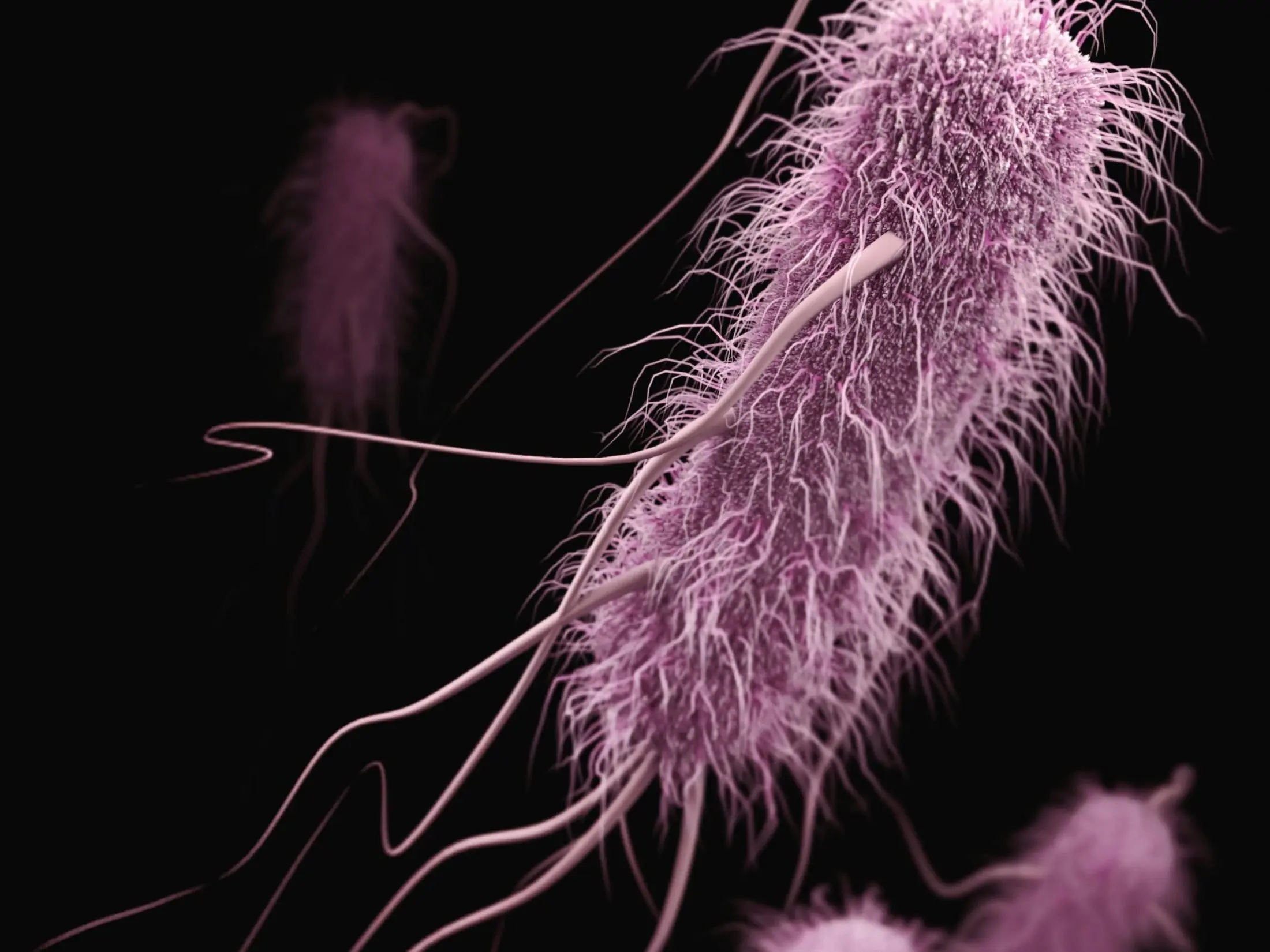
In a landmark demonstration of generative artificial intelligence in biology, researchers at Stanford University and collaborating institutions have used the genomic language model Evo 2 to design bacteriophages, or phages, that specifically target Escherichia coli (E. coli). The work, reported by the team behind Evo 2, shows that a large language model trained on massive amounts of DNA sequence data can not only understand the grammar of genomes but also imagine new biological functions. The result is a set of synthetic phages that could one day serve as precision antibacterial agents.
What is Evo 2?
Evo 2 is a state-of-the-art genomic foundation model developed by the Arc Institute, Stanford University, and NVIDIA. It belongs to a class of large language models applied to DNA, where the vocabulary consists of the nucleotide bases adenine, cytosine, guanine, and thymine. The model uses a transformer architecture to learn the contextual dependencies between these bases across vast stretches of genomic sequence. With 7 billion parameters, Evo 2 is among the largest genomic models ever released, yet it is efficient enough to run on a single GPU in some configurations.
The model was trained on 9.3 trillion nucleotides from over 100,000 genomes spanning bacteria, archaea, eukaryotes, and their viruses. This diverse training set allows Evo 2 to understand both universal genomic patterns and organism-specific codes. For example, it can identify gene boundaries, regulatory sequences, and even structural features of proteins. The developers designed Evo 2 to be open-source, making it freely available for academic and commercial use. This transparency has enabled a wide range of applications, from annotating genomes to designing synthetic sequences.
Key facts at a glance
- Evo 2 is an open-source genomic foundation model with 7 billion parameters.
- It was trained on 9.3 trillion DNA nucleotides from bacteria, archaea, and eukaryotes.
- Scientists used Evo 2 to generate synthetic phage genomes with specificity for E. coli.
- The designed phages were synthesized and tested against E. coli cultures in laboratory experiments.
- The study demonstrates a new paradigm for creating bacteriophages tailored to bacterial pathogens.
- The approach could help address the growing crisis of antibiotic-resistant bacteria.
The language of genomes and generative design
One of the key innovations of Evo 2 is its ability to generate new DNA sequences. Rather than simply classifying or predicting, the model can write long stretches of genomic code that follow the rules it learned during training. This is similar to how large language models write coherent sentences after being trained on millions of books. To generate a functional phage, the researchers at Stanford used a technique called conditional generation. They provided the model with a scaffold or partial genome and asked it to fill in the missing regions. For phage design, the most important region is the tail fiber gene, which determines what bacterium the phage can recognize.
The team designed a workflow that combined Evo 2 with structural biology tools. First, they used Evo 2 to create a library of tail fiber sequences that were compatible with the existing phage genome. Then they used protein structure prediction to assess which sequences would maintain the correct folding and display of the binding domain. Only those sequences that passed both computational filters were chosen for synthesis. This pipeline dramatically reduced the number of sequences that needed to be tested in the lab, demonstrating how generative AI can speed up the design-build-test cycle in synthetic biology.
The E. coli experiment
To validate the model's designs, the Stanford team synthesized full phage genomes and used them to create actual viruses. They tested these viruses against several strains of E. coli, including K-12, a well-characterized laboratory strain, and some clinical isolates. The result was successful: the AI-designed phages formed clear plaques on E. coli culture plates, indicating that they could infect and lyse the bacteria. The researchers also confirmed that the phages were specific to E. coli, as they did not produce plaques on unrelated bacterial species.
One of the most encouraging aspects of this experiment was the speed. Previous attempts to engineer phages for new host specificity required weeks or months of directed evolution. With Evo 2, the initial candidates were generated in hours. The team also showed that the model could design phages with different tail fiber variants, providing a pool of candidates that could be used to overcome bacterial resistance. By combining multiple variants, it may be possible to create a cocktail phage therapy that targets a bacterium through more than one receptor.
Bacteriophages: nature's tiny killers
Bacteriophages are viruses whose hosts are bacteria. First discovered in the early 20th century, they are found in every environment where bacteria live, from soil and seawater to the human gut. A typical phage particle has a head that contains its genetic material, a tail, and tail fibers. The tail fibers act as molecular sensors that bind to specific receptors on the bacterial cell surface. Once attached, the phage injects its DNA into the host, hijacks the bacterial machinery to replicate, and eventually lyses the cell to release new phage particles. This lytic cycle is what makes phages effective antimicrobials.
The specificity of phages is determined largely by the tail fiber proteins. By swapping or mutating tail fiber genes, scientists can change which bacteria a phage attacks. This is precisely what Evo 2 was asked to do. The model learned the relationship between tail fiber amino acid sequences and the structures on bacterial surfaces they recognize. In a sense, Evo 2 knows how to modify a natural phage so that it recognizes a different enemy, just as a computer vision model can learn to classify new objects after training on a large dataset.
Why phage therapy matters
The rise of antibiotic resistance has created an urgent need for alternative antimicrobials. Phages offer a natural mechanism to kill bacteria, and they have several advantages over chemical drugs: they are highly specific, they can self-amplify at the site of infection, and they tend to have fewer side effects. However, the development of phage therapies has been hindered by the difficulty of finding or creating phages that are safe, stable, and effective. Evo 2 could change this by enabling rational design rather than discovery from nature.
In particular, AI-designed phages could be tailored to local outbreaks or even individual patients. For example, if a patient is infected with a strain of E. coli that is resistant to all standard antibiotics, doctors could sequence the strain, use a model like Evo 2 to design a phage that recognizes its specific surface receptors, and produce a personalized treatment within days. While this vision is still in the future, the current study provides a proof of concept that the core technology works.
Limitations and safety considerations
Despite the breakthrough, the work is not without limitations. AI-generated phage genomes may contain subtle mutations that reduce their infectivity compared to natural phages. The Stanford team had to screen many candidates, and the success rate, while much higher than random mutation, was not perfect. Additionally, the experiments were conducted in laboratory cultures, not in animals or humans. The behavior of phages in a complex host environment, where immune responses and biofilms can interfere, remains unknown.
Safety is also a critical concern. Bacteriophages are generally considered harmless to humans, but they can sometimes carry genes for toxins or antibiotic resistance. The researchers used safeguards to ensure that the designed phages lacked known problematic genes. They also designed the phages to be obligately lytic, meaning they kill their host rather than integrating into the bacterial genome. This reduces the risk of horizontal gene transfer. Nevertheless, regulatory bodies will require rigorous testing before AI-designed phages can be approved for medical use.
Toward a new era of synthetic biology
The success of Evo 2 in designing phages against E. coli is a powerful illustration of the convergence between artificial intelligence and biotechnology. As genomic models become larger and more accurate, they will be able to design increasingly complex biological systems. Already, Evo 2 has been applied to predict the effect of mutations in disease genes and to design novel CRISPR enzymes. The same principles could be used to create phages that attack cancer cells, engineer bacteria that produce sustainable chemicals, or restore damaged ecosystems.
Importantly, the open-science approach of the Evo 2 project means that the computational tools and the resulting phage designs are publicly available. This allows researchers around the world to replicate, improve, and adapt the technology. It also fosters responsible development, as more eyes can evaluate the risks and benefits. The road from a successful laboratory experiment to a widely used therapeutic is long, but the Stanford Evo 2 phage work marks a decisive step forward. It shows that with the right algorithms and rigorous experimental validation, AI can help us write the code of life in ways that benefit human health.
Source: AI News News