

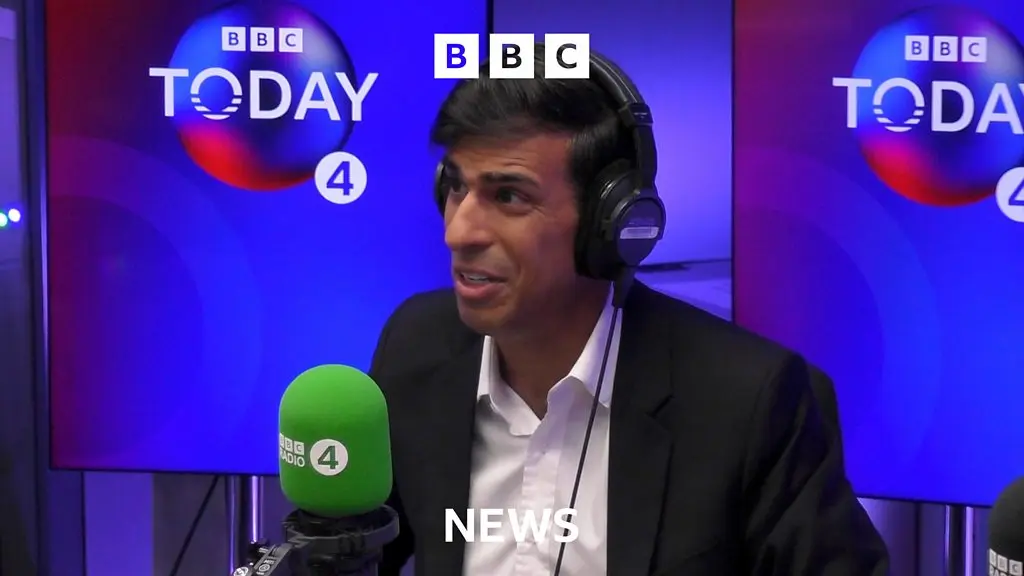
Former Conservative Prime Minister Rishi Sunak has said that it would be "beneficial" for any future Labour leader to secure the position through a leadership contest, rather than through a coronation without a vote. Speaking to BBC Radio 4's Today programme, Sunak reflected on his own experience of becoming Prime Minister without a contest after Liz Truss's resignation in October 2022. He argued that a leadership election, even if contested internally, ensures that the winner has a clear mandate from the party and, by extension, from the public.
Sunak stated that a contest forces candidates to articulate their vision and engage in a robust debate over policies and ideas. This process, he said, not only strengthens the leader's authority but also helps the party unite behind a coherent platform. "Having a debate over ideas meant a new leader would have a mandate," he said. His comments come amid speculation about the future of Labour leadership under current leader Sir Keir Starmer, though Starmer has faced no formal challenge.
The former PM's remarks carry particular weight given his own path to power. After Liz Truss's dramatic resignation following the mini-budget crisis, Sunak became Conservative leader and Prime Minister without a single vote from party members, as his opponent Penny Mordaunt withdrew. Sunak acknowledged that this experience shaped his view: a leader who wins a contest is better positioned to implement bold reforms.
Sunak also offered advice to any future Prime Minister, regardless of party: focus overwhelmingly on delivering economic growth as the single biggest priority for the United Kingdom. He emphasised that sustainable growth is the foundation for improving public services, raising living standards, and ensuring national prosperity. "If you get that right, so many other problems become easier to solve," he said.
This echoes his own government's priorities, which included measures to boost investment, reduce inflation, and stabilise the economy after the turmoil of 2022. Sunak's tenure saw the introduction of the "four priorities" – halving inflation, growing the economy, reducing debt, cutting waiting lists, and stopping the boats – but economic growth remained elusive, with the UK narrowly avoiding recession.
Beyond politics, Sunak discussed the findings of the Richmond Project, the financial charity he and his wife, Akshata Murty, founded. The charity focuses on improving financial literacy among young people and adults. According to the project's research, four in ten people lack a proper understanding of key financial terms related to managing money, such as compound interest, inflation, and budgeting.
Sunak described this as a "worrying gap" that leaves millions vulnerable to debt and poor financial decisions. He called for better financial education in schools and workplaces, stressing that financial literacy is a vital life skill. The Richmond Project has been working with schools and community groups to deliver workshops and resources.
The former PM's appearance on the Today programme was part of a broader media push linked to the Richmond Project's latest report. Sunak has maintained a low-profile since leaving office, but his comments on Labour's internal processes have drawn attention, as they come at a time when the Conservative Party is also undergoing its own leadership transition. Current Conservative leader Rishi Sunak stepped down after the general election defeat, and the party is now in the process of electing a new leader, with candidates like Kemi Badenoch and Robert Jenrick vying for the position.
Sunak's remarks about the Labour leadership have been interpreted by some as an attempt to influence the opposition's dynamics, though he insisted he was speaking from experience. "I'm not trying to tell Labour what to do, but I think any party should think carefully about how it chooses its leader," he said.
Historically, the Labour Party has had contested leadership elections, most notably in 2015 when Jeremy Corbyn won against three other candidates, and in 2020 when Sir Keir Starmer defeated Rebecca Long-Bailey and Lisa Nandy. However, the party also has a process for leadership challenges, which requires a certain number of nominations from MPs and MEPs. Sunak suggested that even if a contest appears divisive in the short term, it ultimately strengthens the leader's position.
Sunak's advice on economic growth aligns with cross-party consensus that the UK needs to improve its productivity and investment rates. He highlighted the importance of fiscal discipline, innovation, and a stable regulatory environment. "We need to create conditions where businesses have the confidence to invest, where people are rewarded for hard work, and where we attract the best talent from around the world," he said.
On financial literacy, Sunak shared personal anecdotes about learning to manage money from his parents, who were both pharmacists. He said that many young people today leave school without understanding basic concepts like interest rates or how to budget for a month. The Richmond Project aims to address this by providing free resources and training to teachers.
Overall, Sunak's interview covered a range of topics from party leadership to economic policy and financial education. His message was clear: leadership should be earned through debate, economic growth must be paramount, and financial knowledge should be universal. As the political landscape shifts, his words offer a perspective from a former PM who experienced both the benefits and drawbacks of being elected without a contest.
For context, Rishi Sunak's political career has seen rapid rises and falls. First elected as MP for Richmond (Yorks) in 2015, he served as Chief Secretary to the Treasury, Chancellor of the Exchequer during the pandemic, and then Prime Minister from October 2022 to July 2024. His premiership was marked by a focus on economic stability, but also by internal party divisions and electoral defeat. Since leaving office, he has devoted more time to his charitable work and to writing his memoirs, though he remains active in public discourse.
Sunak's comments on Labour's leadership come as the party prepares for its annual conference, where internal rule changes and policy debates are expected. While Starmer's position appears secure, some on the left of the party have expressed dissatisfaction with his centrist direction. A contested leadership election remains unlikely in the near term, but Sunak's remarks may fuel speculation about future challenges.
In summary, Rishi Sunak's interview provided valuable insights into his views on political leadership, economic priorities, and the importance of financial literacy. His experience as an uncontested PM gave him a unique perspective on the value of democratic debate within parties. The full transcript of the interview is available on the BBC Sounds app, along with other episodes of the Today programme.
Source: BBC News