

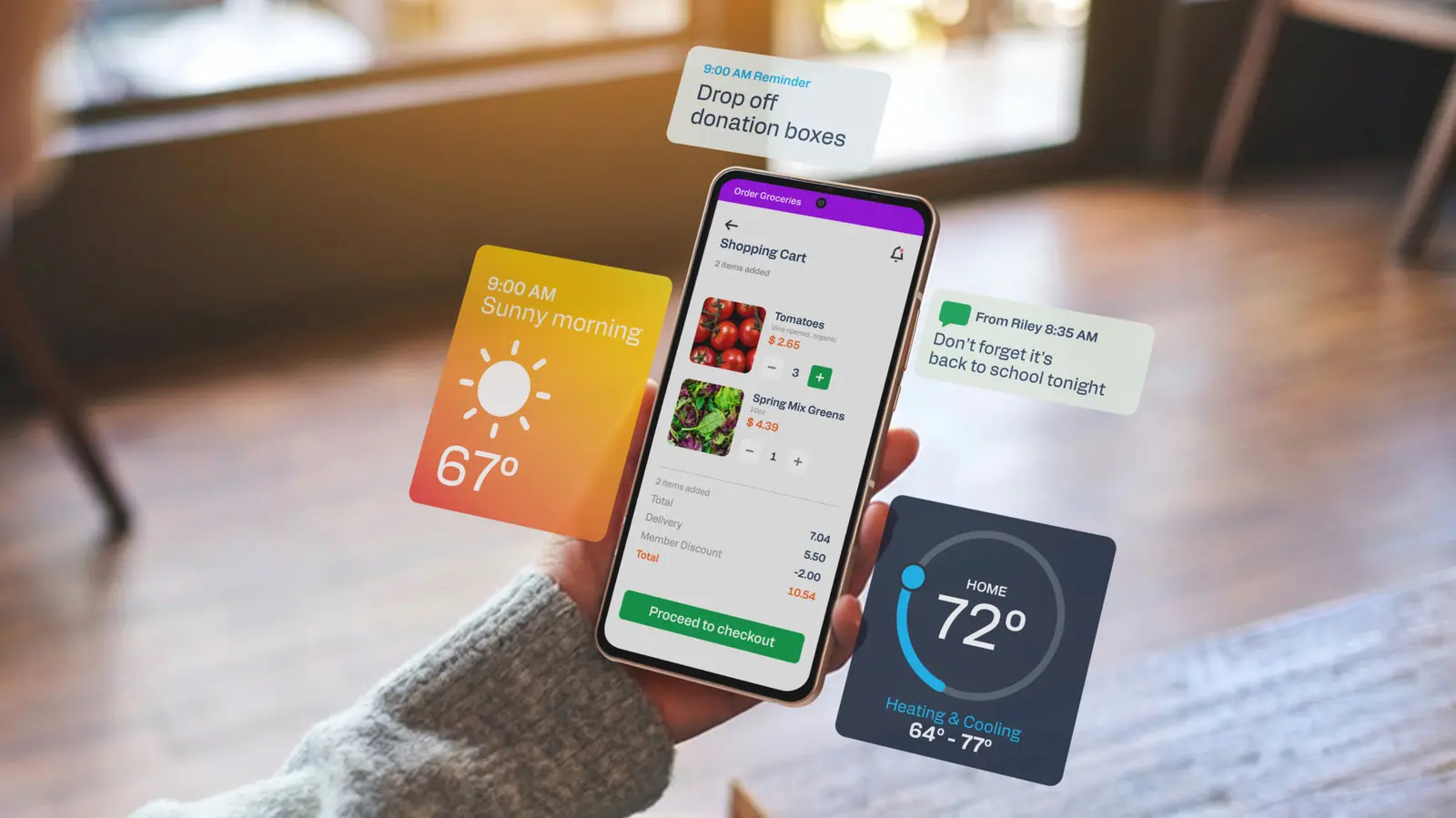
As the cost of consumer electronics continues to climb, Qualcomm is broadening its portfolio to give smartphone manufacturers more flexibility in designing devices that balance performance with affordability. The company has officially introduced two new mobile chipsets, the Snapdragon 6 Gen 5 and the Snapdragon 4 Gen 5, both aimed at the midrange and budget segments of the market. These processors promise significant gains in graphical performance, UI smoothness, and camera capabilities, while also incorporating modern connectivity standards.
Snapdragon 6 Gen 5: Performance for the Midrange
The Snapdragon 6 Gen 5 sits below Qualcomm's flagship Snapdragon 8 series but above the entry-level 4 series. It is designed to deliver a substantial upgrade over its predecessor, the Snapdragon 6 Gen 4. At the heart of the chip is a Qualcomm Kryo CPU with an octa-core configuration: four high-performance cores and four efficiency cores. This arrangement allows for better multitasking and power management. The integrated Adreno GPU is claimed to be 21 percent more powerful than the previous generation, enabling smoother graphics in games and applications.
One of the standout features introduced with the Snapdragon 6 Gen 5 is Qualcomm's Snapdragon Smooth Motion UI technology. This software and hardware combination is engineered to reduce screen stuttering by 18 percent and accelerate app launch speeds by up to 20 percent. For users, this translates to a more fluid experience when scrolling through social media feeds, opening apps, or navigating the operating system. The technology works by intelligently predicting and adjusting frame rates based on the content displayed, ensuring that animations remain consistent and responsive.
Camera capabilities receive a notable boost thanks to AI enhancements. The chip supports Intelligent Night Vision, which leverages machine learning to improve low-light photography by reducing noise and enhancing detail. Additionally, an AI-powered digital zoom system can achieve up to 100x magnification, though at such extreme levels software processing will play a major role in preserving image quality. The ISP also handles improved HDR10 video processing for more dynamic and vibrant recordings.
On the connectivity side, the Snapdragon 6 Gen 5 includes sub-6GHz 5G support (mmWave is absent, likely to keep costs down), along with Wi-Fi 7 and Bluetooth 6.0. Bluetooth 6.0 introduces Channel Sounding technology, which enables precise location tracking of accessories like wireless earbuds and speakers using a phone's existing Bluetooth hardware. This could make it easier to find misplaced items without the need for separate trackers.
Snapdragon 4 Gen 5: Affordable Power for Budget Phones
The Snapdragon 4 Gen 5 is the more accessible option, designed to bring modern features to even lower price points. Despite being a step down from the 6 series, this chip delivers impressive improvements over the Snapdragon 4 Gen 4. Qualcomm states that its GPU is 77 percent faster than the previous generation's, allowing for smooth 90fps gaming—a first for the Snapdragon 4 series. This leap in graphics performance means that budget phones could soon handle more demanding games without stuttering.
Like its sibling, the Snapdragon 4 Gen 5 also includes Smooth Motion UI. Here, the technology reduces screen stutter by 25 percent and boosts app launch speed by 43 percent compared to the previous generation. The improvements are more pronounced because the predecessor had a lower baseline, but the overall effect should be a noticeably snappier user experience on entry-level devices.
Another noteworthy addition is support for Dual SIM Dual Active (DSDA) technology. This allows a phone to maintain active data connections on two SIM cards simultaneously, enabling features like seamless network switching or using data from two carriers at once. While this capability is less common in the United States, it is highly valued in many regions across Asia, Africa, and Europe where dual-SIM phones are popular. The Snapdragon 4 Gen 5 supports sub-6GHz 5G, but its Wi-Fi and Bluetooth specifications are less advanced: Wi-Fi 5 and Bluetooth 5.1. This choice helps keep the chip cost-effective while still offering adequate connectivity for most users.
Market Context and Availability
Qualcomm's new chips arrive at a time when the smartphone market is experiencing price sensitivity due to global inflation and supply chain fluctuations. By offering tiered solutions with clear performance differences, the company enables OEMs to design phones that meet specific budget constraints without sacrificing essential features like camera quality or UI smoothness. The introduction of Smooth Motion UI across both chipsets indicates that Qualcomm views fluid user interaction as a key differentiator in the midrange and budget segments, where disparities in display refresh rates and software optimization often exist.
It is important to note that while the Snapdragon 6 Gen 5 and 4 Gen 5 support these features at the chipset level, it is ultimately up to device manufacturers to implement them in their phones. The actual user experience will depend on factors such as thermal design, software customizations, and component choices. Qualcomm has not yet announced specific devices, but it has confirmed that phones powered by these SoCs are expected from brands including Honor, Redmi, Oppo, and Realme. These devices are likely to appear in late 2026 or early 2027, targeting a wide range of price points from under $200 to around $400.
The company's strategy of bringing premium features like AI photography, high-refresh-rate gaming, and advanced connectivity to affordable hardware could intensify competition in the midrange market. MediaTek, Qualcomm's primary rival, has been aggressive in this space with its Dimensity series, and these new Snapdragon chips are clearly meant to regain ground. With the Snapdragon 6 Gen 5 offering Wi-Fi 7 and Bluetooth 6.0, and the 4 Gen 5 pushing GPU performance by 77%, manufacturers have compelling options to differentiate their upcoming models.
Looking back at Qualcomm's recent history, the Gen naming convention has evolved to simplify generations across the portfolio. The 6 Gen 5 follows the 6 Gen 4 introduced in 2025, while the 4 Gen 5 updates the 4 Gen 4 from early 2026. The continuous annual updates indicate a rapid pace of iteration, driven by competitive pressure and the need to support emerging technologies like AI on-device processing and always-on connectivity.
For consumers, the arrival of these chips means that affordable phones will no longer have to compromise as severely on performance. Gamers on a budget can look forward to 90fps support, while photography enthusiasts can expect better low-light shots and digital zoom. The inclusion of Channel Sounding in the 6 Gen 5 also hints at future ecosystem features where phones can serve as hubs for locating accessories—a capability that could become standard in more devices over time.
In the coming months, tech analysts will be watching closely to see how OEMs implement these chips and whether they deliver on the promised improvements. Battery life, thermal management, and software updates will be critical factors in determining the success of phones based on the Snapdragon 6 Gen 5 and 4 Gen 5. Qualcomm's announcements today set the stage for a new wave of affordable smartphones that aim to bring premium experiences to a wider audience without breaking the bank.
Source: Engadget News