

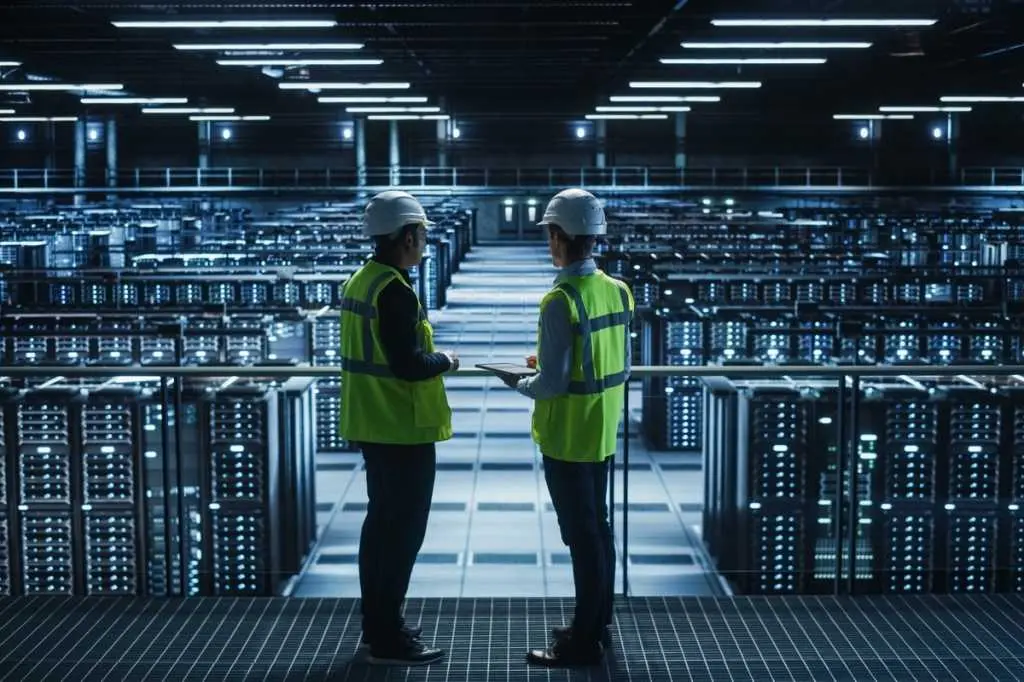
The AI data center capacity crisis was not a surprise to everyone. In 2023 and 2024, hyperscalers unveiled plans for massive data center expansions, including gigawatt-scale campuses that promised to deliver nearly unlimited compute for the AI era. Boardrooms listened, press releases were celebrated, and enterprises began building road maps around those promises. Yet anyone with deep infrastructure experience could see the numbers did not add up. Power grids, construction timelines, supply chains, and physical reality were being treated as afterthoughts.
Now, in 2026, the consequences are impossible to ignore. Articles and industry reports confirm that many of these high-profile data center projects are being delayed or canceled outright. Power shortages are creating bottlenecks across the industry. The grid simply cannot support the ambitions announced with such fanfare just a few years ago. The gap between the fantasy and the reality is not a mystery. It is simple math, and the math said the timeline was impossible from the start.
Enterprises left holding the bag
If your AI road map relies on the abundant cloud capacity vendors promised, you are likely facing tough conversations right now. Your AI growth plans are feeling pain, and the promised compute does not exist as advertised. You are scrambling to decide next steps. Looking inward is the only option at this point. The vendors had every incentive to sell their vision with confidence and enthusiasm. When you are a hyperscaler announcing a $10 billion data center campus, you are in the business of capturing mindshare and customer commitment.
That strategy boosts sales, but it fosters dangerous assumptions in customers. The enterprises that are struggling today relied on vendor promises without doing their own analysis. They trusted the vendors to be right or, at least, close enough. They built their plans around those promises. When reality does not match up, they are left holding the bag. The hard truth is that vendor incentives do not perfectly align with your interests. They want your business, which means painting rosy pictures of capacity and timelines. You need someone to look out for your interests, and that person must be internal or a trusted advisor without a stake in selling you cloud services.
Two years ago, many infrastructure experts were warning clients that the promised AI capacity was a fantasy for most organizations within the stated time frames. The advice then was to plan for constraints, build flexibility into infrastructure strategy, and assume that the needed compute would be harder to get than the vendors suggested. Many clients nodded politely and went back to assuming the vendors would deliver. Some suggested the experts were too pessimistic. The enterprises that took that advice seriously are in a much better position today.
Why the grid cannot keep up
The root cause of the crisis is not a lack of ambition or capital. Hyperscalers have plenty of both. The problem is that data centers require enormous amounts of electricity, and the grid is not expanding fast enough to meet the demand. Nearly half of all new US data center builds are being delayed or canceled, according to recent industry data. Power interconnection queues are backed up for years. Transformers and other critical electrical equipment have lead times that stretch far beyond project schedules. Skilled labor for construction and grid upgrades is in short supply. Environmental reviews and local opposition add further delays.
AI workloads make the problem worse. High-performance GPUs consume far more power than traditional cloud workloads, and they generate heat that requires robust cooling systems. A single large AI training cluster can draw as much electricity as a small town. When you multiply that by dozens of planned facilities, the demand quickly exceeds what the grid can deliver. The timelines promised by vendors assumed that new power generation and transmission infrastructure could be built as quickly as the data centers themselves. That assumption was never realistic.
Three realities to plan for
So, how should enterprises plan for future infrastructure growth? Let me offer three realities that need to be part of your planning process going forward.
- First, assume constraints. Every infrastructure plan should assume you will not get the power, space, or compute you want within the time frame you need. Build your strategies around limitations, not abundance. This is not pessimism; it is realism. If the limitations hit, you are ahead of the game. If they do not materialize, you have simply over-engineered your solution and you can scale back.
- Second, build for flexibility. The days of locking into single-vendor strategies based on promised capacity are over. You need infrastructure strategies that can adapt as reality unfolds. That means maintaining options, keeping relationships with multiple providers, and building architectures that can shift workloads as conditions change. The enterprises that will succeed are not the ones who picked the right hyperscaler. They are the ones who did not put all their eggs in one basket.
- Third, do the math yourself. When a vendor shares future capacity plans, analyze whether they are realistic. Review power infrastructure constraints. Review construction timelines. Review historical patterns of delivery versus promises. Make vendors substantiate their commitments in writing with enforceable accountability clauses. Protect your organization from optimistic sales projections that do not align with operational realities.
Build for a constrained world
For enterprises still scrambling, the first step is to admit that the old plan is dead. You cannot execute an infrastructure strategy built on vendor promises that never materialized. You need a new plan that accounts for real power constraints, real timeline challenges, and real competition for limited compute resources. Start by conducting a thorough audit of your current and planned AI workloads. Estimate the compute and power requirements for each use case. Then compare those requirements against what providers can actually deliver.
In many cases, the answer will be to diversify across multiple providers and deployment models. Cloud, colocation, on-premises, and edge all have a role to play. Some workloads may fit better on dedicated infrastructure that you control. Others can run efficiently in smaller regional data centers that have available power. Still others may need to wait until the grid catches up. The goal is not to abandon the cloud, but to use it strategically and realistically.
Flexibility also means rethinking how you design applications. Workloads should be portable and able to run in different environments. That requires avoiding proprietary dependencies and building with open standards where possible. It also means designing for graceful degradation, so that when capacity is tight, the most critical workloads get priority and lower-priority work can be deferred or moved.
The role of new power sources
There is no question that the industry is looking for solutions. Hyperscalers and utilities are exploring new sources of power, including small modular nuclear reactors, advanced geothermal, and long-duration energy storage. Some are striking deals with natural gas plants to bring capacity online quickly. Others are investing in on-site generation to reduce reliance on the grid. These efforts are real, but they take time. Nuclear projects can take a decade or more to complete. Geothermal is promising but limited by geography. Natural gas is available but raises emissions concerns. None of these solutions will rescue the timelines that were promised for 2025 and 2026.
What about the short term? There are no easy answers. Enterprises should expect a continued squeeze on compute availability for the next several years. Power constraints, supply chain issues, and labor shortages will not be resolved quickly. The organizations that adapt will be those that treat infrastructure planning as an ongoing discipline, not a one-time exercise. They will monitor market conditions, revisit their assumptions regularly, and adjust their strategies as new information emerges.
Hype never stops
The AI capacity crisis we are living through was predictable. Those who predicted it were largely ignored because the message was not what people wanted to hear. But that is always the way infrastructure reality works. The grid can only expand so fast. Power capacity has real limits. Massive new demands create real bottlenecks. The vendors will keep selling the vision. The press will keep covering the announcements. And the hype will continue to outpace reality.
Your job is to be skeptical. Your job is to build infrastructure strategies that work in the world that actually exists, not the world that vendors are selling. The warnings from two years ago about the data center capacity crisis were right. They are likely to remain right for the foreseeable future. The question is whether enterprises will finally start listening before the next wave of unrealistic vendor and media promises leads to the next round of painful corrections. As always, the choice is yours.
Source: InfoWorld News