

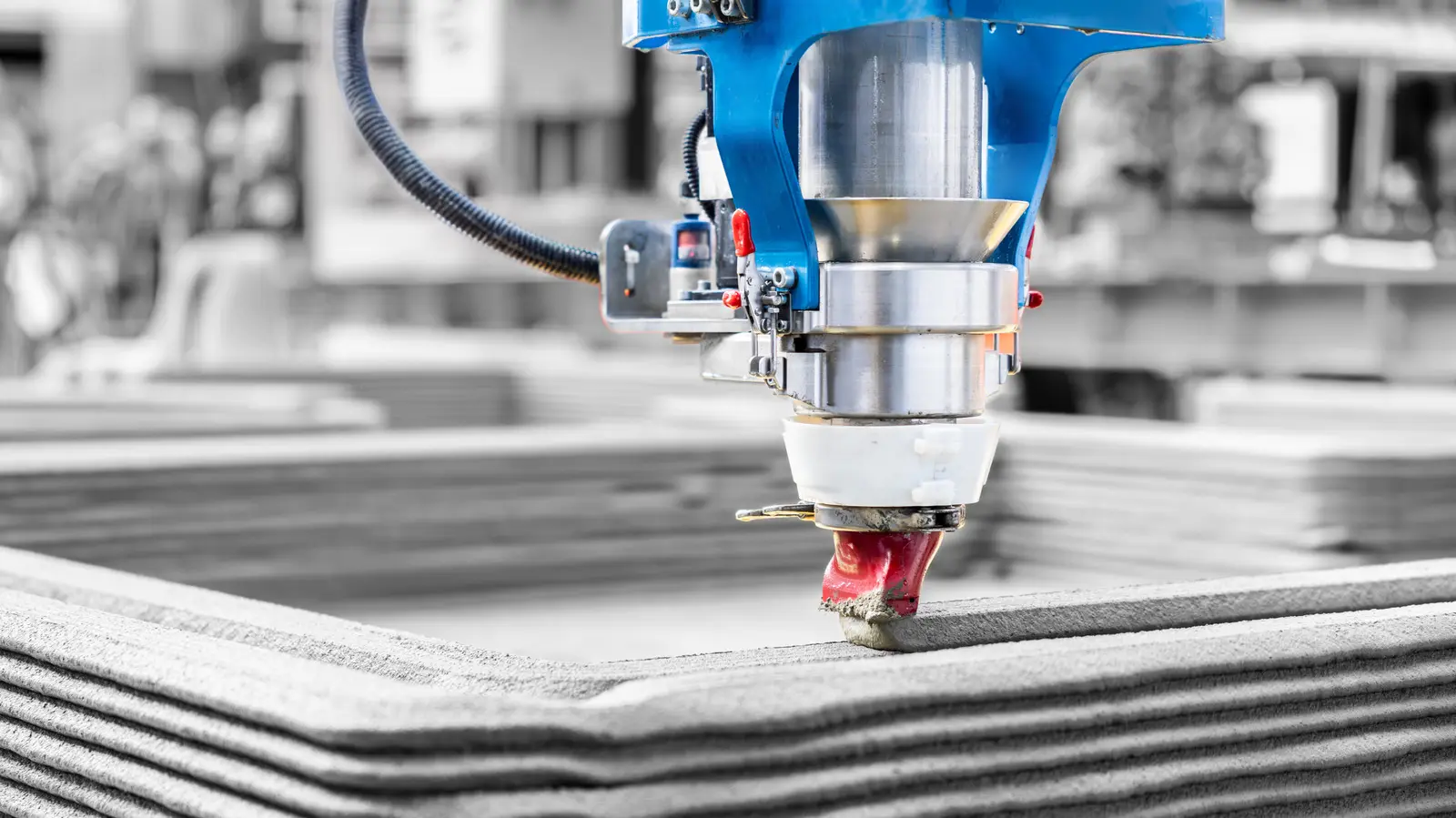
3D printing concrete has long been heralded as a transformative technology for the construction industry, promising faster build times, reduced labor costs, and lower material waste compared to traditional methods using molds. However, the path from a digital design to a physically printable structure has been fraught with challenges. Engineers often spend days manually tweaking designs to accommodate the real-world limitations of 3D printers—constraints like the need for continuous printing lines, restricted nozzle turning radii, and fixed bead widths. These obstacles have slowed adoption and limited the technology's potential.
Now, a team of scientists at the Massachusetts Institute of Technology (MIT) has announced a breakthrough that could fundamentally change this landscape. Their new computational framework automates the design optimization process, slashing the time required to produce a printer-ready design from several days to mere minutes. The findings were published in the journal Additive Manufacturing and have already been put to the test by printing a 2.3-meter-long concrete bridge at the Autodesk Technology Center in Boston.
Breakthrough in 3D Printing Concrete
Led by researchers from MIT's Department of Civil and Environmental Engineering, the team worked closely with technicians at the Autodesk facility to identify exactly why previously accepted design frameworks often produced models that couldn't be printed. They identified three critical limitations: printers must extrude material in a continuous, unbroken line—a constraint that earlier software didn't properly enforce. Additionally, the printer nozzles cannot make sharp turns; they require gradual curves to maintain consistent material flow and avoid clogging. Finally, the thickness of the bead—the line of concrete laid down by the nozzle—must remain consistent throughout the print, a factor that previous models treated as variable or ignored entirely.
By integrating these constraints into their computational framework, the MIT team achieved a dramatic speedup. Co-author Zane Schemmer noted that the underlying mathematics are so complex that even three years ago, the solvers needed to compute these optimizations did not exist. 'You go back five, 10 years ago, the solver we used, even three years ago, could not solve these problems,' he said. The new framework runs on a standard laptop, requiring no specialized hardware.
How the New Framework Works
The framework uses advanced optimization algorithms that simultaneously consider hundreds of geometric and mechanical constraints. It takes a high-level architectural model and automatically generates a detailed printing path that respects all physical limitations. The software can adjust bead width, layer height, and print speed on the fly to ensure the structure is both printable and structurally sound. In tests, the team demonstrated that the framework could adapt to last-minute design changes in real time. For example, on the day they planned to print the bridge, they realized the design needed to be slightly smaller. Previously, such a change would have required hours or days of manual rework. With the new system, the modification took only about 10 minutes.
The resulting bridge, spanning 2.3 meters, was not only printable but also remarkably strong. Co-author Hajin Kim-Tackowiak reported that the bridge was 'super over-engineered,' comfortably holding over 2,000 pounds without any signs of failure. She added that the structure could have been made far stronger, noting that it would take 'after 200,000 pounds [that] you can start to think about the physics' of structural failure. This strength-to-weight ratio is crucial for practical applications like pedestrian bridges or temporary infrastructure.
Implications for Material Efficiency
Beyond speed, the new framework also highlights significant opportunities for material savings. The printed bridge used a bead width of 4 centimeters, but the team's simulations showed that reducing the bead to just 1 centimeter could cut concrete usage by up to 76% without compromising safety. This reduction is especially impactful for one-off designs, such as emergency structures built after natural disasters, where material availability and transportation costs are critical. The narrower bead also allows for greater geometric complexity, enabling designs that use exactly the amount of concrete needed for strength while eliminating excess weight.
The team emphasized that their work is not only about optimizing existing printers but also about guiding future printer design. By identifying which constraints have the biggest impact on printability and material efficiency, they can provide clear recommendations to manufacturers. For example, printers capable of varying bead width dynamically would unlock even greater savings. The findings suggest that focusing on nozzle design and motion control could yield the most significant advances in the next generation of concrete printers.
Looking Ahead: Reinforced Concrete and Beyond
Despite this progress, major challenges remain. One of the greatest is the inability to print reinforced concrete—concrete that includes steel rebar or fibers for tensile strength. Most 3D printed concrete structures currently rely on the material's compressive strength alone, which limits their use in beams and slabs that experience bending forces. The MIT team acknowledged this limitation and said they are already turning their attention to solving it. Potential solutions include embedding reinforcement during printing or using new types of fiber-reinforced concrete that can be extruded.
In the meantime, 3D printed houses are already becoming a reality in several countries, with startups like ICON and Apis Cor building entire homes in under 24 hours. However, large-scale infrastructure projects—bridges, dams, high-rise buildings—remain rare due to regulatory hurdles, the need for reinforced concrete, and the high cost of industrial printers. The MIT work addresses one of the key bottlenecks: the time and expertise required to prepare a design for printing. If this can be reduced to minutes, it may accelerate the adoption of 3D printing across the construction sector.
The broader implications are significant. According to the United Nations, the construction industry accounts for nearly 40% of global carbon dioxide emissions. 3D printing has the potential to reduce this footprint by using less material, generating less waste, and enabling the use of low-carbon concrete mixes. The MIT team's framework could help designers optimize structures for minimum environmental impact while maintaining structural performance. Additionally, the ability to rapidly redesign and print customized components could transform disaster response, allowing relief teams to fabricate shelters bridges, and other critical infrastructure on-site using locally sourced materials.
The research also opens up new avenues for architectural creativity. With constraints now managed automatically, architects and engineers can focus on aesthetic and functional design rather than printer compatibility. The bridge printed by the team is a functional proof of concept, but the same framework could be applied to organic shapes, intricate lattice structures, or even furniture. As the technology matures, the line between fabrication and design may blur, leading to entirely new forms of construction that are both efficient and beautiful.
In summary, the MIT team's work represents a quantum leap in the practical application of 3D concrete printing. By solving the design optimization problem, they have removed a major obstacle to widespread adoption. The combination of speed, material efficiency, and strength demonstrated in their bridge print suggests that large-scale 3D printed infrastructure is not just a futuristic dream but an imminent reality. As they tackle the challenge of reinforced concrete, the construction industry may soon see even more dramatic changes in how buildings and bridges are conceived and built.
Source: SlashGear News