

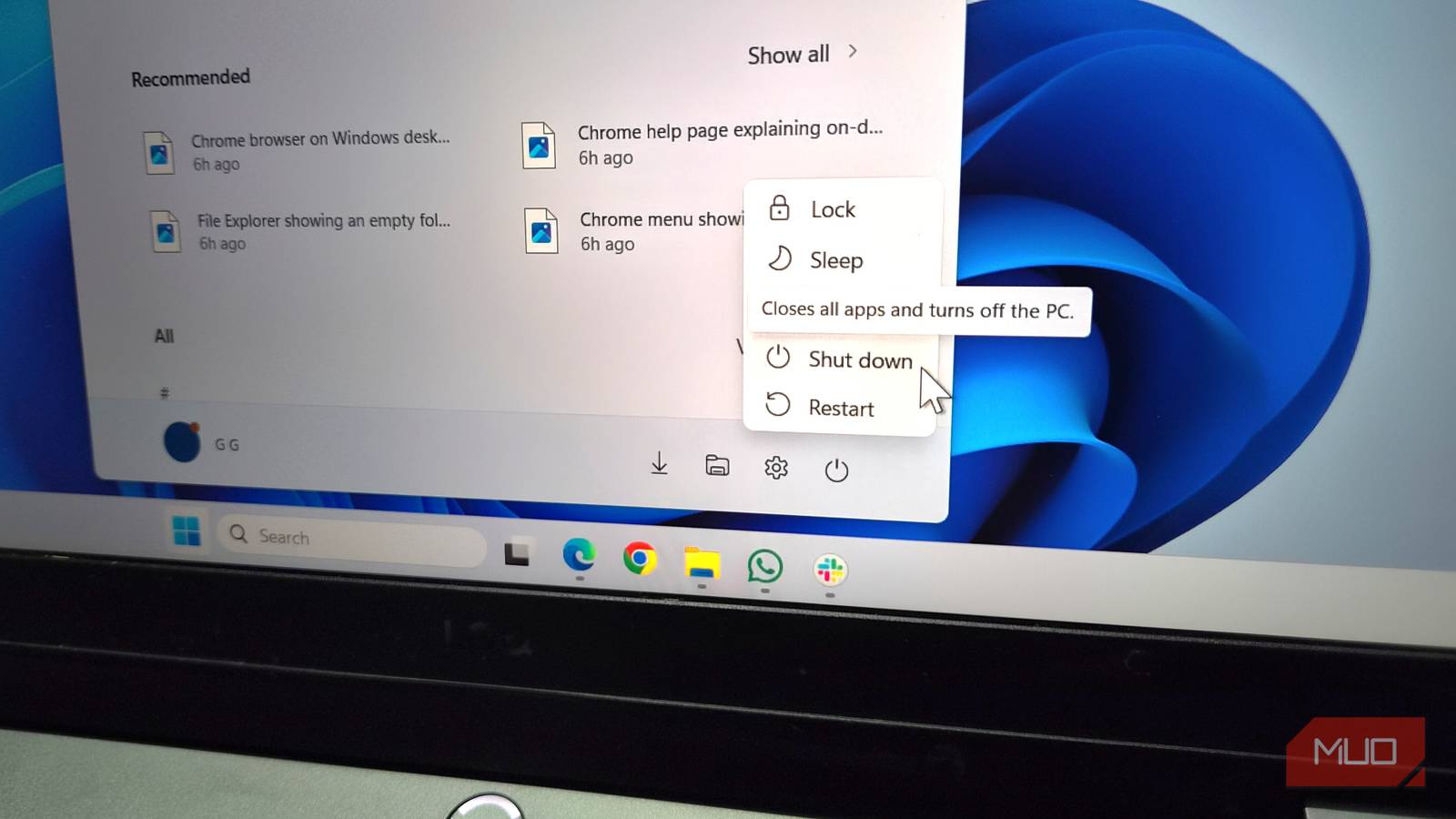
For the last couple of years, I’ve been hibernating my PC almost every single day. The convenience was undeniable—closing everything down across virtual desktops only to reopen it all the next morning never made much sense to me. So for the longest time, I rarely ever shut down or rebooted my PC apart from Windows updates. But then I had to stop because of what daily hibernating was doing to my system. And honestly, I’m glad I did. Shutting down my PC every night turned out to be a much bigger improvement than I expected.
Hibernating is convenient, but there are downsides
It saved time but caused other problems
Hibernation once felt like a perfect feature—it gave me the best of both worlds: no battery drain like a full shutdown while still letting me resume work exactly where I left off, similar to sleep mode. For a while it worked great, but then I noticed a pattern. Every 7 to 10 days, my PC would gradually feel slower and less responsive. Eventually, things would get bad enough that the entire system would freeze out of nowhere, forcing a hard reset. Unfortunately, that also meant losing unsaved work at times.
This wasn’t the only issue. The hibernation file itself can be quite large because Windows essentially saves your entire system state to storage. In my case it was close to 10GB when I checked storage usage. That may not sound massive, but it’s space that could be used for something else. More importantly, modern SSDs have made hibernation far less essential than it used to be. Earlier, PCs could take a minute or more to boot up, but that’s no longer the case. My PC boots incredibly fast anyway, so I was barely saving any meaningful time by hibernating. Sure, reopening apps takes some extra time, but I feel it’s worth it if it helps my PC run smoothly.
The reason for the slowdowns is rooted in how Windows manages memory and processes during long uptimes. Even though hibernation saves the system state to disk, it doesn’t fully reset the kernel session. Over days or weeks, memory fragmentation accumulates, background processes can leak resources, and temporary glitches pile up. A fresh shutdown clears all of this, giving the operating system a clean slate. SSDs have also reduced the historical advantage of hibernation—modern SSDs boot in seconds, so the time savings are negligible. The real cost of hibernation is the accumulation of system baggage that can degrade performance over time.
Regular shutdowns solved a lot of little problems
It wasn’t as bad as I thought
Once I started shutting down my PC every night, those random slowdowns that used to creep in completely disappeared. I can confidently credit regular shutdowns for this improvement because I didn’t change anything else about my setup. More importantly, my PC also felt cleaner and a bit faster than before. It’s hard to describe exactly, but Windows just felt “fresh” every morning. The reason is simple: with hibernation, a PC never gets the chance to fully shut down and reset itself. Everything from background processes to temporary glitches and memory usage just keeps carrying over day after day. Regularly shutting down fixes that.
Another side benefit is that Windows updates became much less annoying. When I relied on hibernation, there were times when Windows would suddenly decide to force an update in the morning or even in the middle of the day while I was busy working. Now, updates usually install during shutdown instead, so they’re far less disruptive. Of course, I still rely on hibernation from time to time—it’s not a bad feature by any means. Anytime I know I’ll need to jump back into a project and want everything as I left off, hibernation is still handy. But I no longer treat it as the default option every single day.
Beyond the immediate fixes, this change also improved my overall workflow. I started mentally separating work sessions more clearly, and I found that the few seconds it takes to relaunch browsers and apps became a useful transition period. Many users worry about losing their session state, but Windows has a feature called restartable apps that mitigates that. By enabling it, supported apps like Edge, Notepad, and File Explorer automatically reopen after a shutdown. This made my nightly shutdown routine almost as seamless as hibernation, but without the performance baggage.
Fast Startup can make shut down less effective
It blurs the line between shutdown and hibernation
Shutting down your PC doesn’t always mean Windows is doing a full shutdown. That’s because Windows has a feature called Fast Startup enabled by default. During a shutdown, this feature saves part of the system state to disk, so Windows can quickly reload it during the next boot. In a way, it’s almost like a lighter version of hibernation. While faster boot times sound great, it also prevents your PC from fully shutting down and clearing bugs or memory issues. It simply reduces the effectiveness of a shutdown. Since parts of Windows kernel sessions are still being preserved, some underlying issues simply carry over between sessions.
To avoid this, I disabled Fast Startup on my PC, and I recommend it to most people. Instead of relying on that, I’ve done other optimizations, like managing startup apps and disabling unnecessary background services. The performance gain from a truly clean shutdown far outweighs the extra second or two it takes to boot. If you want to check whether Fast Startup is on, go to Power Options in Control Panel and click “Choose what the power buttons do,” then look for “Turn on fast startup (recommended).” Disabling it ensures that every shutdown is a full shutdown.
Another factor to consider is how modern Windows kernel sessions work. Even with a regular shutdown, some system services may not fully reload if they are set to start automatically. That’s why I also reviewed my startup programs and background app permissions. Using tools like Task Manager and System Configuration (msconfig), I trimmed down unnecessary auto-starting programs. This combined with disabling Fast Startup gave me the cleanest possible restart experience. The result was a PC that felt consistently responsive, without the gradual degradation I had previously normalized.
Windows restarts most of my apps after a shutdown
One of the things that made shutting down my PC regularly much more convenient is Windows’ restartable apps feature. It basically allows Windows to restore supported apps as soon as you sign in after a shutdown or reboot. To enable it, head to Settings > Accounts > Sign-in options and turn on “Automatically save my restartable apps and restart them when I sign back in.” Not every app supports it, but the ones that do work great. For me, it restores my Edge tabs, File Explorer folders, Notepad, and other supported apps exactly as I left them.
This feature bridges the gap between hibernation and a clean shutdown. Combined with modern SSDs and a properly configured system, nightly shutdowns become a straightforward habit. The small trade-off in convenience is far outweighed by the stability and performance consistency. Many users may not realize how much accumulated background activity can affect their daily experience until they try a full shutdown routine. It’s a simple change that delivers noticeable benefits without requiring advanced technical knowledge.
Source: MakeUseOf News