

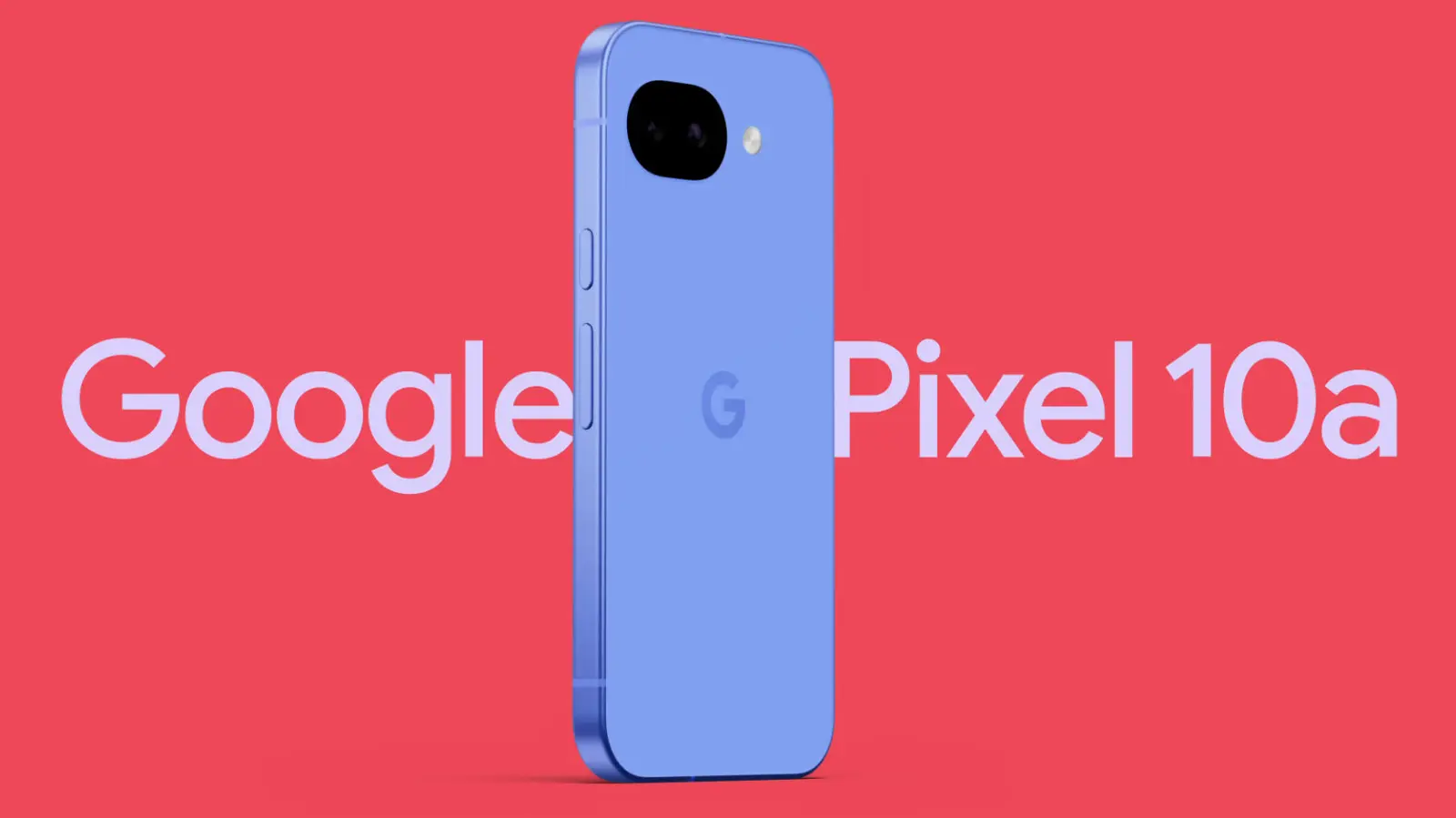
The launch of the Pixel 10 in 2025 marked a decade since the series first debuted, giving Google ample time to find its footing in the extremely crowded smartphone industry. Pixels are often criticized for performance or battery life, but they remain easy recommendations for those seeking clean software and an excellent camera setup. Google's lineup is streamlined: base Pixel, Pro and Pro XL variants, a foldable, and the budget-friendly 'a' series announced about half a year later.
The Pixel 10a starts at $500 for the 128GB version. By comparison, the regular Pixel 10 is priced at $800 and the 10 Pro at $1,000, both with the same storage. To achieve such a large price difference, Google makes deliberate compromises. You notice differences as soon as you pick up the Pixel 10a: though it uses the same aluminum frame as the Pixel 10, it swaps the glass back for a composite plastic panel. You also lose the telephoto camera, which is handy for distant subjects. The 'a' series also cuts corners with a less powerful chip, slower wireless charging, and a slightly inferior display. Yet these phones consistently rank among the best budget-friendly options.
Google's winning formula for budget-oriented phones
The Pixel 3a, introduced in 2019, was the first budget-friendly smartphone in the Pixel family. With a lower-end chip and a standard refresh rate display, it was a stripped-down version of the Pixel 3. Google has followed that recipe ever since: offering a substantially cheaper model by dialing back on build materials, performance, and camera hardware. Over time, the A series has caught up in key areas, but Google keeps costs down by reusing older processors and reserving certain features for flagship models.
Take the Pixel 10a, reviewed earlier in 2026. It is powered by 2024's Tensor G4 chip, 8GB of RAM, 128GB of storage, and offers a 120Hz pOLED display, a dual-camera setup, and a 5,100 mAh battery. The Pixel 9a, released in 2025, packs identical hardware. Iterative upgrades are common in the smartphone space, but Google has taken component recycling further than most OEMs. While day-to-day performance with the Tensor G4 and 8GB RAM is solid, the Pixel 10a misses some features like Magic Cue, which require on-device AI models. Pixelsnap, Google's version of MagSafe, is also absent. The plastic back allows wireless charging but at slower speeds of up to 10W. The Pixel 10a also replaces the faster ultrasonic fingerprint scanner found in premium models with an optical sensor.
The Pixel 10a plays it very safe
It helps that the Pixel A series devices usually launch six months after the regular models, giving Google a good opportunity to repurpose existing components for a more affordable device. Despite being less powerful than the Pixel 10, the Pixel 10a uses the same camera hardware for its primary and ultrawide lenses. It drops the 5x telephoto lens, though. Then there is the homegrown Tensor G4 that powers the experience. Although it is the same SoC used in the flagship Pixel 9 and 9 Pro, Tensor chips have never been known for class-leading performance. While the Tensor G4 suits a budget phone, it still falls behind Qualcomm's and Apple's latest mid-range chips. For example, the OnePlus Nord 6, exclusive to Asian markets, is powered by the Snapdragon 8s Gen 4, which delivers up to 50% better AnTuTu scores than the Tensor G4, and it is priced at roughly $450.
Google is also one of the few mainstream brands still offering smartphones with a base capacity of 128GB. For a camera-centric device, users may need cloud storage sooner than they would on an iPhone 17e. Despite its limitations, the consensus among Pixel 10a users is that the phone has more positives than negatives. It even enjoys the same seven-year software update commitment as other Pixels.
Behind the scenes, Google's cost-saving strategy is a masterclass in supply chain management. By reusing the Tensor G4 chip across two generations (Pixel 9 and 10a), Google amortizes research and development costs over a larger volume. The same applies to the display – the 120Hz pOLED panel is sourced from previous production runs, avoiding the premium for cutting-edge components. The plastic back, though less premium, is cheaper to manufacture and more durable than glass. Google also avoids the expense of a periscope telephoto lens, which requires precision optics and complex assembly. Instead, the dual-camera system relies on the same main and ultrawide sensors used in the Pixel 9, ensuring camera quality remains high while costs stay low.
Software differentiation also plays a role. By reserving advanced AI features like Magic Cue and video boost for flagship models, Google creates a clear value hierarchy without alienating budget buyers. The Pixel 10a still gets core Google Assistant features, Call Screen, and computational photography enhancements, but the most resource-intensive AI tasks are limited to devices with newer Tensor chips and more RAM. This approach ensures that the budget phone remains capable without cannibalizing sales of higher-priced models.
Historical context shows that Google has refined its budget formula over six generations. The Pixel 4a used the Snapdragon 730G, a mid-range chip, and skipped wireless charging entirely. The Pixel 5a introduced a larger battery and water resistance, but still used an older Snapdragon 765G. With the Pixel 6a, Google switched to its own Tensor chip, bringing computational photography parity with flagships for the first time. Each iteration closed the gap in performance and features, yet Google maintained a consistent $350-$500 price point. The Pixel 7a added 90Hz refresh rate and wireless charging, while the Pixel 8a bumped the display to 120Hz and increased battery capacity. The Pixel 9a essentially repeated the Pixel 8a's specs, but the Pixel 10a kept the same chip and camera while lowering the price by $50 compared to the 9a's launch price of $550.
Marketing and distribution also contribute to the low cost. Google often sells the A series through its online store and carrier partners with limited retail presence, reducing overhead. By launching the phone six months after the flagship, Google capitalizes on the hype around the main Pixel launch and then offers a more accessible option when early adopters have already upgraded. The timing also allows Google to negotiate lower component prices as the chips and displays are no longer in highest demand. Additionally, Google benefits from economies of scale: the same Tensor G4 chip is used in multiple Pixel models, increasing order volumes and reducing per-unit cost.
Comparing the Pixel 10a to direct competitors reveals both strengths and weaknesses. The Samsung Galaxy A56 5G, priced similarly at $450, features a 120Hz display, triple cameras, and a newer Exynos 1480 chip, but its software update policy is only four to five years. The OnePlus Nord 6 offers raw performance but lacks the Pixel's camera optimization and clean Android experience. Apple's iPhone 17e starts at $599 but has a smaller display and only single camera. The Pixel 10a strikes a balance: excellent camera, seven years of updates, and a clean interface, all for $500. The plastic back and slower wireless charging are trade-offs many consumers readily accept.
In essence, Google's formula for the Pixel A series is simple: reuse proven components, prioritize camera and software experience, cut corners on materials and niche features, and leverage brand loyalty. The result is a phone that feels more premium than its price suggests, especially in daily use. While spec enthusiasts may lament the lack of a telephoto lens or faster charging, the average user receives a device that excels at photography, runs smoothly for years, and costs significantly less than the competition. As Google continues to iterate, the A series remains a benchmark for affordable Android phones, proving that you don't need a flagship price to get a flagship camera and software experience.
Source: SlashGear News