

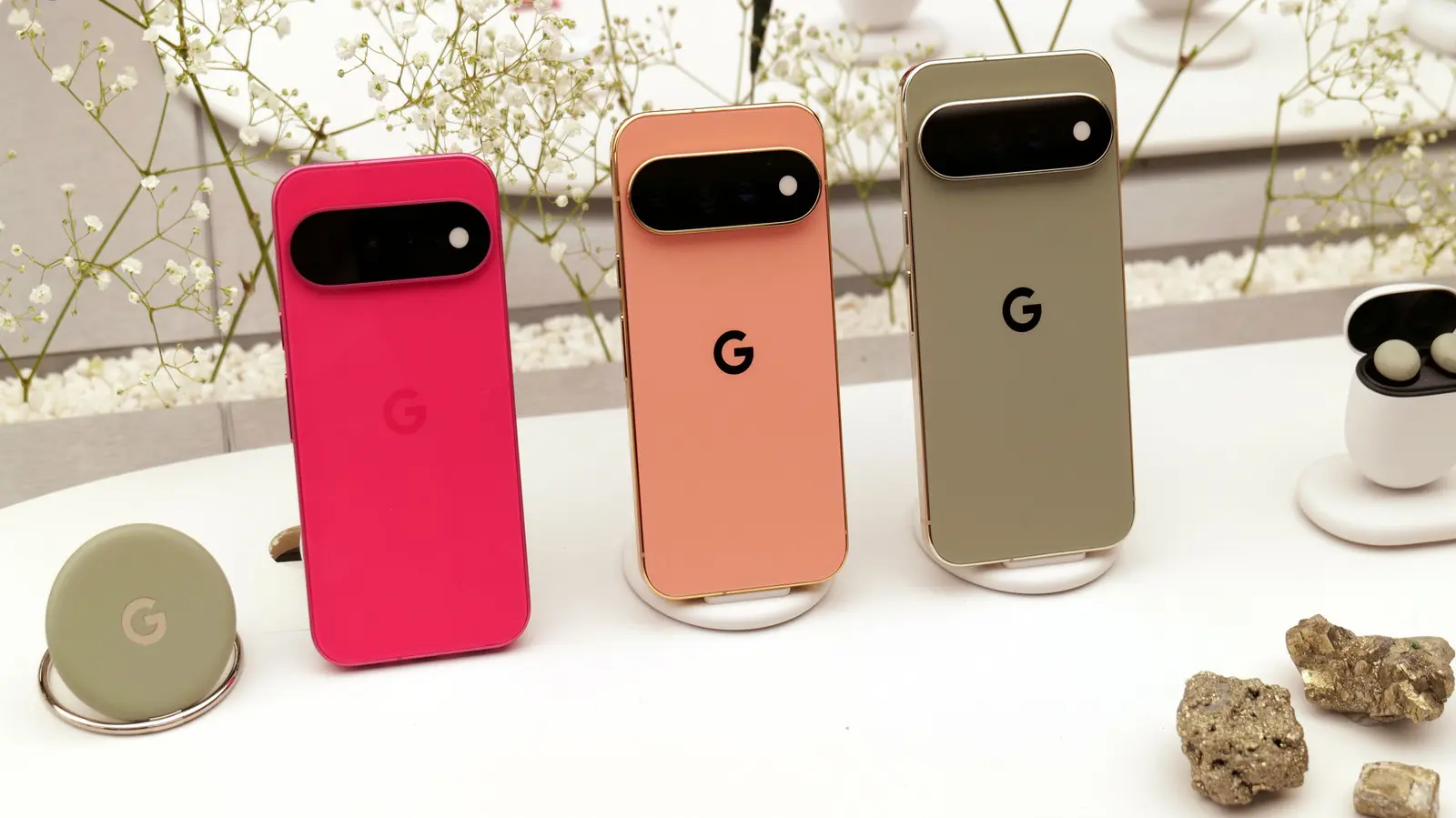
Google's latest flagship smartphones, the Pixel 11 lineup, represent a notable shift in the company's mobile strategy. With the cost of memory skyrocketing over the last year, the story of the new Pixel line is mostly one about software. Google is touting the ability of its Pixel 11 devices to deliver timely, proactive assistance to users. Many of the features Google has built to deliver on that promise expand on Gemini Intelligence, the computer-use agent the company debuted ahead of I/O 2026 earlier this year.
Gemini Intelligence is Google's ambitious attempt to make its AI assistant more aware of what is happening on the screen and in the user's broader digital life. Rather than waiting for a command, the Pixel 11 is designed to anticipate needs and offer help before a user even asks. This proactive approach is a major evolution from the traditional smartphone assistant model, where the phone only responds to explicit requests. With the Pixel 11, Google is aiming to create a companion that understands context, recognizes patterns, and delivers information at exactly the right moment.
A more helpful phone that acts before you ask
One of the standout features will see the Pixel 11 family generate glance-able cards inside apps you're using as you go about your day. These cards are designed to be quickly scannable, offering relevant information without requiring users to switch between apps or manually search. For instance, say a friend messages you about a trip that's coming up. You'll see a card appear with your flight details, indicating if it's on time or delayed. This kind of frictionless information delivery could redefine how people interact with their devices, making the phone feel less like a tool and more like a proactive personal assistant.
In other contexts, the phones will attempt to deliver contextual help. Google suggests a scenario where you're texting about dinner and your Pixel 11 offers to secure a reservation on your behalf. This goes beyond simple suggestions; the phone understands the conversation, identifies a relevant action, and offers to complete it. The company describes this as proactive help that appears in many more places across your phone. For example, users might see suggestions to save events to their Calendar, locations to Maps, or relevant information to Google Wallet, such as membership numbers on airline or hotel apps.
This level of integration is a critical part of Google's approach. By weaving AI assistance into the fabric of Android and its own apps, the company hopes to create an ecosystem that is genuinely useful rather than just superficially clever. The Pixel 11 is not just a phone with a chatbot; it is a phone that can understand the user's context and act on it.
Location-based lock screen suggestions
The new Pixels will also launch with a preview of a feature that will deliver proactive suggestions based on your location. This adds another layer to the AI's contextual awareness. For example, say you're waiting for a seat at a new restaurant. You'll see a lock screen notification with insights related to the spot, including information about the menu and where to sit to get the best view. Such features show how Google is combining on-device processing with location data to create a more seamless experience.
Google notes that for all the features mentioned above, you may need a subscription for higher usage. This is an interesting development, as it suggests that the company is moving toward a tiered AI service model. While basic proactive assistance may be free, heavy users might need to pay for a premium tier. This aligns with broader industry trends, as smartphone makers and cloud providers seek to monetize AI features that require significant computational resources.
Breaking down barriers with sign-language-to-text
Google is also expanding how you can interact with its phones, and this time the focus is on accessibility. The company's DeepMind lab has created a sign-language-to-text model that will debut first on the Pixel 11 line before coming to other devices. The model, known as SL2T, allows deaf and hard of hearing users to sign at their phone to search the web, write messages, and converse with Gemini. This is a significant step forward for inclusive technology, as it moves beyond voice and text input to embrace a visual language used by millions of people around the world.
The SL2T model leverages advances in computer vision and natural language processing to recognize and translate sign language gestures in real time. By making this feature a first-party offering on Pixel devices, Google is ensuring that it is deeply integrated with the rest of the system. Users can respond to messages, compose emails, or ask Gemini questions using sign language, and the phone will handle the rest. This has the potential to dramatically improve the daily experiences of deaf and hard of hearing users, making smartphones more accessible than ever before.
Google's investment in accessibility is not new, but the Pixel 11 shows that the company is willing to integrate these features at the core of its operating system. The fact that SL2T will eventually roll out to other devices also suggests that Google views this as a platform-wide feature rather than a one-off experiment.
Magic Capture reimagines smartphone photography
Of course, it wouldn't be a Pixel launch without at least one new AI-related camera feature. The phones will offer a new tool called Magic Capture, which Google says uses a combination of models to ensure you snap life's fleeting moments. When you go to photograph a subject like a smiling baby, or a fast-moving scene like a buzzer-beating three pointer, you'll just need to tap a single button on your phone. Behind the scenes, Google's models will analyze around 400 frames to deliver the perfect 12-megapixel snap.
Magic Capture is designed to eliminate the guesswork from photography. Instead of capturing a single frame at the moment you press the shutter, the Pixel 11's camera system records a burst of frames before and after your tap. The AI then analyzes these 400 frames to identify the one with the best expression, focus, and timing. This is particularly useful for capturing children, pets, sports, and other unpredictable subjects where timing is everything.
The feature can automatically apply edits for you, ensuring that exposure, color, and composition are optimized without manual intervention. And if a still photo isn't enough, you can even get a video without switching modes. This flexibility reflects a growing trend in smartphone photography: blurring the lines between photos and videos. By allowing users to tap a single button and receive both a perfect still and a video clip, Google is simplifying the capture process and helping users preserve memories in multiple formats.
Magic Capture also builds on years of computational photography innovations in the Pixel lineup. From the original Pixel's HDR+ technology to later features like Night Sight and Magic Eraser, Google has consistently used software to overcome hardware limitations. The Pixel 11 continues this tradition, using machine learning not just to enhance images after the fact, but to capture better moments in the first place.
The broader shift toward AI-driven assistance and photography raises important questions about privacy and on-device processing. Google has often emphasized its Private Compute Core and on-device machine learning capabilities, which are designed to keep sensitive data off Google's servers. With features like glanceable cards and location-based suggestions, users may wonder how much data the phone is using to make these predictions. Google has not disclosed all the details, but the company has historically stressed that many Pixel features are processed locally on-device, and that users have controls to manage their data.
The Pixel 11 launch also comes at a time when the smartphone market is maturing. Hardware upgrades are becoming less dramatic, and software differentiation is increasingly important. Apple's Siri and Samsung's Bixby have also evolved with AI, but Google's deep investment in large language models and computer vision gives it a unique edge. Gemini Intelligence represents Google's attempt to unify these capabilities into a coherent assistant that can see, hear, and understand the world in a more human way.
Developers and third-party app makers are likely to play a big role in expanding these features. If Google opens up the relevant APIs, other apps could integrate glanceable cards and contextual suggestions into their own interfaces. That could create a rich ecosystem of proactive assistance that extends far beyond Google's own apps. However, it also requires careful design to avoid overwhelming users with notifications and suggestions. The balance between helpful and intrusive is delicate, and Google will need to ensure that its proactive AI respects user attention.
For now, the Pixel 11 devices appear to be a bold step forward in the evolution of the smartphone. With proactive AI notifications, sign-language-to-text capabilities, and Magic Capture, Google is once again pushing the boundaries of what a phone can do. The emphasis on software over hardware reflects broader economic realities, but also a clear vision: the future of smartphones lies in intelligence, not just components. As the Pixel 11 begins to reach consumers, the true test will be whether these features feel magical in daily use or simply like clever gimmicks. Given Google's track record with Pixel cameras and assistant features, there is reason to be optimistic. The company has consistently transformed ambitious ideas into practical tools, and the Pixel 11 appears to carry that tradition forward.
Source: Engadget News