

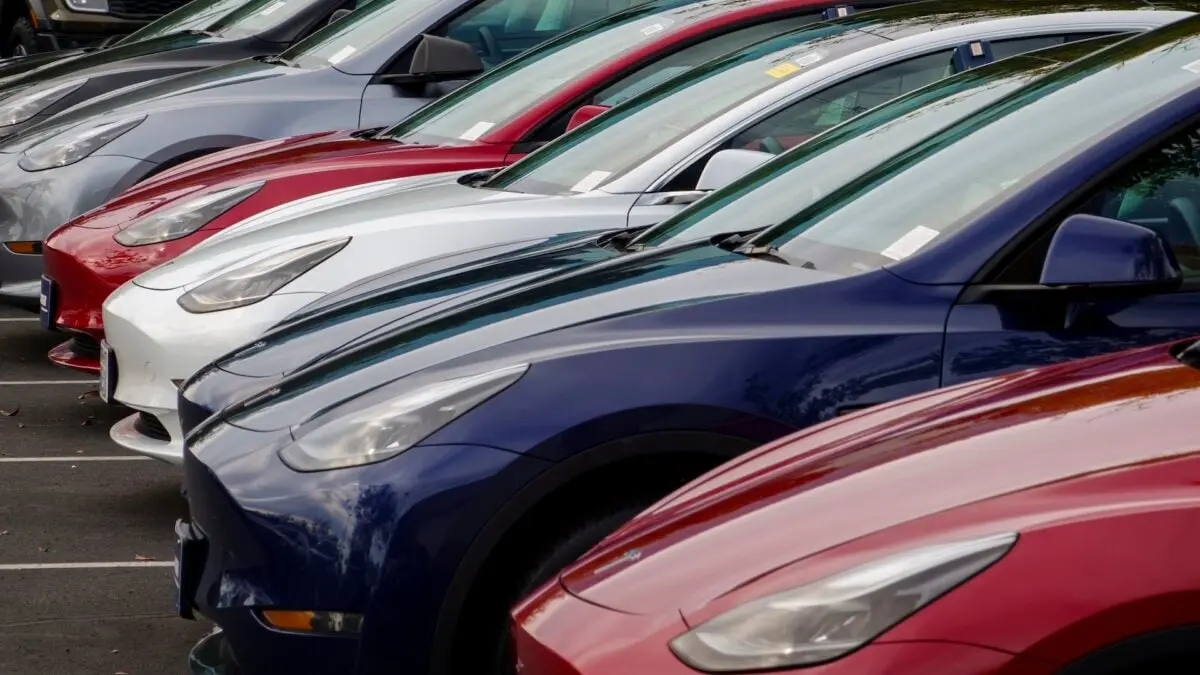
After Tesla’s sales in Europe took a nosedive last year, the company appears to be making a strong resurgence on the continent. While it initially seemed that Elon Musk’s political maneuvering had soured buyers’ appetites across the pond, time appears to be healing those wounds. Tesla announced Thursday it plans to hire 1,000 new workers at its Gigafactory near Berlin as part of a push to increase production to 7,500 vehicles per week by October, according to Electrek. This news arrives just months after Tesla announced a previous round of 1,000 new jobs at the plant and said it planned to increase production to 6,000 vehicles per week by the end of June.
Electrek points out that this production boost would put Tesla’s German factory on track to produce around 390,000 EVs per year. That is still below the 500,000 cars per year Tesla was targeting when it opened the facility in 2022. The factory, which faced delays and regulatory hurdles during its construction, has been a symbol of Tesla's European ambitions. The current expansion suggests confidence in sustained demand, even in a market that has been historically sensitive to political controversies.
The rebound in sales is striking when contrasted with the political climate. Like in the United States, Elon Musk’s hardcore conservative politics, direct involvement in DOGE (the Department of Government Efficiency), and personal ties to President Donald Trump hurt 2025 sales in Europe. At the time, Trump was threatening to take over Greenland and followed through on his promise to impose various tariffs on the continent. Meanwhile, Musk promoted far-right and anti-immigrant movements in Europe, including Germany’s AfD party. More recently, Musk was accused of inciting violence with posts related to violent anti-immigrant demonstrations in Belfast. These actions led to a backlash among European consumers, who traditionally value social cohesion and environmental responsibility.
Yet sales now appear to be moving in the other direction, driven by rising fuel costs and new government incentives for zero-emission vehicles in Germany. Tesla registrations in Europe rose 57 percent to more than 118,000 vehicles from January through May, compared with the same period last year, according to the European Automobile Manufacturers’ Association. This shift is remarkable given that European leaders have spent much of 2026 talking about the need to reduce dependence on U.S. technology companies. French President Emmanuel Macron, speaking at the Munich Security Conference in February, declared, “In this new geopolitical environment, Europe has to become a geopolitical power. It’s ongoing, but we have to accelerate and clearly deliver all the components of a geopolitical power, in defence, in technology, and in the derisking vis-à-vis all the big powers in order to be much more independent.”
Macron’s words have been backed by concrete actions. Earlier this year, the French government announced it would stop using American video conferencing platforms like Microsoft Teams and Zoom, and instead use the French platform Visio. Additionally, France signed a deal for its armed forces to use Mistral’s models and software, an effort to boost European AI sovereignty. At the European Union level, the European Commission unveiled a “tech sovereignty package” meant to strengthen the bloc’s digital autonomy, focusing on semiconductors, AI, cloud computing, and open-source software. The Commission also announced that it has reached a preliminary position that Amazon Web Services and Microsoft Azure should be regulated as “gatekeepers” under the Digital Markets Act, the EU’s sweeping antitrust law for large digital platforms. These moves signal a concerted push to reduce reliance on American big tech.
However, the electric vehicle sector presents a paradox. EVs should be one of the easiest sectors for Europe to break its dependence on American tech. Unlike cloud computing or social media, where the US giants dominate, Europe already has several homegrown automakers making EVs, including Volkswagen, BMW, and Stellantis. These companies have invested billions in electrification and have deep roots in European manufacturing. European customers also have increasing access to options from China, where companies like BYD have been making breakthroughs in driving range and charging speed. The Chinese EV makers have aggressively entered the European market with lower-priced models and advanced battery technology. Despite these alternatives, Tesla’s sales are surging, suggesting that brand loyalty, the Supercharger network, and perceived innovation still outweigh political concerns for many buyers.
The numbers tell a story of resilience. The 57% increase in registrations is not just a blip; it represents a recovery from a deep low. In 2025, Tesla’s European sales had dropped by over 40% in some quarters as customers boycotted the brand due to Musk’s political alignment. The rebound may be fueled by newer models like the updated Model 3 Highland and the Cybertruck’s limited European rollout, as well as price cuts that made Tesla vehicles more competitive against traditional automakers. Moreover, Tesla’s ability to ramp up production at the Berlin factory shows that its manufacturing efficiency, a core Musk strength, remains intact. The factory now employs thousands and is a key part of the local economy in Brandenburg.
Yet the broader geopolitical implications are significant. Europe’s ambition to achieve digital sovereignty is being undermined by consumer choices in the very industry where it has domestic champions. Tesla’s success highlights the difficulty of disentangling from American technology when the products offer perceived superior value. Volkswagen’s ID. series, for example, has faced software glitches and slower rollouts, while BMW’s EVs remain premium-priced. Chinese competitors like BYD face potential tariff hurdles and brand skepticism in some markets. This leaves Tesla as a convenient option for Europeans who prioritize range, charging infrastructure, and performance over political statements.
Industry analysts warn that Europe may be missing a critical opportunity. If European governments truly want to reduce dependency on US tech, they need to incentivize the purchase of European-made EVs through tax breaks, subsidies for local battery production, and stricter regulations on foreign data flows. However, such measures risk trade retaliation and clash with the EU’s free trade principles. The current rebound in Tesla sales suggests that consumer sentiment is not aligned with political rhetoric. Musk’s controversial image, while damaging in the short term, may be fading as new car buyers focus on practical concerns like fuel costs and reliability.
In summary, Tesla’s hiring spree and production ramp-up in Germany represent a vote of confidence in the European market. The company seems convinced that European customers will keep making their way back to its showrooms, despite the larger tech sovereignty push. The ease with which Europe could supplant American EVs with local or Chinese alternatives underscores the irony of this trend. As European leaders continue to talk about strategic autonomy, the Tesla comeback serves as a reminder that technological independence requires not just regulation but also competitive products that win over consumers. Whether Europe can achieve both goals remains an open question.
Source: Gizmodo News