

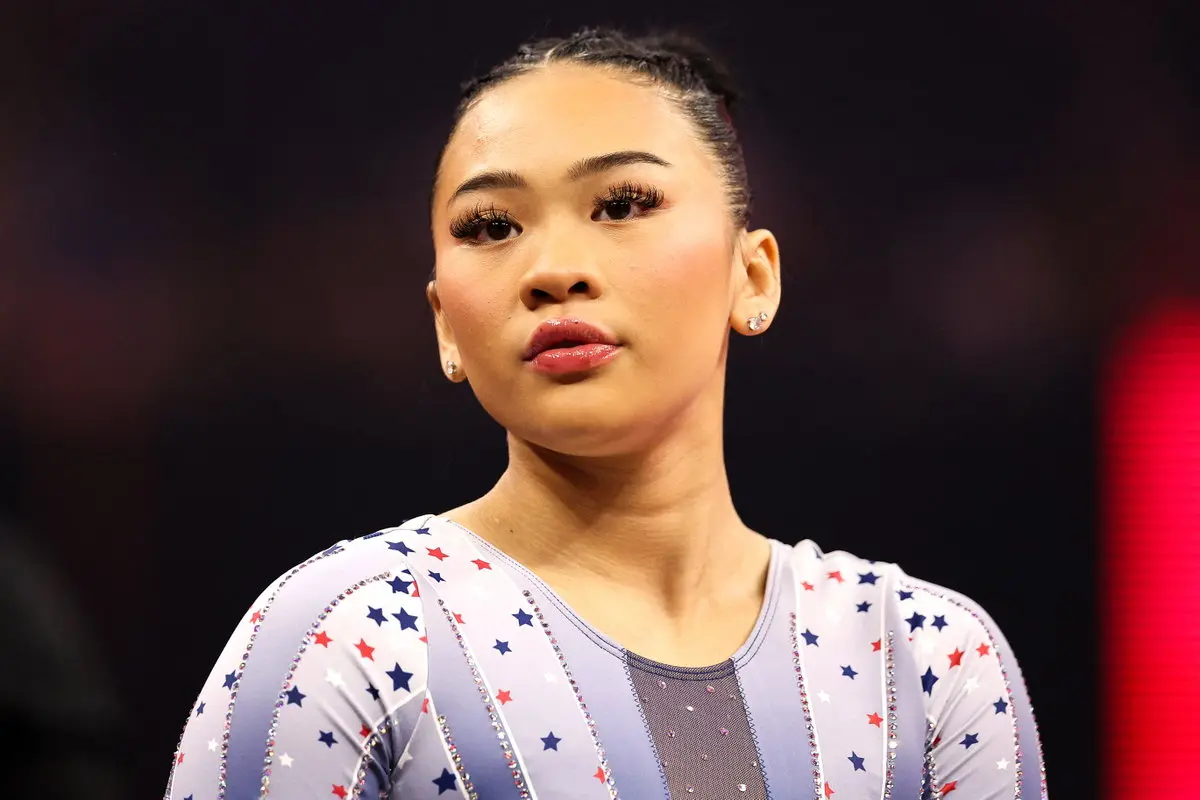
At just 18 years old, Suni Lee arrived at the Tokyo Olympics carrying a lingering foot and ankle injury. Few anticipated that she would become the face of Team USA in her first Olympic Games. When Simone Biles withdrew from the team final due to mental health concerns, Lee had no choice but to step up. With the United States trailing Russia, the responsibility suddenly fell on her young shoulders. On the uneven bars, she delivered a stunning 15.400 score, securing a silver medal for the team. To fans and commentators, it looked like a moment of extraordinary courage. But five years later, Lee has revealed the harsh truth about those pressure-filled moments: she often blacked out during competition.
Speaking at the Special Olympics USA Games in Minnesota on June 23, Lee visited athletes and shared her experiences. The next day, she joined FOX 9 Minneapolis-St. Paul for an interview where she talked about the mental toll of elite gymnastics. “I’ve just been telling them to breathe, do their exercises, and to trust in their confidence,” Lee said. “It’s not easy to go out there and compete in front of so many people with such high stress.” Then she added a personal confession: “I remember when I was competing, I definitely have blacked out a couple of times and not remembered what’s happened because it’s just so stressful in the moment. So hard to feel anything else.”
This admission sheds light on the brutal reality behind the glitz of Olympic glory. Lee’s journey has been marked by immense physical and mental challenges. In 2023, she was diagnosed with two rare kidney diseases that caused severe swelling in her face, hands, and legs. She had to step away from gymnastics entirely as her body stopped responding normally. Slowly, she regained strength and worked her way back to competition, ultimately qualifying for the Paris 2024 Olympics. There, she helped Team USA win a gold medal and earned bronze in both the individual all-around and uneven bars.
Lee’s College Career and Life Beyond Gymnastics
Suni Lee also made history by competing in NCAA gymnastics at Auburn University from 2021 to 2023. She became the first reigning Olympic all-around champion to participate in college gymnastics. During her time at Auburn, she accumulated numerous accolades, including an NCAA title on balance beam in 2022 and an SEC title on uneven bars the same year. She recorded several perfect 10.0 scores and became a beloved figure in the college sports community.
After the Paris Olympics, Lee began exploring life outside the gym. She has taken on roles in fashion, brand collaborations, and media. She works with brands like Lululemon and American Eagle and even appeared in the 2025 Sports Illustrated Swimsuit Issue at age 22 (now 23). Her versatility has made her a role model not only for young gymnasts but for anyone navigating career transitions and health struggles.
Health Struggles and Mental Health Advocacy
Lee’s kidney disease diagnosis in 2023 forced her to pause her elite career. The condition caused significant swelling and fatigue, making training impossible. She spent months focusing on recovery, working with doctors to manage the symptoms. Her return to gymnastics was nothing short of remarkable. At the Special Olympics USA Games, she noted the importance of mental health care and regular health checks for athletes. “I feel like it’s something I needed when I was competing,” she said, reflecting on the support systems available at the Games.
Her openness about blacking out under pressure adds to a growing conversation about mental health in sports. Other elite athletes, including Simone Biles and Naomi Osaka, have spoken about the psychological toll of high-stakes competition. Lee’s story resonates because she represents resilience—not only in her physical recovery but also in her willingness to be vulnerable about her mental state. She advises young athletes to breathe deeply, trust their training, and remember that perfection is not the goal.
Uncertain Future for LA 2028
As for her gymnastics future, Lee remains cautious about a potential comeback for the LA 2028 Olympics. “I think last Olympics I put so much pressure on myself,” Lee said. “I just kind of want to see where I’m at and how my body feels.” She has continued light training at Midwest Gymnastics Center in Minnesota, the same facility where her journey began. For now, she seems to be balancing two worlds: life beyond gymnastics and the possibility of returning, without rushing into either direction.
The question of whether Lee will compete in Los Angeles remains open. At just 23, she is still young enough to make a return, but her body and mind need time to heal. She has already achieved more than most athletes dream of: Olympic medals, NCAA championships, and a platform to advocate for mental health. Whether or not she steps onto the competition floor again, her legacy as a trailblazer is secure.
Trending in Sports: Athletes Speaking Out on Mental Health
Lee’s story is part of a larger trend where athletes are increasingly sharing their mental health struggles. From NBA players taking mental health breaks to tennis stars withdrawing from matches for self-care, the stigma is slowly being dismantled. Lee’s admission about blacking out underlines how extreme the pressure can be, even for the world’s best gymnasts. Her visit to the Special Olympics also highlighted the importance of community and support systems for athletes of all abilities.
As the sports world evolves, conversations about mental health are becoming more common. Teams and organizations now provide access to sports psychologists and mental health professionals. Lee’s experience underscores the need for continued investment in these resources. Her journey inspires not only gymnasts but anyone facing overwhelming pressure in their lives.
The 2026 World Cup and other major events also spark discussions about athlete welfare. While the focus often remains on performance and medals, Lee’s story reminds us that behind every routine, every competition, there is a human being with vulnerabilities. Her courage in sharing her blackout experiences will likely encourage other athletes to speak out and seek help.
Source: Yahoo Sports News