

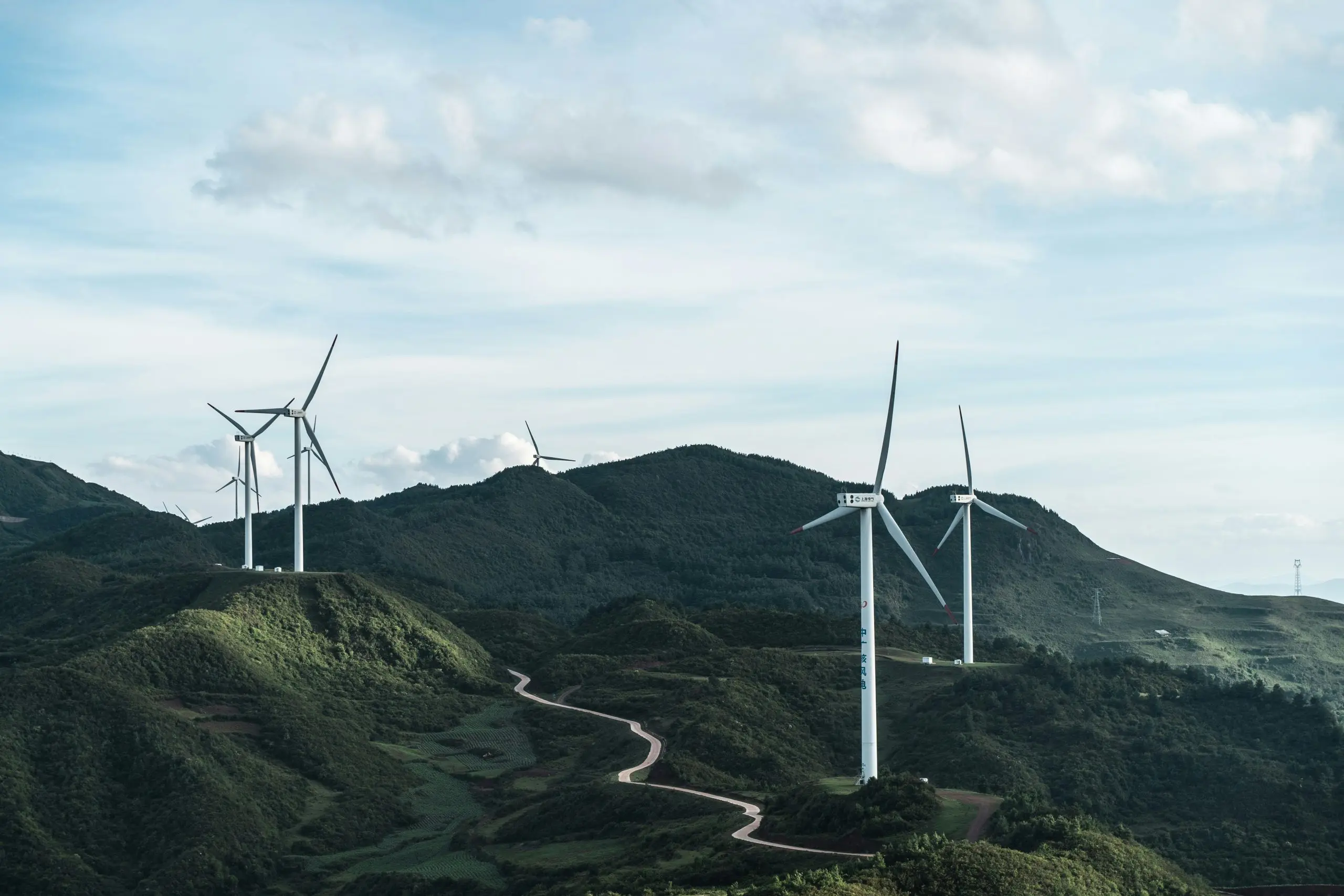
Breakthrough in grid mapping
China has achieved a world first by using artificial intelligence to map its entire renewable energy grid. The project, led by the State Grid Corporation of China in collaboration with several AI research institutes, created a dynamic digital twin of all solar, wind, hydro, and biomass installations across the country. The AI system processes real-time data from millions of sensors, weather stations, and satellite feeds to optimize power generation, storage, and distribution. Officials claim the mapping has already improved grid efficiency by 12% and reduced curtailment of renewable energy by 8% in pilot regions.
How the AI works
The AI model employs deep reinforcement learning and transformer networks to predict energy generation patterns up to 72 hours in advance. It factors in local weather, historical consumption, equipment health, and even cloud cover movements. By simulating thousands of scenarios per second, the AI can recommend when to store energy in batteries, divert surplus to electric vehicle charging stations, or ramp down fossil fuel backup plants. The system also identifies priority maintenance zones, reducing outages by an estimated 15%. An open-standard data layer ensures interoperability between different provincial grids, a historic challenge for China's fragmented energy system.
Background: China's renewable energy push
China is the world's largest producer of renewable energy, with over 1,200 gigawatts of installed capacity from solar, wind, and hydro as of 2023. However, grid integration has lagged behind generation capacity. Due to transmission bottlenecks and forecasting limitations, an estimated 7% of renewable output was wasted in 2022. The AI mapping initiative directly tackles these inefficiencies. It builds on earlier digital grid projects in provinces like Jiangsu and Sichuan, but scales the concept nationwide for the first time. The project cost roughly $2.6 billion over three years, funded partly by state energy innovation funds and private AI venture capital.
Historical context and energy interdependence
China's energy policy has long emphasized self-sufficiency and technological leapfrogging. The current AI mapping effort follows the country's 14th Five-Year Plan, which calls for a 'new-type power system' with smart grids and digital management. International observers note that China's experience is relevant for regions like Europe, where cross-border renewable trading faces coordination issues. The AI's ability to harmonize variable sources could serve as a blueprint for global supergrids. However, questions remain about data sovereignty and the centralization of critical infrastructure control.
Global implications
Experts suggest that China's AI model could be adapted for other nations with similar geographic and climatic diversity. India, for example, has expressed interest in collaborating on AI-based grid optimization for its ambitious 500 GW renewable target by 2030. The United States has its own DOE-funded projects using AI for grid resilience, but none at the national scale. The Chinese achievement raises the bar for best practices: integrating weather prediction, demand response, and asset management into a single AI orchestration layer. Some European researchers caution about over-reliance on proprietary algorithms, but acknowledge the efficiency gains are undeniable.
Technical details and challenges
The AI model runs on a dedicated exascale supercomputer cluster at the National Energy Administration's data center in Beijing. It ingests 2 petabytes of data daily from 450,000 IoT sensors, 1,200 weather stations, and satellite imagery from the Fengyun series. Machine learning pipelines classify 300 types of energy assets, from offshore wind turbines to rooftop solar panels. One challenge was standardizing data formats across 30 provincial grid operators with different legacy systems. The team solved this by deploying a unified metadata schema and edge computing nodes that preprocess data locally. Cybersecurity was also a major concern; the grid uses physical isolation and quantum key distribution for critical control signals.
Career highlights of lead scientists
Dr. Li Wei, the project lead, previously worked on autonomous driving neural networks before pivoting to energy AI. He founded the AI for Energy Lab at Tsinghua University in 2021 and published the foundational paper on large-scale renewable forecasting. His colleague, Professor Chen Yuxiang, is a veteran of smart meter analytics since 2008 and contributed the anomaly detection algorithms. The team includes 340 engineers and data scientists, with an average age of 31. Their achievement was recently recognized with the State Grid Technology Innovation Award. Dr. Li has stated that the next phase will incorporate distributed ledger technology for peer-to-peer renewable trading between neighborhoods.
Reaction from international community
The International Energy Agency (IEA) described the mapping as 'a promising demonstration of AI's potential to accelerate clean energy transitions' in an early statement. The World Bank's Energy Sector Management Assistance Program (ESMAP) is reportedly studying the results to inform its grid modernization projects in Southeast Asia. Some environmental groups, however, have raised concerns about the environmental impact of training such massive AI models, estimated to consume 50 GWh annually. In response, the team says they offset power usage by directly connecting the supercomputer to a nearby solar farm and using carbon-free hydro for 40% of its runtime.
Future applications and scalability
The AI mapping is not a one-time project. The model is designed to update continuously as new renewable plants are built. China plans to add 300 GW of solar and wind by 2025, and the AI will automatically incorporate them. The system also has a 'digital twin' for emergency simulation, enabling operators to test responses to natural disasters or cyberattacks without risking real equipment. Some industry analysts predict that a similar approach could be applied to decarbonize heavy industries like steel and cement by optimizing their power draw to match renewable availability. The code base is not currently open-source, but Chinese authorities have indicated willingness to share anonymized algorithms with international bodies like the IRENA.
The success of the AI mapping marks a turning point where artificial intelligence moves from an experimental tool to an essential component of national energy infrastructure. As renewable energy continues to dominate new capacity additions globally, the ability to intelligently manage millions of distributed assets will become the defining challenge of the energy transition. China's achievement provides both a proof of concept and a competitive benchmark for the rest of the world. The AI has effectively turned the country's vast renewable fleet into a single, intelligent system—offering a glimpse of the responsive, resilient energy grid of the future.
Source: AI News News