

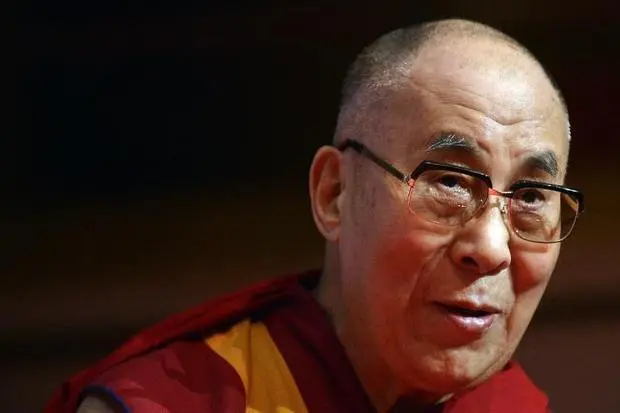
Pope Francis, known for his advocacy of interfaith dialogue and bridge-building, made a calculated decision to avoid meeting the Dalai Lama during the Tibetan spiritual leader's visit to Rome for the World Summit of Nobel Peace Laureates in December 2014. Analysts say the pontiff's choice underscores the Vatican's overarching strategic priority: normalizing relations with China, a nation home to millions of Catholics whose religious freedom is heavily constrained.
While Francis has described the Dalai Lama as a figure he holds in very high regard, a spokesman for the Holy See confirmed that no meeting would take place. The decision was not unprecedented. Pope Benedict XVI met the Dalai Lama in 2006 but declined follow-up audiences in 2007 and 2009. For Francis, the stakes were even higher. Since his election in 2013, he has quietly reinvigorated diplomatic discussions between Rome and Beijing that have been ongoing since the 1980s, following the Cultural Revolution when China's Communist leader Mao Zedong severed ties with the Vatican in 1951.
Beijing has long viewed any gesture of solidarity toward Tibet as a threat to its sovereignty. The Dalai Lama, who fled Tibet in 1959, is considered a separatist by the Chinese government. A meeting between the pope and the Dalai Lama would almost certainly have been interpreted by Beijing as a political provocation, potentially derailing years of painstaking negotiations aimed at securing greater religious freedom for China's Catholic population, which numbers approximately 12 million. Of these, about half belong to the state-controlled Chinese Patriotic Catholic Association, while the rest are part of underground churches loyal to the Vatican, though there is some overlap between the two groups.
The Vatican's Diplomatic Calculus
The decision to avoid the Dalai Lama reflects a broader calculus within the Vatican's diplomatic corps. The Holy See has long sought to establish full diplomatic relations with China, which would allow the Catholic Church to operate more freely in the world's most populous nation. Currently, China's official Catholic church is tightly controlled by the state, with bishops appointed without papal approval—a major point of contention. In the rest of the world, bishops are named by the pontiff. For China, renouncing control over episcopal appointments would mean relinquishing part of its sovereignty, a non-negotiable stance for the Communist Party.
Andrea Tornielli, a commentator with the Vatican Insider site, explained: "The Vatican's diplomatic objective is to avoid actions that fuel instability in already tricky situations and avoid decisions whose consequences are paid for by others—in this case, Chinese Catholics." This sentiment was echoed by other analysts who noted that a meeting with the Dalai Lama could have exposed Chinese Catholics to increased state surveillance and persecution, undoing any progress made in recent years.
Francis's Overtures to Beijing
Pope Francis has made clear his desire to visit China, stating in August 2014 after a trip to South Korea that he would like to go "tomorrow" and expressing admiration for the Chinese people, whom he called "wise." He also emphasized that the church only asks for liberty to carry out its mission, setting no other conditions. In September 2014, the Argentine news site Infobae reported that Francis had sent a letter to Chinese President Xi Jinping, inviting him to the Vatican. Xi and Francis exchanged congratulatory letters following their respective elections in 2013, signaling a tentative thaw in relations.
However, the road to normalization remains fraught. The pro-democracy protests in Hong Kong, which gained momentum in 2014, have further complicated matters. Two local cardinals backed the movement, which China viewed as a threat to its authority. This likely dampened any vague desire Beijing had to relax its grip on religion. Moreover, China has shown little reciprocation. When the Vatican invited the Chinese Philharmonic Orchestra to perform in 2008, Beijing refused to reciprocate by allowing the Sistine Chapel Choir to play in Beijing and Shanghai during a subsequent tour, forcing the singers to settle for performances in Hong Kong, Macao, and Taipei instead.
The Internal Vatican Debate
Within the Vatican, there are two schools of thought on how to proceed with China. One camp, represented by figures like French specialist on Asian churches Regis Anouil, believes that the Holy See should reach an agreement with China on a less problematic nomination process for bishops. The other faction fears that any formal agreement would be exploited by Beijing, which would twist the terms to its advantage. Anouil also argues that China has less riding on the establishment of diplomatic ties than the Vatican does, giving Beijing the upper hand in negotiations.
Despite these challenges, Francis has continued to pursue dialogue. His decision to avoid the Dalai Lama was seen as a pragmatic move to keep the diplomatic channels open. The Dalai Lama's spokesman expressed disappointment but acknowledged that a meeting with the pope could have caused "inconvenience"—a diplomatic understatement that highlighted the delicate balance the Vatican must maintain.
The Broader Implications
The issue of how to handle Tibet is of strategic importance to the Vatican, not only because of China's millions of Catholics but also because of the broader geopolitical dynamics. China has been a top priority for the Holy See since the era of Pope John Paul II, who initiated the first tentative contacts after the Cultural Revolution. The Catholic Church sees China as a crucial frontier for evangelization and a key partner in promoting global peace and development. However, the church's stance on human rights and religious freedom often clashes with Beijing's authoritarian governance.
The Dalai Lama, for his part, has consistently advocated for non-violence and dialogue with China. His presence at the Nobel Peace Laureates summit in Rome was part of his ongoing efforts to promote peace and human rights. Yet, the pope's absence from that meeting sent a clear signal that, for now, the Vatican's priority is to secure tangible gains for Chinese Catholics rather than symbolic gestures that could backfire.
In the years since this episode, the Vatican and China have made incremental progress. In 2018, a landmark provisional agreement on the appointment of bishops was signed, allowing the pope to have a say in the selection of China's state-sanctioned bishops, though implementation has been inconsistent. The agreement was renewed in 2022, indicating a continued willingness on both sides to engage. Pope Francis has praised the deal as a step forward, though critics argue that it gives Beijing too much control over church affairs.
Looking back, the decision to duck the meeting with the Dalai Lama is seen by many analysts as a necessary sacrifice for the greater good of Chinese Catholicism. It reflects the hard choices that diplomacy often demands, especially when dealing with a powerful and sensitive partner like China. As the Vatican continues its delicate negotiations, the memory of that 2014 moment serves as a reminder of the geopolitical tightrope that the Holy See must walk.
The Dalai Lama, now in his nineties, has continued his global advocacy, winning a Grammy in 2026 and remaining a symbol of Tibetan Buddhism and non-violent protest. Meanwhile, the Vatican has also turned its attention to other global issues, such as artificial intelligence, under Pope Leo XIV, who succeeded Francis. Yet, the fundamental challenge of reconciling China's sovereignty with the church's universal mission remains unresolved.
In the end, Pope Francis avoided the Dalai Lama not out of disrespect, but out of a deep commitment to the millions of Chinese Catholics he serves. It was a decision that prioritized substance over symbolism, in the hope that one day, the church in China can worship freely and openly, without fear of state interference.
Source: Digital Journal News