

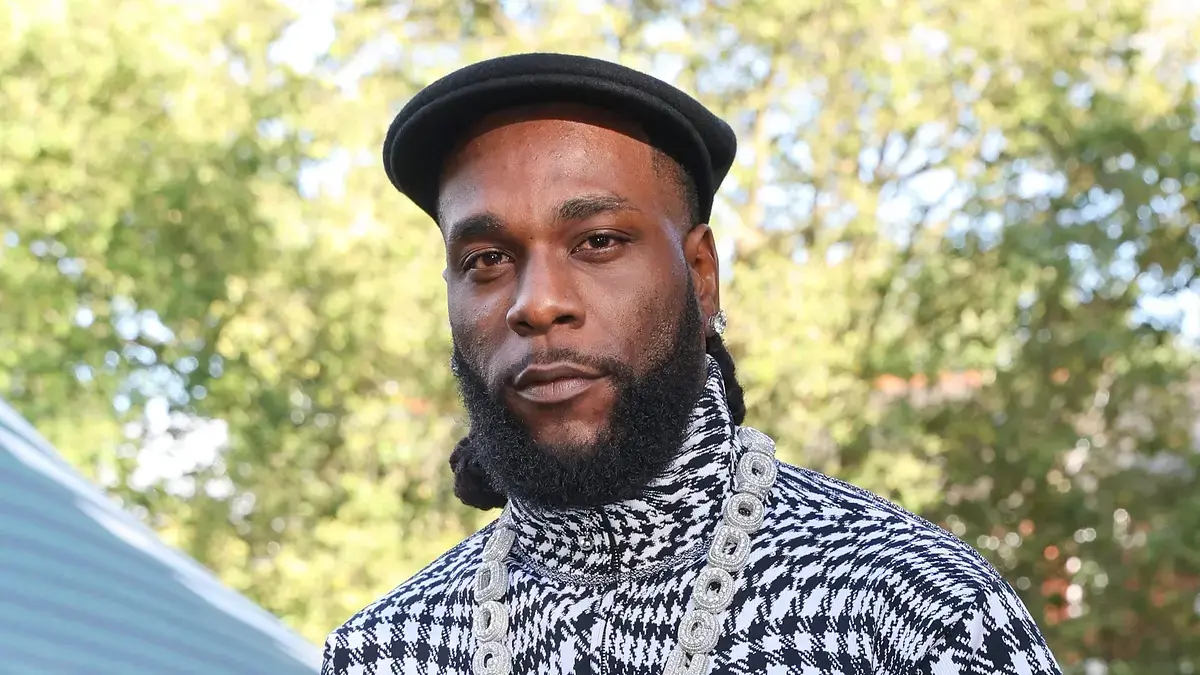
Grammy-winning Nigerian singer Damini Ogulu, popularly known as Burna Boy, has finally reacted to the widespread criticism he received after news broke of his purchase of a custom 1-of-1 Venuum Widebody Bugatti Chiron, reportedly worth 9 billion naira. The purchase, which made headlines across the globe, drew sharp reactions from fans, critics, and social commentators, many of whom questioned the singer's priorities in spending such an enormous sum on a luxury vehicle amid Nigeria's economic challenges.
The criticism came from multiple angles. Some berated Burna Boy for what they termed an extravagant display of wealth on “vain things” instead of investing in businesses or donating to charitable causes. Others pointed out that Nigeria's notoriously bad road infrastructure is ill-suited for a high-performance exotic car like the Bugatti Chiron, which is designed for smooth highways and racetracks. The purchase also reignited debates about the growing gap between the wealthy elite and the struggling masses in the country.
However, Burna Boy did not remain silent for long. During his headlining performance at the Afronation concert in Portugal on Friday night, he addressed the controversy head-on with a freestyle rap that has since gone viral on social media. Standing on stage in front of thousands of fans, he delivered a pointed verse: “I buy Bugatti, dem ask which road I go drive am? No be today we dey do road like Julius Berger.” The line was a clear reference to Julius Berger, one of Nigeria's leading construction companies, which has been involved in road projects across the country for decades. By invoking the company's name, Burna Boy appeared to dismiss the criticism, suggesting that poor roads have always been a reality in Nigeria and that no one should be surprised he bought a car that might not suit local conditions.
In the days leading up to his performance, social media platforms were flooded with reactions to the Bugatti purchase. Some users calculated that the 9 billion naira could have been used to build schools, hospitals, or provide clean water in rural areas. Others defended the singer’s right to spend his hard-earned money as he pleases, arguing that celebrities are not obligated to solve societal problems. The debate reflects a long-running tension in Nigeria and across Africa between celebrating individual success and demanding social responsibility from the rich.
The choice to respond during a performance in Portugal, rather than through a formal statement, is consistent with Burna Boy’s artistic persona. Known for his blend of Afrobeat, dancehall, and reggae, the singer has often used his music as a platform to address social and political issues, from corruption to the struggles of the African diaspora. His freestyle response turned the controversy into content, allowing him to both entertain his audience and clap back at his detractors in a single moment.
Interestingly, this is not the first time Burna Boy has been at the center of a luxury car controversy. Last year, a socialite named Sophia Egbueje publicly accused him of reneging on a promise to buy her a Lamborghini in exchange for intimacy. The allegation made headlines and became a subject of public gossip. Burna Boy never directly confirmed or denied the claim but instead mocked her on his song ‘No Do,’ where he sang about someone shouting over a Lamborghini. In a twist, Sophia Egbueje later announced that she had purchased the Lamborghini herself, effectively ending that chapter of the drama. The strained relationship between the two has been widely publicized, and the incident continues to follow Burna Boy in media narratives about his flamboyant lifestyle.
To fully understand the context of Burna Boy’s career, it is essential to look at his rise to global fame. Born in Port Harcourt, Nigeria, he gained international recognition with his 2019 album ‘African Giant,’ which earned him a Grammy nomination. He followed that up with ‘Twice as Tall’ in 2020, which won the Grammy for Best Global Music Album. Since then, he has become one of Africa’s most streamed artists, headlining major festivals around the world and collaborating with international stars like Beyoncé, Sam Smith, and Ed Sheeran. His net worth is estimated to be in the millions of dollars, and he is known for his luxury tastes, including designer outfits, jewelry, and exotic cars.
Nevertheless, the Bugatti purchase has stirred particularly strong emotions because of the sheer amount of money involved. Nine billion naira is roughly equivalent to $6 million USD at current exchange rates, an amount that could fund a small community’s infrastructure for years. Critics argue that such spending is tone-deaf in a country where over 40% of the population lives below the poverty line. Supporters counter that Burna Boy’s success is a symbol of African excellence and that he should be free to enjoy the fruits of his labor without being guilt-tripped.
The road infrastructure dig by critics also touches on a sensitive point. Nigeria’s roads are in a deplorable state across many regions, with potholes, accidents, and congestion being daily realities. Owning a low-clearance, high-performance vehicle like a Bugatti Chiron would indeed be impractical in most parts of the country, except perhaps on a few well-maintained sections in Lagos or Abuja. This has led to jokes and memes online, with some wondering if Burna Boy plans to drive the car on airport runways or only display it in a climate-controlled garage.
Meanwhile, the Afronation concert in Portugal is an annual event that celebrates African music and culture in Europe. Burna Boy’s performance there was part of a summer tour that includes stops across Europe and North America. His freestyle moment quickly became the most talked-about part of the show, with fans capturing and sharing clips on TikTok, Instagram, and Twitter. The response from his fanbase, known as the “Outsiders,” has been largely supportive, with many praising his confidence and wit. Others, however, felt the freestyle was dismissive and did not address the deeper issues raised by the criticism.
It is worth noting that Burna Boy’s purchase of the Venuum Widebody Bugatti Chiron is a rare move, even among ultra-wealthy celebrities. The custom body kit makes the car a one-of-a-kind piece, which only adds to its exclusivity and price tag. The Venuum modification enhances the car’s aerodynamics and aesthetics, making it even more of a collector’s item. Such vehicles are rarely driven on public roads; they are typically stored or showcased at events. This has led some to speculate that the singer bought the car primarily as an investment or status symbol rather than a daily driver.
The controversy also highlights the double-edged sword of celebrity fame. Every public figure is subject to scrutiny, especially when they flaunt wealth. For an artist like Burna Boy, who has been outspoken about social and political issues, the expectation that he should also embody philanthropy is heightened. Yet, he has not been entirely absent from charitable giving: he has funded scholarships, supported youth development programs, and contributed to relief efforts during the COVID-19 pandemic. However, those acts of generosity are often overshadowed by his larger-than-life persona.
In the broader context of the Nigerian music industry, Burna Boy is not alone in attracting criticism for lavish spending. Fellow artists like Davido and Wizkid have also been scrutinized for their expensive cars, homes, and parties. Davido, for instance, once posted a video of himself burning money, which sparked outrage. Wizkid has been praised for his style but also questioned for his opulent lifestyle. The push and pull between celebrating success and demanding accountability is a recurring theme in African pop culture, where artists are seen as both role models and targets of envy.
Looking ahead, it is unclear whether Burna Boy’s freestyle response will end the criticism or fuel further debate. Some observers believe that the singer intentionally fueled the controversy as a marketing tactic, keeping his name in the headlines ahead of his upcoming album release. Indeed, speculation is rife that Burna Boy is planning new music, possibly an album titled after the Bugatti or with themes related to wealth and status. If so, the controversy could serve as a launchpad for a successful promotion campaign.
The incident also opens a window into how African artists are increasingly using international stages to address domestic critiques. By performing in Portugal and addressing Nigerian critics, Burna Boy connects his global audience with local conversations. This dynamic is becoming more common as Afrobeat gains worldwide traction, and artists leverage their platforms to comment on issues back home. It also underscores the cosmopolitan nature of modern African celebrities, who live and perform across continents while remaining deeply tied to their home countries.
Another angle worth exploring is the role of the media in amplifying such stories. The original report of the Bugatti purchase came from multiple Nigerian gossip blogs and entertainment news sites, each adding their own spin. The narrative spread rapidly because it tapped into existing grievances about inequality. The media’s focus on celebrity wealth, especially during economic hardship, can sometimes foster resentment and moral outrage. However, it also holds public figures accountable and sparks necessary conversations about wealth distribution and social responsibility.
On the personal level, Burna Boy’s family has weighed in on his lifestyle choices in the past. His mother, Bose Ogulu, who also serves as his manager, has publicly urged him to get married and have children. She has expressed concern about his single status and the bad influence of fame. The Bugatti purchase is unlikely to change those familial dynamics, but it does cast a spotlight on his priorities. His mother, a strong figure in his life, has sometimes been at odds with his rebellious image, yet she remains his closest advisor.
In conclusion, Burna Boy’s response to the Bugatti controversy is a quintessential example of his artistic approach: direct, confrontational, and loaded with cultural references. By turning a moment of criticism into a stage performance, he reinforces his brand as an unapologetic king of Afrobeat. Whether one agrees with his spending or not, the episode has once again placed him at the center of global conversations about wealth, success, and the responsibilities of fame. As he continues his tour and prepares new music, the echoes of his Afronation freestyle will likely reverberate through the rest of the year, ensuring that the Bugatti remains a symbol of both his achievements and the controversies they attract.
Source: Daily Post Nigeria News