

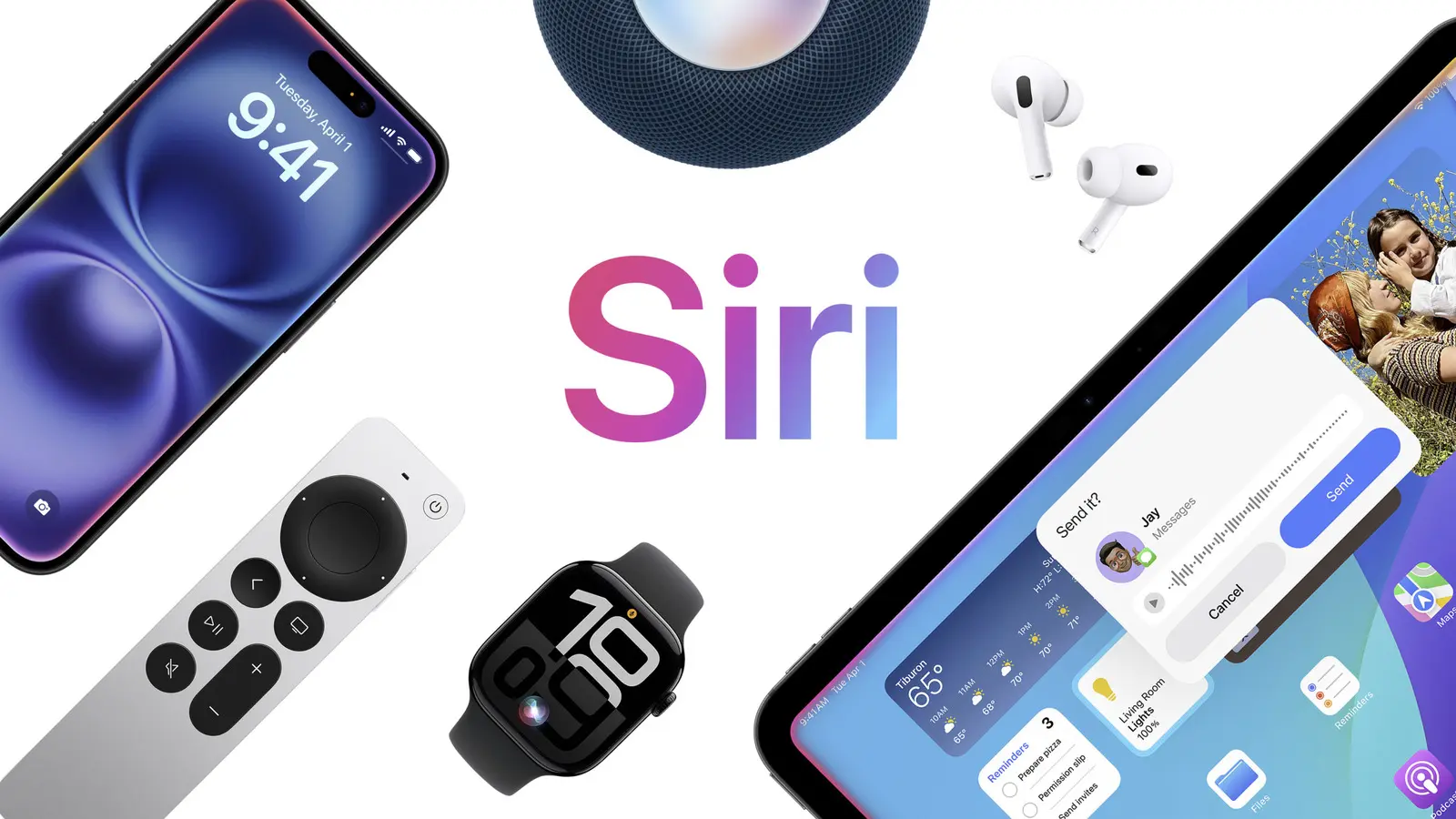
Apple has agreed to pay $250 million to settle a class action lawsuit that accused the company of misleading consumers about the release of its long-awaited AI-powered Siri assistant. The lawsuit, filed on behalf of iPhone buyers in the United States, claimed that Apple promoted the enhanced Siri as a key feature of its Apple Intelligence suite during WWDC 2024, yet failed to ship the software update within the promised timeframe. The settlement, which must still be approved by a federal judge, offers financial compensation to customers who purchased an iPhone 16 or iPhone 15 Pro in the expectation of receiving the new Siri experience.
Background of the Lawsuit
The class action was initiated shortly after Apple announced a delay in delivering the updated Siri in March 2025. According to court documents, the plaintiffs argued that Apple engaged in deceptive advertising by repeatedly showcasing a more personalized and context-aware Siri in promotional materials ahead of the iPhone 16 launch in September 2024. The company marketed the iPhone 16 as the first device built from the ground up for Apple Intelligence, with Siri playing a central role in that vision. However, more than 18 months after the initial announcement, the AI-powered Siri remains absent from users' devices.
The lawsuit covered U.S. residents who bought an iPhone 16, iPhone 16 Plus, iPhone 16 Pro, or iPhone 16 Pro Max, as well as those who purchased an iPhone 15 Pro or iPhone 15 Pro Max after the WWDC 2024 keynote. The proposed settlement does not require Apple to admit any wrongdoing, which is a common provision in such class action agreements. Instead, the company will establish a fund to compensate eligible consumers, with the exact payout per claimant depending on the number of valid claims filed.
The Promised Features That Never Arrived
At WWDC 2024, Apple unveiled a sweeping vision for artificial intelligence it called Apple Intelligence. The initiative included system-wide writing tools, image generation capabilities, and a deeply integrated ChatGPT partnership. But the centerpiece was a dramatically upgraded Siri that would understand the context of what users were viewing on their screens, take actions inside third-party apps, and perform multi-step tasks autonomously. Demo videos showed Siri pulling up flight details from emails, editing photos based on voice commands, and even booking restaurant reservations through integrated services.
Throughout 2024 and 2025, Apple slowly rolled out components of Apple Intelligence: on-device text summarization, Genmoji creation, and the ChatGPT integration arrived in stages. Yet the core Siri enhancement never appeared. Industry observers noted that the ambitious on-device natural language processing required for context-aware actions proved far more challenging than Apple anticipated. The company also faced internal struggles with data privacy constraints, as Apple Intelligence was designed to process most requests locally on the device rather than in the cloud.
Apple's Public Acknowledgment of the Delay
For over five months after the iPhone 16 launch, Apple remained silent about the missing Siri features. The company continued to run television and online advertisements that highlighted the new Siri capabilities, including a notable ad showing a user asking Siri to forward a document from an email to a colleague in a messaging app. In March 2025, Apple quietly issued a statement acknowledging that the update would not arrive as planned and was instead postponed to an unspecified later date. The company pulled the advertisements from circulation shortly afterward.
This delay represented an unusual misstep for Apple, which prides itself on product reliability and customer trust. The price of the iPhone 16 lineup had increased compared to previous generations, partly justified by the promise of advanced AI features. Many early adopters expressed frustration on social media and tech forums, feeling misled by the marketing campaign. The class action lawsuit followed within weeks.
Details of the Settlement
The $250 million settlement fund will be distributed among eligible class members after deducting legal fees, administrative costs, and incentive awards for named plaintiffs. Lawyers for the class are expected to seek up to 30% of the fund in attorney fees, which is common in large consumer class actions. The settlement notice will be published in major newspapers and online channels, giving affected customers a window to file claims. Each claimant must provide proof of purchase, such as a receipt or activation date, and submit a short declaration stating that they expected the new Siri features when they bought their device.
Apple's decision to settle rather than litigate likely reflects its desire to avoid a drawn-out court battle that could produce unflattering internal documents and potentially higher damages. In 2023, Apple paid $35 million to settle a similar class action over the slow performance of older iPhones (the "batterygate" controversy), and in 2022 it agreed to a $25 million settlement over Family Sharing violations. The $250 million figure in this case is among the largest consumer class action settlements involving software promises.
Consumer Impact and Eligibility
To be eligible for the settlement, consumers must have purchased one of the following devices in the United States between June 10, 2024 (the date of WWDC 2024) and the date of the settlement approval: iPhone 16, iPhone 16 Plus, iPhone 16 Pro, iPhone 16 Pro Max, iPhone 15 Pro, or iPhone 15 Pro Max. Importantly, the device must have been purchased for personal use, not for resale. Consumers who already received a refund or exchange related to the missing Siri feature may be excluded or discounted.
The estimated payout per person will depend on the total number of valid claims. If one million people file claims, each might receive around $200–250. If fewer people file, the payout could be higher. Class action administrators will set up a dedicated website and toll-free telephone line for inquiries. The settlement also bars class members from suing Apple individually over the same issues.
Apple's AI Strategy and the Road to iOS 27
After the delay announcement, Apple reportedly accelerated its work on Siri through a partnership with Google. The company is now using Google's Gemini large language models to power the long-overdue contextual Siri features. This marks a significant shift for Apple, which traditionally relied on its own in-house AI models and preferred to minimize reliance on external cloud providers for core assistant functionality. The partnership allows Apple to tap into Gemini's advanced natural language understanding while maintaining some on-device processing through a hybrid architecture.
Industry analysts believe the new Siri will finally debut with iOS 27, expected at WWDC 2027 and released in fall 2027. The software update is rumored to include not only the enhanced Siri but also additional AI capabilities such as proactive calendar management, advanced photo search, and deeper integration with Apple's Health and Home apps. However, given Apple's past delays, some observers remain skeptical until the features are actually shipped.
The delay of Siri has broader implications for Apple's competitive position in the AI assistant market. Amazon's Alexa has gained momentum with generative AI upgrades, while Google Assistant continues to evolve with Bard integration. Meanwhile, OpenAI's ChatGPT, Microsoft's Copilot, and various third-party apps have set high expectations for conversational and proactive AI. Apple's cautious approach to user privacy and on-device processing, while laudable, has slowed its ability to match the pace of rivals who are more willing to send data to the cloud.
The $250 million settlement is a costly reminder that marketing promises must be backed by deliverable products. For Apple, known for its meticulous product launches, the Siri debacle may lead to more conservative advertising in the future. The company is already adjusting its disclosure practices: in recent press releases, Apple has used disclaimers noting that some features "will not be available in the initial release" or "may arrive in a future software update." Such language could help avoid future litigation but may also dampen consumer excitement around new hardware.
The lawsuit also raises questions about the responsibility of tech companies to honor pre-launch feature commitments. Legal experts suggest that the case could set a precedent for how AI-related advertising is handled, especially as generative AI features become a major selling point for smartphones and other devices. Regulatory bodies like the Federal Trade Commission have shown interest in cracking down on "vaporware" — products that are announced but never delivered. While the settlement does not include an admission of liability, it signals that consumers have legal recourse when companies fail to deliver on advertised AI capabilities.
As for Siri itself, Apple has not provided a firm launch date beyond "later this year" as of May 2026. The company is reportedly testing the updated assistant internally with a subset of employees. Early testers have noted improvements in understanding complex commands but still encounter errors in app-level actions. Apple is said to be working on a safety framework to ensure the assistant does not accidentally delete data or perform unintended actions, which has been a point of concern for the company's privacy-focused engineering culture.
In the meantime, iPhone users continue to rely on the current version of Siri, which has seen only incremental updates in recent years. The assistant's limitations have become more glaring as competitors offer increasingly sophisticated AI tools. For many consumers, the $250 million settlement provides a financial remedy but does little to restore the trust lost when a flagship feature fails to materialize. The new Siri, when it finally arrives as part of iOS 27, will need to be not just competitive but exceptional to win back skeptical users. Until then, the class action settlement stands as a cautionary tale in an industry where the race for AI dominance sometimes outruns the ability to deliver.
Source: Engadget News