

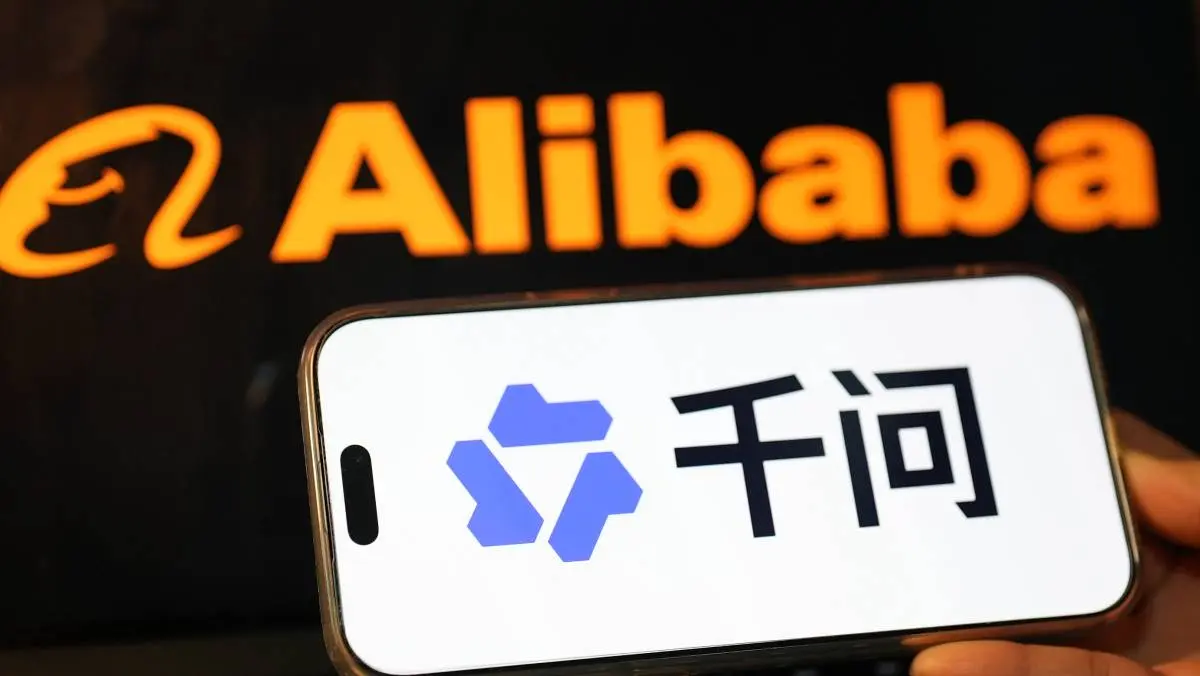
Alibaba is reportedly testing a new business model for its Qwen open-source artificial intelligence family, a move that could redefine how the Chinese tech giant monetizes its growing AI portfolio. According to industry insiders and early reports, the company is exploring ways to combine the accessibility of open-source models with tiered commercial services, targeting enterprises that require additional support, security, or customization. If successful, this hybrid approach could serve as a blueprint for other AI developers wrestling with the economics of free-to-use models.
The Rise of Qwen in the AI Landscape
Qwen, short for "Tongyi Qianwen," is Alibaba's flagship suite of large language models. It was first introduced in April 2023, just as the global AI boom was accelerating. Since then, Alibaba has released multiple iterations, including Qwen 1.5, Qwen 2, and the more advanced Qwen 2.5 series. These models span a wide range of sizes, from compact versions designed for edge devices to colossal parameter counts that rival some of the best proprietary systems in the world.
What has set Qwen apart is its commitment to the open-source philosophy. Unlike Alibaba's proprietary Tongyi Qianwen hosted on its cloud platform, the open-source versions are freely available on repositories such as Hugging Face and ModelScope. Developers have flocked to Qwen due to its multilingual capabilities, strong reasoning skills, and competitive benchmarks. By late 2025, cumulative downloads of Qwen models have reportedly exceeded hundreds of millions, making it one of the most widely used open-source AI families globally.
The Open-Source Dilemma
Open-sourcing a high-performance AI model is a double-edged sword. On one hand, it attracts a vibrant community of developers, accelerates innovation, and builds goodwill across the industry. On the other hand, the financial burden of designing, training, and maintaining such models can be staggering. Training a frontier-level large language model can cost tens of millions of dollars, not to mention the infrastructure required for fine-tuning, evaluation, and safety mitigation.
Alibaba's existing business model has mostly relied on indirect revenue from Qwen. By offering models for free, the company encourages developers to build applications that ultimately run on Alibaba Cloud. This cloud-centric strategy has worked well, as Alibaba Cloud is a leading provider in Asia and a major player globally. Yet the growing demand for artificial intelligence capabilities, combined with the intensifying competition from other tech giants, has prompted a search for more direct monetization avenues.
The New Business Model: A Commercial Layer Above Open Source
According to sources familiar with the matter, Alibaba is now testing what it calls an "enterprise-ready" tier for Qwen. This new layer sits atop the existing open-source models and includes value-added services such as priority technical support, advanced safety auditing, legal indemnification, and custom fine-tuning support. Enterprises would pay a subscription fee or usage-based pricing to access these perks while still benefiting from the base model's open availability.
A key feature of the new model is likely to be a dedicated, fully managed AI platform integrated with Alibaba Cloud. Instead of downloading the weights and managing their own infrastructure, businesses could deploy Qwen in a secure, scalable environment with just a few clicks. This would not only lower the barrier to entry for non-technical organizations but also create a recurring revenue stream for Alibaba. The platform could offer tools for prompt engineering, data privacy compliance, and seamless integration with existing enterprise applications.
Possible Variations of the Model
- Tiered Licensing: A free, open-source version for research and small-scale use, alongside a paid commercial license for enterprises that surpass certain usage thresholds.
- Managed Service: A cloud-hosted Qwen service with subscription tiers based on throughput, latency, and additional features such as retrieval-augmented generation or multi-modal support.
- Technical Support and SLA: Premium support packages with guaranteed response times, health monitoring, and custom service-level agreements for critical workloads.
- Co-Development Opportunities: Exclusive early access to experimental models and the ability to influence the roadmap by participating in private betas.
Why Alibaba Is Making This Move Now
The urgency to find a sustainable business model for AI has intensified across the industry. Alibaba has invested heavily in AI research and infrastructure, including the construction of advanced data centers and the development of proprietary chips like the Pingtouge processor. The company also competes with a host of well-funded rivals, including Baidu, Tencent, and ByteDance, as well as global players like OpenAI, Meta, and Google. In this hyper-competitive environment, leaving money on the table by offering premium services for free is no longer a viable long-term strategy.
Moreover, the regulatory landscape for AI is becoming more demanding. Governments around the world are introducing stricter rules about transparency, safety, and accountability. Enterprise customers need assurance that their AI systems comply with relevant laws, and they are willing to pay for certification and compliance support. By offering a commercial tier that includes these assurances, Alibaba can differentiate itself from purely open-source projects that leave compliance entirely to the developer.
The timing is also significant. Qwen 2.5 and its subsequent versions have proven that Alibaba can produce models on par with or even better than leading Western alternatives on certain benchmarks. This credibility gives Alibaba the leverage to experiment with monetization without losing its core community. Developers are more likely to accept a commercial overlay when the underlying model remains open and high-quality.
Echoes of Other Open-Source Strategies
Alibaba is not the first to walk this tightrope. Meta has adopted a hybrid approach with its Llama models, offering them under a custom license that permits commercial use for companies with fewer than 700 million monthly users. Larger entities need explicit permission from Meta, a strategy that has generated both controversy and business leads. Mistral, the French AI startup, took a similar path by releasing its models freely while selling access to its proprietary "Le Chat" chatbot and offering commercial licenses for its "Among the most notable is its impact on trust and credibility. Open-source proponents are wary of companies that use the "open" label loosely, particularly if they impose restrictive clauses or quicken that gate access to key features. Alibaba must walk a careful line to avoid being accused of "open-washing"—promoting a product as open-source while reserving the best parts for paying customers.
The model's success will also depend on execution. A poorly managed transition could alienate the very people who contributed to Qwen's success. Community feedback, transparency about future changes, and genuine value in the paid tier will be crucial. Yet there is reason for optimism. The open-source AI movement thrives on sustainability, and if Alibaba demonstrates that it can remain profitable while keeping its models accessible, other companies may follow suit.
Implications for the Global AI Ecosystem
Alibaba's experiment could have far-reaching implications beyond its own products. For developers in emerging markets, open-source models like Qwen are gateways to state-of-the-art AI without the need for massive budgets. A sustainable commercial model ensures that these models continue to be updated and improved, which is a net positive for the entire ecosystem. If the paid tier includes localized support or language-specific enhancements, it could also make Qwen more attractive in regions where other AI providers have limited presence.
Moreover, this move might pressure Western AI companies to reconsider their own open-source strategies. OpenAI has been a staunch advocate of closed models, while Meta and Google have offered varying degrees of openness. Alibaba's hybrid model could become a new middle ground—one that appeals to enterprises that want transparency but also require professional guarantees. In a market where trust and reliability are becoming as important as raw performance, a package that combines open weights with enterprise-grade support could be a compelling proposition.
The Importance of Developer Community
Alibaba's relationship with the developer community will be a decisive factor. The company has invested in fostering a robust ecosystem around Qwen, sponsoring hackathons, publishing extensive documentation, and providing tools for model fine-tuning. A commercial-tier announcement is likely to be accompanied by assurances that the open-source versions will retain their functionality and be updated regularly. If developers feel that they are second-class citizens compared to paying customers, they may migrate to alternative models such as Llama, Mistral, or others.
On the other hand, a well-designed paid tier could actually enhance the experience for free users. Revenue from commercial clients can be reinvested into improved training data, longer context windows, and faster inference engines. This positive-sum outcome is reminiscent of how Red Hat and other open-source companies have succeeded in the software infrastructure space. By supporting the business, developers indirectly support the continuing evolution of the open-source offering.
Alibaba Cloud as the Primary Channel
It is highly likely that the new business model will be closely intertwined with Alibaba Cloud. The cloud division has been a growth driver for Alibaba and has seen accelerated demand since the integration of AI services. By bundling Qwen with cloud infrastructure, Alibaba can offer a turnkey solution that simplifies deployment. For example, a company could subscribe to a Qwen-powered API service that autoscales according to traffic, includes security patches, and provides detailed usage analytics. This approach reduces operational complexity and makes it easier for businesses to comply with data residency requirements.
Alibaba Cloud's global footprint, which includes regions in Europe, the Middle East, and Southeast Asia, gives the company a unique advantage in cross-border AI deployment. Multinational corporations could leverage Qwen on Alibaba Cloud to ensure that their AI workloads run in compliance with diverse regional regulations. The paid tier could also include specialized data governance features, such as the ability to train on proprietary datasets without exposing them to third parties. Such capabilities are often essential for customers in finance, healthcare, and government sectors.
A Risk Assessment: What Could Go Wrong?
No significant strategic shift comes without risks. One major concern is that the commercial tier may cannibalize the existing open-source usage. Some companies currently using Qwen for free might be pushed to pay for services they previously managed themselves, leading to resentment. Additionally, the introduction of sales and marketing costs could erode the margins that Alibaba hopes to achieve. The company must carefully structure its pricing to reflect the true value of enterprise support without pricing out smaller startups that cannot afford premium fees.
There is also the technical risk of developing a managed platform that meets enterprise expectations. AI inference at scale is challenging, and Alibaba Cloud has occasionally faced outages and performance issues, as do most cloud providers. If the paid tier experiences reliability problems, it could damage the reputation not only of the business model but of Qwen as a whole. Moreover, the rapidly evolving nature of large language models means that investments in specific infrastructure might become obsolete quickly, requiring constant adaptation.
Finally, Alibaba will need to navigate geopolitical tensions and regulatory scrutiny. The export of AI models and technology across borders is becoming an increasingly sensitive topic, particularly with regard to China-based companies selling to Western customers. Alibaba will likely need to ensure that its commercial offerings comply with trade restrictions and intellectual property laws. This might involve creating separate "regional" versions of Qwen or restructuring which features are available in different jurisdictions.
The Road Ahead
As Alibaba begins testing the new business model, the industry will be watching with a mix of curiosity and caution. The outcome will not only influence Alibaba's own AI agenda but also shape the broader conversation about how open-source AI can be funded. A successful hybrid model could encourage other companies to follow suit, leading to a more diverse and financially sustainable open-source ecosystem. However, the approach may need to be adjusted over time, as developers and enterprises respond to the offerings.
Early signals suggest that Alibaba is proceeding pragmatically. The company has publicly stated that it remains committed to open-source development, and its testing appears to be incremental rather than radical. This cautious approach allows for feedback from the community and adjustments before a full-scale rollout.
The ultimate test will be whether Alibaba can demonstrate that openness and profitability are not mutually exclusive. If Qwen's enterprise tier gains traction, it could become a landmark case in the history of commercializing artificial intelligence. For now, the tech world's attention is fixed on Alibaba's next moves, wondering how this bold experiment will unfold and what it will mean for the future of open AI. The industry will be closely monitoring the response of both the developer community and enterprise customers as the story develops.
Source: AI News News