

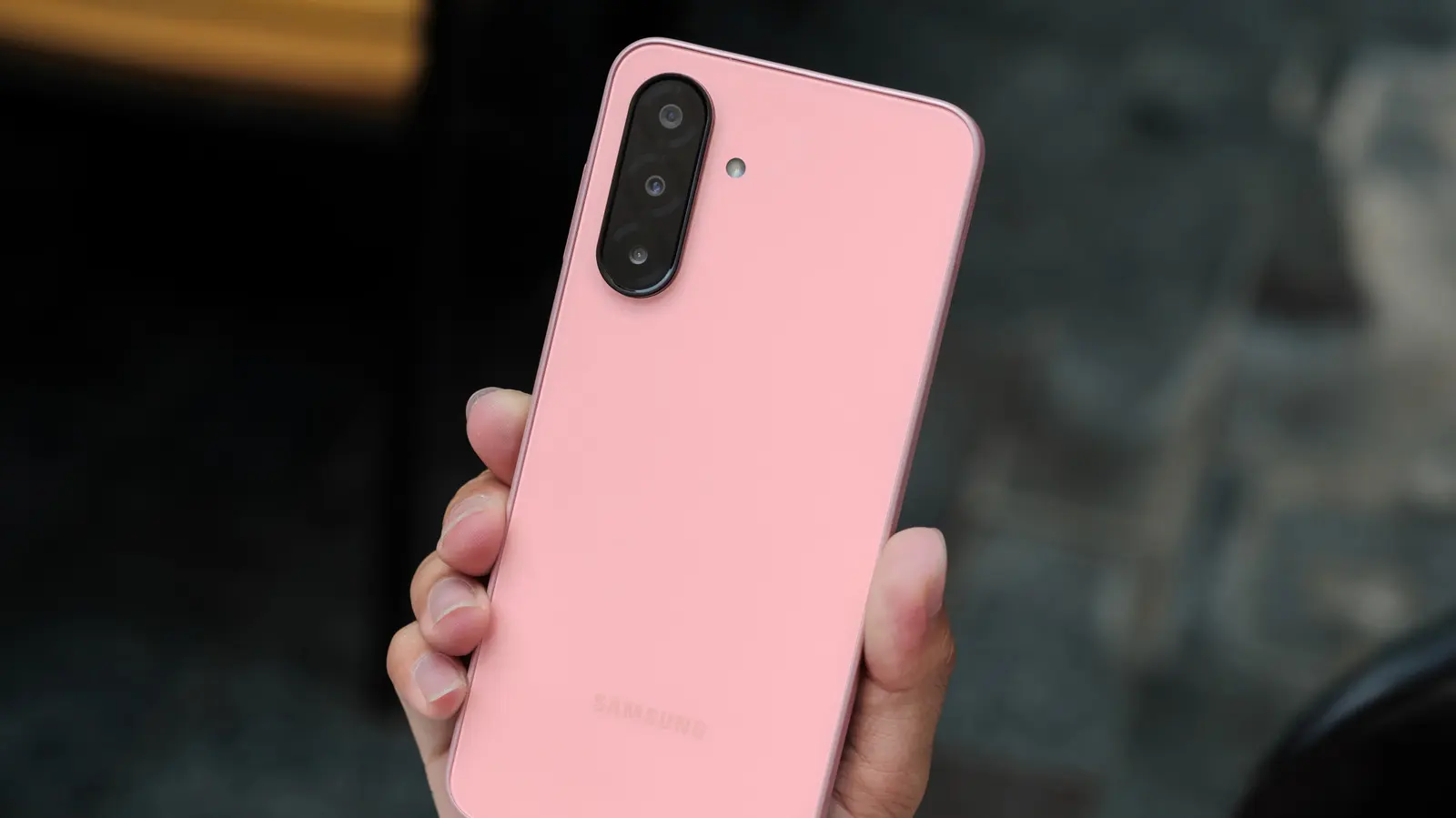
When you think of Samsung, you likely picture large televisions or the premium Galaxy S Ultra device that launches every year. The Galaxy S series, generally, is one of the most popular Android smartphone lineups around. Prices range anywhere from $650 for the Galaxy S25 FE all the way up to $1,300 for the top-of-the-line Galaxy S26 Ultra. If you're shopping for foldables, you could end up spending over $2,000 for the Galaxy Z Fold 7.
Yet, Samsung's best-selling smartphone in 2025, according to Counterpoint Research, was the Galaxy A16 — a budget-oriented device that was launched at $200. The year before, it was the Galaxy A15. This goes to show that the average consumer might not always crave the bleeding edge of innovation, but is rather prioritizing affordable hardware that can last a long time. Samsung's expansive product catalog therefore caters to a wide range of shoppers. This is why there's a Samsung phone at every price point you can think of.
In this read, though, we will highlight some of the more economical devices Samsung sells. We've picked products across different categories like smartphones, tablets, earphones, and smartwatches — so there's something for everyone here. If you're looking to build yourself a Samsung ecosystem, here are five current-gen products you can buy that are on the affordable side.
Galaxy A17 5G
At $200, the Galaxy A17 5G is one of the most affordable current-gen Samsung smartphones you can buy. It's powered by the company's in-house Exynos 1330 SoC, 4GB of RAM, and 128GB of internal storage. While 4GB of RAM is pretty measly by 2026 standards, the phone isn't burdened with heavy AI features that would warrant more memory on other devices. You can summon Gemini as usual and can even use Circle to Search, which is arguably one of the more useful AI features you could use on a smartphone.
Plus, the Galaxy A17 offers a microSD card slot that can add up to another 2TB of space — even Samsung's costliest smartphones don't offer expandable storage. The display is a 6.7-inch AMOLED panel, albeit with a slightly lower 90Hz refresh rate. The bezels aren't quite as slim as other phones in Samsung's lineup, and there is a noticeably larger chin, too. The phone boasts a triple-camera setup, although one of them is a 2-megapixel macro shooter.
There is a side-mounted fingerprint scanner for biometric authentication and a USB Type-C port for charging and data transfer. At 5,000 mAh, the Galaxy A17 offers the same capacity as the S26 Ultra. While you don't get wireless charging, you can top up the device via a cable at a respectable 25W. One thing the Galaxy A17 has going for it that probably no other phone in this price segment can claim is six years of OS updates. This long-term software support makes it a wise investment for those who keep their phones for several years. Additionally, the device includes a standard headphone jack, which is becoming increasingly rare even in mid-range phones. The phone's design is simple but functional, with a plastic back that keeps weight down and durability up. For everyday tasks like browsing, social media, and video streaming, the Exynos 1330 provides smooth performance. The 5G connectivity ensures future-proofing as networks expand. Compared to competitors like the Moto G Power or Nokia G series, the Galaxy A17 stands out with its AMOLED display and update commitment.
Galaxy Buds 3 FE
Bluetooth audio devices have been around for years, but Apple dropping the headphone jack in the iPhone catalyzed the shift towards truly wireless earbuds. If you're in the market for a pair, there are plenty of wireless earbuds manufacturers to choose from. Oftentimes, sticking to the same ecosystem as your phone has its advantages. Samsung sells earphones at various price points, with the Galaxy Buds 3 FE being the most affordable among truly wireless options. They're priced at $150 and come with all the bells and whistles you'd hope for.
This includes active noise cancellation (ANC), spatial audio, and an ingress protection certification to shield them from dust and splashes of water. Though support for true Bluetooth multipoint is missing here, Samsung does offer a feature that lets them automatically switch between connected Samsung products, just like AirPods do across Apple's ecosystem. You can control music playback by pinching an earbud or change the volume by swiping on it.
If you use Gemini on a daily basis, you can summon it directly using your earbuds and get it to fulfill quick tasks. Surprisingly, Samsung is also offering a live translation feature on its cheapest Galaxy Buds model, but you will need a compatible Samsung phone with Galaxy AI to use it. $150 isn't exactly cheap for a pair of earphones, but if you're shopping exclusively for Samsung-made earphones, these offer a great balance of features and value. The buds come with multiple ear tip sizes for a secure fit, and the charging case is compact enough to slide into a pocket. Battery life is rated at 6 hours with ANC on, and an additional 20 hours from the case. The transparency mode allows you to hear your surroundings when needed. Compared to the more expensive Galaxy Buds 3 Pro, the FE version lacks adaptive ANC and a more premium design, but for everyday use, the sound quality is very good, with a balanced profile that suits most genres. The integration with Samsung's SmartThings app makes firmware updates and customization easy.
Galaxy Fit 3
In addition to smartphones and wireless earbuds, smartwatches have also become part of many people's everyday carry. They allow you to track your workouts, monitor your sleep, and even view and interact with notifications your phone receives. Samsung sells a couple of Galaxy Watch models, but if you're looking for the most affordable wearable, the Galaxy Fit 3 is an excellent entry point into the ecosystem. It's currently priced at $46 on Amazon, where it also has a 4.5-star rating and nearly 2,500 reviews.
The Galaxy Fit 3 is technically a fitness band with a slightly wider display. It's not going to be as feature-packed or fast as a Galaxy Watch, but it covers all the essentials and then some. It sports a 1.6-inch rectangular AMOLED display with a single button on the side. Tracking is done using its accelerometer, gyroscope, and optical heart rate and light sensors. The biggest advantage of going with a Galaxy Fit over a Galaxy Watch is battery life. Samsung touts up to 13 days of battery on a single charge.
There are over 100 exercise options you can track, in addition to sleep tracking. The Galaxy Fit 3 actually offers a couple of the same niceties you'd expect from a smartwatch. You can control media playback, use it as a remote shutter for your phone's camera, or quickly ping your phone if you've misplaced it. There is a decently large library of watch faces to choose from as well. The device is water-resistant up to 5 ATM, making it suitable for swimming and showering. The gentle vibration motor provides discreet alerts for calls and messages. While it lacks built-in GPS, it can use your phone's GPS for more accurate outdoor tracking. The Samsung Health app syncs seamlessly, providing detailed insights into your activity, stress levels, and sleep stages. Compared to alternatives like the Xiaomi Mi Band 8 Pro or Fitbit Inspire 3, the Galaxy Fit 3 offers tighter integration with Samsung phones, including automatic syncing with Samsung Health and the ability to control nearby Galaxy devices. It's a great choice for anyone who wants basic health tracking without the bulk or cost of a full smartwatch.
Galaxy Tab A9
Apple has built a dominant position in the tablet space, with an iPad available at all major price points. If you do want a more customizable (and affordable) experience, the Galaxy Tab A9 is the cheapest tablet that Samsung currently sells. Priced at $165 on Amazon, the tablet is an entry-level offering — which is quite apparent if you look at its spec sheet. It has an 8.7-inch 60Hz LCD panel with sub-1080p resolution. It is powered by the Mediatek Helio G99 chipset, 4GB of RAM, and 64GB of internal storage. Like the Galaxy A17 smartphone, though, the Galaxy Tab A9 offers expandable storage up to 1TB via a microSD card.
The tablet has a single rear camera and a 2-megapixel front-facing sensor. Surprisingly, it even offers a 3.5mm headphone jack, so you don't need to worry about picking up a dongle just to connect your wired headphones. The 5,100 mAh battery isn't particularly large, though.
This tablet isn't designed to handle heavy workflows or demanding games, but it does offer a slightly larger display that can accommodate up to two apps in split-screen mode. If all you're looking for is a bigger screen to fuel your entertainment needs, the Galaxy Tab A9 isn't a terrible option. Samsung does have other, costlier options that are better suited for productivity and gaming, like the Galaxy Tab S10 FE that adds support for Galaxy AI and offers a substantially more powerful SoC. The Tab A9 runs One UI 6.1 based on Android 14, with a promise of at least two major OS updates and security patches for four years. The build quality is decent, with a metal unibody that feels more premium than its price suggests. The speakers are single-channel, but the sound is clear enough for casual video watching. For students or children, this tablet can serve as an e-reader, a device for online classes, or a media consumption hub. Compared to Amazon Fire tablets, the Galaxy Tab A9 offers access to the Google Play Store and a more polished software experience. It's a no-frills device that gets the basics right.
Galaxy SmartTag 2
Samsung sells a handful of accessories, like magnetic phone cases, fast-charging adapters, and bands for the Galaxy Watch, but one accessory in particular stands out for how useful it can be — the Galaxy SmartTag 2. If you're familiar with Bluetooth trackers like the AirTag, this is essentially Samsung's version of the same. You can attach it to your keys, backpack, luggage, or basically anything of value you don't want to lose. It then acts as a tracker that can be located at any time through Samsung's SmartThings Find app.
The Galaxy SmartTag 2 is priced at $30 a pop, but you can pick up a four-pack for $100 if you have more than one valuable item you'd like to track. Unlike the Apple AirTag, the Galaxy SmartTag 2 is actually designed with a built-in keyring. This way, you don't need to shell out extra just for an accessory for your accessory. It has an IP67 rating, and Samsung claims the battery can last up to 500 days.
It's equipped with ultra-wideband (UWB) technology, so you will be able to track your items precisely once you're within range. You do need a Samsung phone with UWB for this to work, though. If an item you're tracking is lost or stolen, the app on your phone lets you mark it as such. A Good Samaritan can then scan the SmartTag 2 using their phone and contact you. The SmartTag 2 also supports a button function, so you can use it to remotely control your Samsung smart home devices, like turning on lights or ringing your phone. The replaceable CR2032 battery is user-replaceable, extending the life of the tracker. Compared to Tile trackers, the SmartTag 2 leverages Samsung's vast network of Galaxy devices for finding lost items, making it more effective in populated areas. For anyone already invested in the Samsung ecosystem, this is a no-brainer accessory that adds peace of mind without a high cost. The design is compact and comes in black or white, with a durable loop that can be attached to almost anything.
Source: SlashGear News