

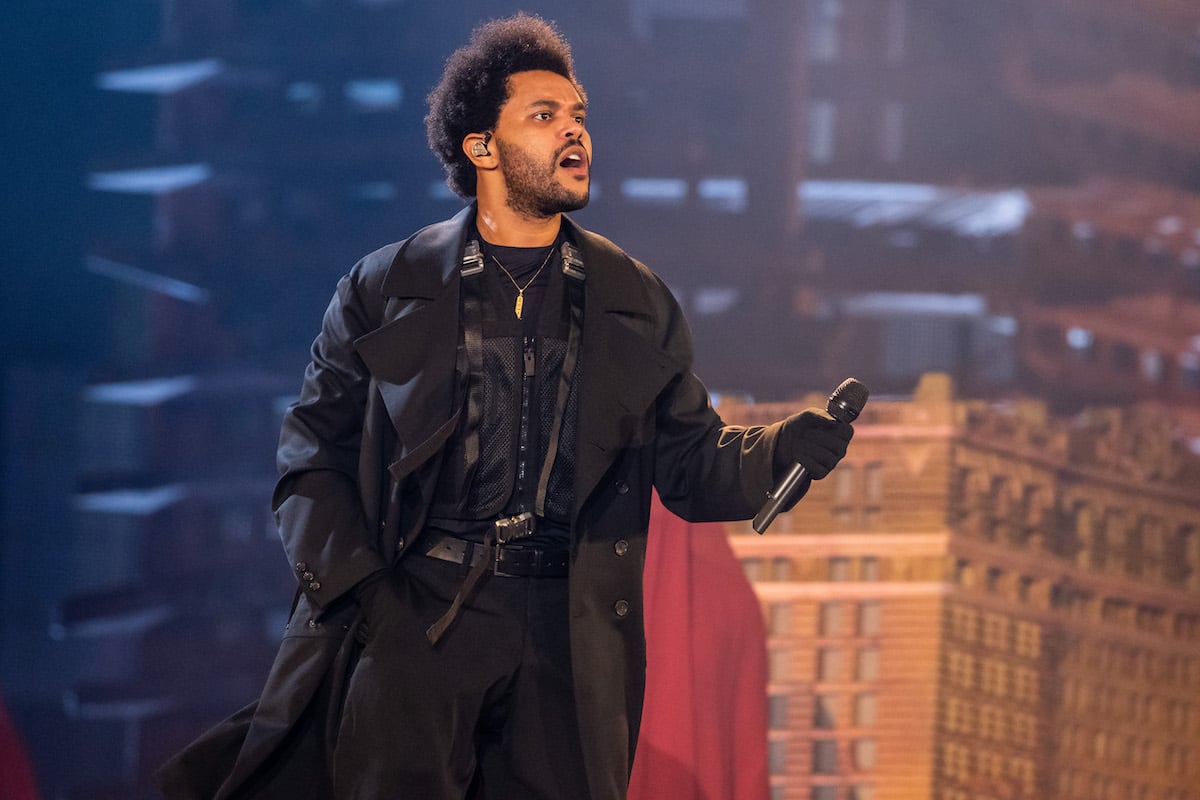
The Weeknd and Abel Makkonen Tesfaye: One Person, Two Identities
Abel Makkonen Tesfaye, the Canadian singer and songwriter known around the world as The Weeknd, has spent more than a decade building one of modern music's most distinctive personas. Yet he has consistently insisted that the man behind the microphone and the character onstage are not interchangeable. The Weeknd is a creative construct: a vehicle for moody R&B, cinematic visuals, and high-concept performances. Abel is the private individual who returns home after the lights go down. That separation is not a marketing gimmick. It is a boundary he has refined as his fame has expanded from anonymous online uploads to sold-out stadiums and a Super Bowl halftime stage.
From Anonymous Uploads to Global Stardom
Tesfaye's rise began in 2009, when he started posting songs to YouTube without revealing his face or full identity. The following year, he connected with producer Jeremy Rose, who proposed a contemporary R&B project. Together they created early tracks including 'What You Need,' 'The Morning,' and 'Loft Music.' The songs spread online, and in 2011 Tesfaye self-released his debut mixtape, House of Balloons, under the name The Weeknd. Two more mixtapes, Thursday and Echoes of Silence, followed the same year, establishing a dark, hazy sound that blended R&B, hip-hop, and electronic textures.
The name itself carried a story. Tesfaye has said it was inspired by the idea of leaving one weekend behind and starting another, with the spelling altered to avoid conflict with an existing band. In 2012, the three mixtapes were packaged as the compilation Trilogy, and his debut studio album, Kiss Land, arrived in 2013. Mainstream success followed with Beauty Behind the Madness in 2015, which included 'Can't Feel My Face' and 'The Hills,' and then Starboy in 2016, powered by the title track and collaborations with Daft Punk.
The Difference Between Abel and The Weeknd
In a 2021 interview, Tesfaye explained that the line between his personal and professional selves was not always clear. 'The lines were blurry at the beginning,' he said. 'And as my career developed — as I developed as a man — it's become very clear that Abel is someone I go home to every night. And The Weeknd is someone I go to work as.' That formulation has become one of the clearest descriptions of his dual identity. The Weeknd is the performer who wears red blazers, stages surreal award-show appearances, and builds elaborate narratives around albums such as After Hours and Dawn FM. Abel is the son, friend, partner, and private citizen who exists outside the spotlight.
Tesfaye has described the relationship as a 'Jekyll and Hyde situation,' with The Weeknd representing the more theatrical, shadowy side and Abel representing the grounded self. To reinforce that divide, he has often 'killed' his public persona in music videos. The visual storytelling around After Hours, for example, followed a character in a red suit through a night of chaos, injury, and surreal transformation. Tesfaye clarified that these gestures were not about self-destruction. 'I think it's me removing The Weeknd from Abel,' he said. 'I think a lot of people are like, Oh, he's suicidal. It's not that. I think it's me removing The Weeknd from the world, but he still finds his way back. He keeps coming out.'
Why He Stayed Anonymous at First
Early in his career, Tesfaye deliberately avoided showing his face. He wanted listeners to react to the music without the baggage of image, biography, or celebrity. 'With House of Balloons, nobody knew what I looked like,' he recalled. 'And I felt like it was the most unbiased reaction you can get to the music, because you couldn't put a face to it. Especially R&B, which is a genre that is heavily influenced by how the artist looks.' That decision helped shape the mystique around The Weeknd, but it also reflected a deeper discomfort with the way fame can distort art. By withholding his identity, he forced attention onto the songs themselves.
The anonymity did not last forever. As The Weeknd became a global name, Tesfaye stepped forward, but he continued to manage how much of his private life entered the public conversation. He has spoken about the strange pressure of being recognized, the loss of ordinary experiences, and the difficulty of protecting the people around him from unwanted attention. Even as his catalog grew to include record-breaking hits, he tried to keep a distinction between the work and the man.
A Career Defined by Reinvention
The Weeknd's discography is full of reinvention. After Hours, released in 2020, produced 'Blinding Lights,' which became the longest-charting song on the Billboard Hot 100. The track's synth-driven nostalgia and relentless momentum made it a global phenomenon, and its success only deepened the public's fascination with the character behind it. In 2021, Tesfaye headlined the Super Bowl LV Halftime Show, delivering a performance that leaned into the cinematic world of After Hours. Later that same year, he released Dawn FM, a concept album framed as a radio broadcast from the afterlife, complete with narration and a meticulously constructed aesthetic.
He has also expanded into acting and television. He co-created and starred in an HBO series, bringing his interest in dark, stylized storytelling to the screen. Collaborations with artists such as Daft Punk, Ariana Grande, and Kendrick Lamar have kept him at the center of pop and R&B, while his live shows have become known for their ambition. Yet Tesfaye has consistently described these achievements as the work of The Weeknd, not the whole of Abel. The persona allows him to explore extremes — heartbreak, excess, fame, isolation — without making those themes a literal autobiography.
Privacy, Relationships, and the Cost of Fame
Tesfaye has also acknowledged the toll that celebrity can take on the people he dates. He said he feels guilty when his romantic life brings attention to non-famous partners, and he tries to keep those relationships out of the spotlight. 'I do feel guilty. For sure,' he said. 'That's why I don't… I try not to do too much. I just try not to bring attention to myself. And I just love being in normal situations, man. It's such a great feeling. To be able to just like go on a walk and not being in a fing SUV.' The remark captures the tension at the heart of his dual identity: The Weeknd is built for arenas, cameras, and headlines, while Abel longs for the unremarkable freedom of a quiet walk.
That desire for normalcy does not mean he rejects his career. It means he treats the stage name as a role rather than a total identity. The Weeknd can be larger than life, provocative, and mysterious. Abel can be a man with a private life, a family history, and a need for ordinary moments. In a culture that often demands total access from celebrities, that boundary is both a survival strategy and an artistic choice.
Even his downtime reflects the contrast. During the pandemic, Tesfaye passed the time binge-watching The X-Files, a detail that sits oddly beside the image of a stadium-filling pop star. But it is precisely that ordinariness that helps explain why he insists on the split. The Weeknd may be the one who goes to work, performs for millions, and disappears into elaborate narratives. Abel is the one who goes home, watches television, and tries to remain a person rather than a product.
For fans, the distinction adds another layer to the music. When The Weeknd sings about longing, excess, or escape, listeners can hear a character speaking — one shaped by Tesfaye's experiences but not identical to them. When Tesfaye speaks about his life, he can do so as Abel, with the persona set aside. The result is a rare kind of career: one built on mystery, spectacle, and reinvention, yet anchored by a simple insistence that the man and the myth are not the same. And as long as The Weeknd keeps finding his way back into the spotlight, Abel will keep looking for the quiet walk outside it.
Source: Showbiz Cheat Sheet News