

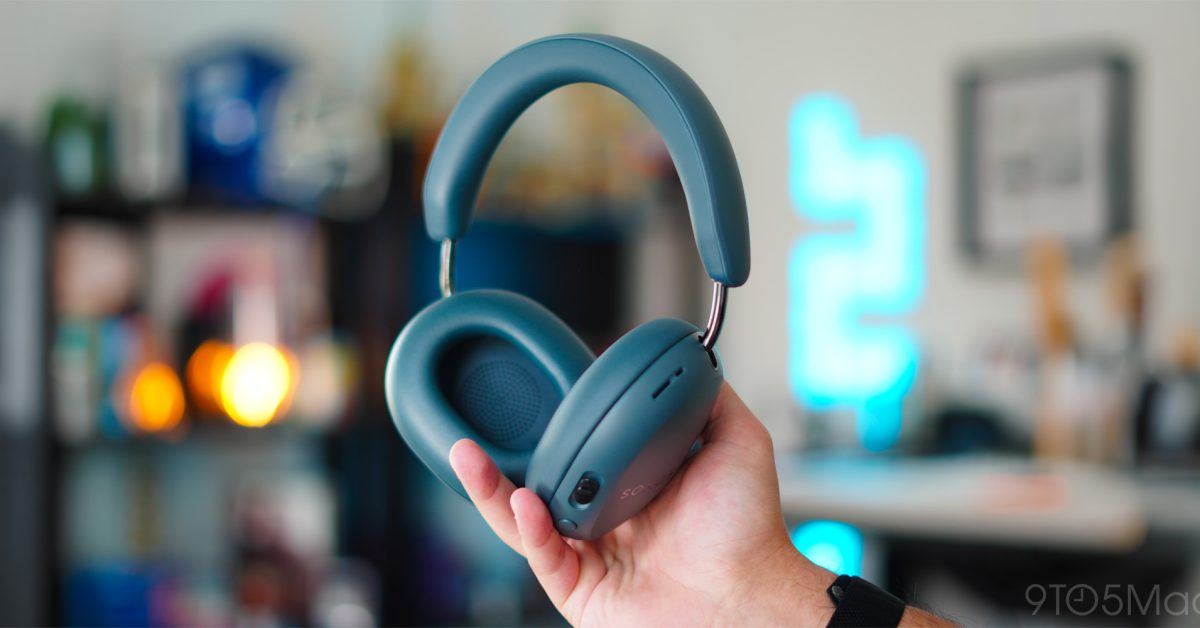
The Sonos Ace Ultra has arrived as a direct follow-up to the original Sonos Ace, and after nearly a month of daily use, it is clear that the company focused on the details that mattered most. The first-generation model looked premium, felt comfortable, and integrated neatly with the Sonos ecosystem, but it left room for improvement in bass depth, active noise cancellation, and app-based tuning. The Ace Ultra takes aim at those complaints with redesigned 40mm drivers, a 10-microphone array, improved adaptive ANC, longer battery life, Bluetooth 6.0, and a more advanced equalizer. It is not a visual reinvention, but it is a meaningful internal upgrade.
Key Facts at a Glance
- Redesigned 40mm drivers for improved acoustics and bass response.
- 10-microphone array, up from eight microphones on the original Sonos Ace.
- Improved adaptive ANC that is up to 2X more effective and adjusts to glasses, hair, and changes in ear seal.
- Up to 35 hours of battery life with ANC turned on.
- Bluetooth 6.0, compared with Bluetooth 5.4 on the older generation.
- Expanded EQ with three-band and advanced eight-band options.
- Headphone linking with the Sonos ecosystem.
- User-replaceable batteries.
- Updated ear cushion and headband cushion materials.
- More ear cup rotation so they can sit flat when worn around the neck.
- Two new colors: Agave and Sand.
Those changes sit alongside features carried over from the original, including spatial audio with Dolby Atmos, dynamic head tracking, lossless audio on supported devices, USB-C and 3.5mm wired audio support, Bluetooth multipoint, fast charging that delivers up to three hours of playback from a three-minute charge, and TV Audio Swap with compatible Sonos soundbars. The magnetic ear cups also return, which makes replacement and customization easier.
Design, Comfort, and Build Quality
At first glance, the Sonos Ace Ultra does not look dramatically different from the original. Sonos kept the same clean, understated silhouette, with a few relocated chrome accents and additional color choices. That is not a bad thing. The design remains premium, lightweight, and easy to wear for long stretches. The mix of plastics and metals gives the headphones a high-quality feel without making them heavy.
Comfort has always been a strength for this line, and the Ace Ultra improves on it. The ear and headband cushions have been updated, and during an 8-10 hour airplane ride, the headphones were worn for about 95 percent of the trip without causing aches, pain, or heat buildup. The ear cups also rotate more than before, allowing them to lie flat when resting around the neck. For travelers and commuters, that small change matters more than it may sound.
Sonos also made the batteries user-replaceable, which is a significant long-term value improvement for a premium product. Instead of treating the battery as a sealed component, the Ace Ultra gives owners a way to extend the lifespan of the headphones. The magnetic ear cups remain one of the more practical design choices in this category, because they can be swapped without disassembling the headphone.
The only notable hardware complaint is the carrying case. The zipper or closure mechanism can be frustrating because a sticker or internal element gets stuck too often. It is a minor issue, but it stands out because the rest of the physical experience feels so polished.
Sound Quality and EQ
The biggest reason to pay attention to the Ace Ultra is sound. The original Sonos Ace had a balanced presentation, but its bass depth was a common criticism, especially for a pair of headphones priced around $450. For listeners who enjoy R&B, hip-hop, and pop, the first model could feel a little restrained at the low end. The Ace Ultra finally delivers the punch and depth that many listeners wanted.
What makes the improvement impressive is that Sonos did not simply crank up the bass slider. Any brand can boost low frequencies, but the hard part is maintaining separation so that bass does not overwhelm vocals, instruments, and higher frequencies. The Ace Ultra hits harder while keeping vocals clear, crisp, and easy to follow. That balance benefits all kinds of media, including podcasts, movies, and YouTube videos. The headphones sound fantastic across music, spoken word, and video content.
The expanded EQ controls are a major part of the experience. Users get a three-band EQ for quick adjustments and an advanced eight-band EQ for finer tuning. That level of control makes it easier to tailor the sound to different genres, recording styles, and personal preferences. The app experience is also smoother, which matters because a great hardware product can be undermined by clumsy software.
Spatial audio and Dolby Atmos remain part of the package, along with dynamic head tracking. On supported devices, lossless audio is available, and wired listening is possible through USB-C or 3.5mm. Those features make the Ace Ultra flexible for people who want wireless convenience at home and a wired connection for editing, gaming, or critical listening.
Active Noise Cancellation and Microphone Array
The original Sonos Ace had capable ANC, but it could occasionally produce a faint hissing noise in ANC mode. The Ace Ultra appears to have resolved that issue. It also takes a clear step forward with a 10-microphone array, up from eight microphones on the previous model. More microphones allow the headphones to sample and respond to noise more effectively.
Sonos says the improved adaptive ANC is up to 2X more effective, and it can adjust to factors such as glasses, hair, and changes in the seal around the ears. That adaptability is important because real-world headphone use is never static. A person may put on glasses, move their hair, or shift the ear cups slightly, and those changes can affect noise isolation. The Ace Ultra responds to those variables dynamically.
The most noticeable improvement is how well the headphones handle unpredictable noises. Blocking a steady airplane engine is one challenge, but blocking passing cars, construction, sirens, or sudden loud sounds while walking outside is another. The Ace Ultra performs impressively in those situations. Even with no media playing, the quietness in many different environments is striking. The ANC is strong enough that it can almost feel too effective, which is a good problem for a premium noise-canceling headphone to have.
Battery Life, Connectivity, and Sonos Ecosystem
Battery life is now rated at up to 35 hours with ANC turned on, which puts the Ace Ultra in a competitive position among premium noise-canceling headphones. Fast charging adds practical value: a three-minute charge can provide up to three hours of playback. That is useful for travelers who realize their battery is low just before a flight or commute.
Bluetooth 6.0 replaces Bluetooth 5.4 on the older model, and Bluetooth multipoint remains available for connecting to more than one device at a time. USB-C and 3.5mm wired audio support give users options when wireless is not ideal. The headphones also support TV Audio Swap with compatible Sonos soundbars, allowing users to move television audio from a soundbar to the headphones.
The Sonos ecosystem integration goes further with a feature that lets users move music from a Sonos speaker to the headphones with the press of a button. For homes with multiple Sonos speakers, this can be a convenient way to keep listening without missing a beat. It is a niche feature for some, but it reinforces the value of the Ace Ultra for existing Sonos customers.
Pricing, Availability, and Market Position
The Sonos Ace Ultra is available for $449 in four colors: Black, White, Agave, and Sand. That matches the original launch price of the first-generation Sonos Ace, even though the new model adds several meaningful upgrades. The original Sonos Ace is also still available at $239 while supplies last. At that price, the older model can still be a reasonable choice for budget-conscious buyers.
At $449, the Ace Ultra sits firmly in the premium noise-canceling headphone category alongside options from Apple, Bose, and Sony. That is a crowded and highly competitive space, and buyers expect strong ANC, excellent sound, comfortable fit, reliable software, and long battery life. The Ace Ultra addresses nearly every complaint that customers had about the original, including bass depth, ANC performance, battery life, and app experience.
For existing Sonos Ace owners, the upgrade question depends on what they value most. The improvements in sound, ANC, battery life, and controls are substantial enough to justify an upgrade for many users. For anyone shopping for a premium set of headphones, the Sonos Ace Ultra deserves a place on the shortlist, especially for Sonos fans who want deeper integration with their home audio system. The Agave color also stands out as a strong new option.
At $449, the Sonos Ace Ultra competes directly with the best-known premium noise-canceling headphones, and its combination of improved bass, smarter ANC, longer battery life, and Sonos ecosystem features gives it a distinct identity in that group.
Source: 9to5Mac News